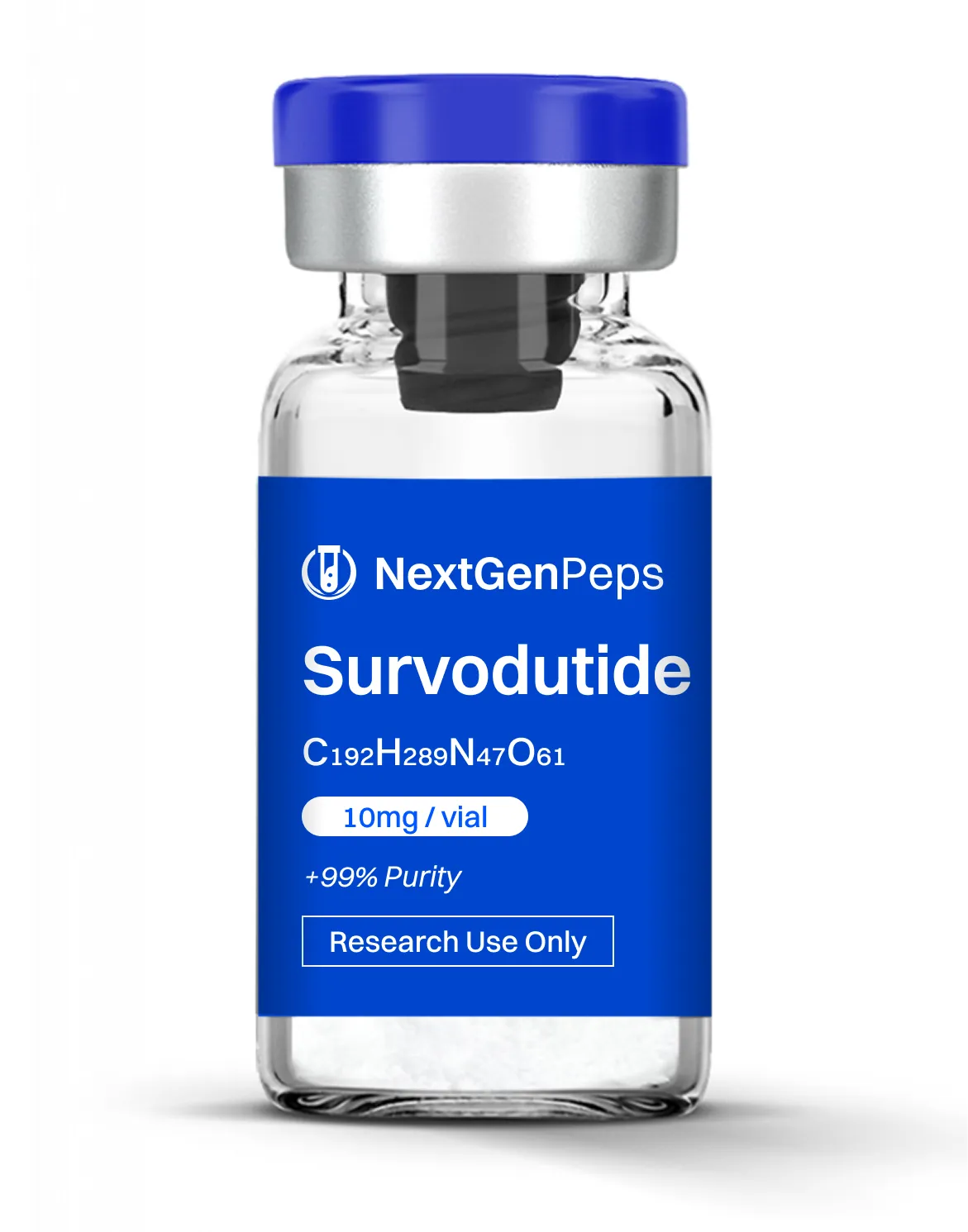






Survodutide is a high-purity, research-grade dual receptor agonist peptide designed for laboratory investigation of metabolic regulation, energy balance, hepatic fat handling, and related pathways. It activates both the glucagon receptor and the GLP-1 receptor in a single molecule and incorporates a fatty-acid modification that supports extended activity.
Molecular Composition and Mechanistic Profile
Survodutide (BI 456906): A synthetic acylated peptide (approximately 29 amino acids, derived from a glucagon backbone) with dual activity at the glucagon receptor (GCGR) and GLP-1 receptor (GLP-1R). A C18 di-acid side chain enables albumin binding and once-weekly pharmacokinetics in research models. Molecular weight is in the range of approximately 4,000–4,230 Da depending on exact form and salt.
Structural characteristics: The dual agonism combines GLP-1-mediated effects on appetite regulation and glucose-dependent insulin support with glucagon-driven increases in energy expenditure and hepatic fatty-acid oxidation. This profile distinguishes it from selective GLP-1 agonists and has been examined in controlled systems for body-weight reduction, liver-fat clearance, and metabolic markers.
Experimental data from preclinical and clinical research programs indicate dose dependent reductions in body weight, decreases in liver fat content, improvements in markers of metabolic dysfunction associated steatohepatitis (MASH), and effects on related cardiometabolic parameters. Gastrointestinal effects are the most commonly observed adverse events in human studies.
Integrated Research Applications
Survodutide enables multi-layer investigation of dual GCGR/GLP-1R signaling within unified experimental designs. Representative research domains include:
In vitro and cellular models examining receptor activation, cAMP signaling, insulin secretion, and hepatic lipid metabolism.
Preclinical models of diet-induced obesity, energy expenditure, glucose control, and liver fat accumulation.
Using Survodutide as a single, well characterized dual agonist allows researchers to study combined metabolic and hepatic effects without the need for separate compounds.
Analytical Validation and Quality Assurance
Research-grade preparations of Survodutide are typically specified at high purity (often ≥98–99%) and characterized by HPLC and mass spectrometry. These methods confirm identity, peptide integrity, and the presence of the acyl modification, supporting consistent batch quality for laboratory use.
Product configurations commonly include lyophilized powder in sealed vials, with labeling that documents content, suggested reconstitution volumes, and research-use disclaimers. This structured presentation facilitates standardized dosing across experiments.
Storage and Stability Guidelines
Proper storage is critical to preserve structural integrity and activity. Typical handling guidance for lyophilized Survodutide includes:
Room temperature (unopened, lyophilized): Suitable only for limited periods when sealed, dry, and protected from light.
Refrigerated storage (2–8 °C): Appropriate for medium-term maintenance of unopened or reconstituted material when used over days to weeks.
Frozen storage (≤ −20 °C, and preferably lower for long-term): Recommended for extended timelines, with vials kept well sealed to limit moisture uptake and degradation.
Reconstituted solutions are generally advised to be stored at low temperature, shielded from light, and used within a defined experimental window according to local lab practices to maintain potency and limit microbial risk.