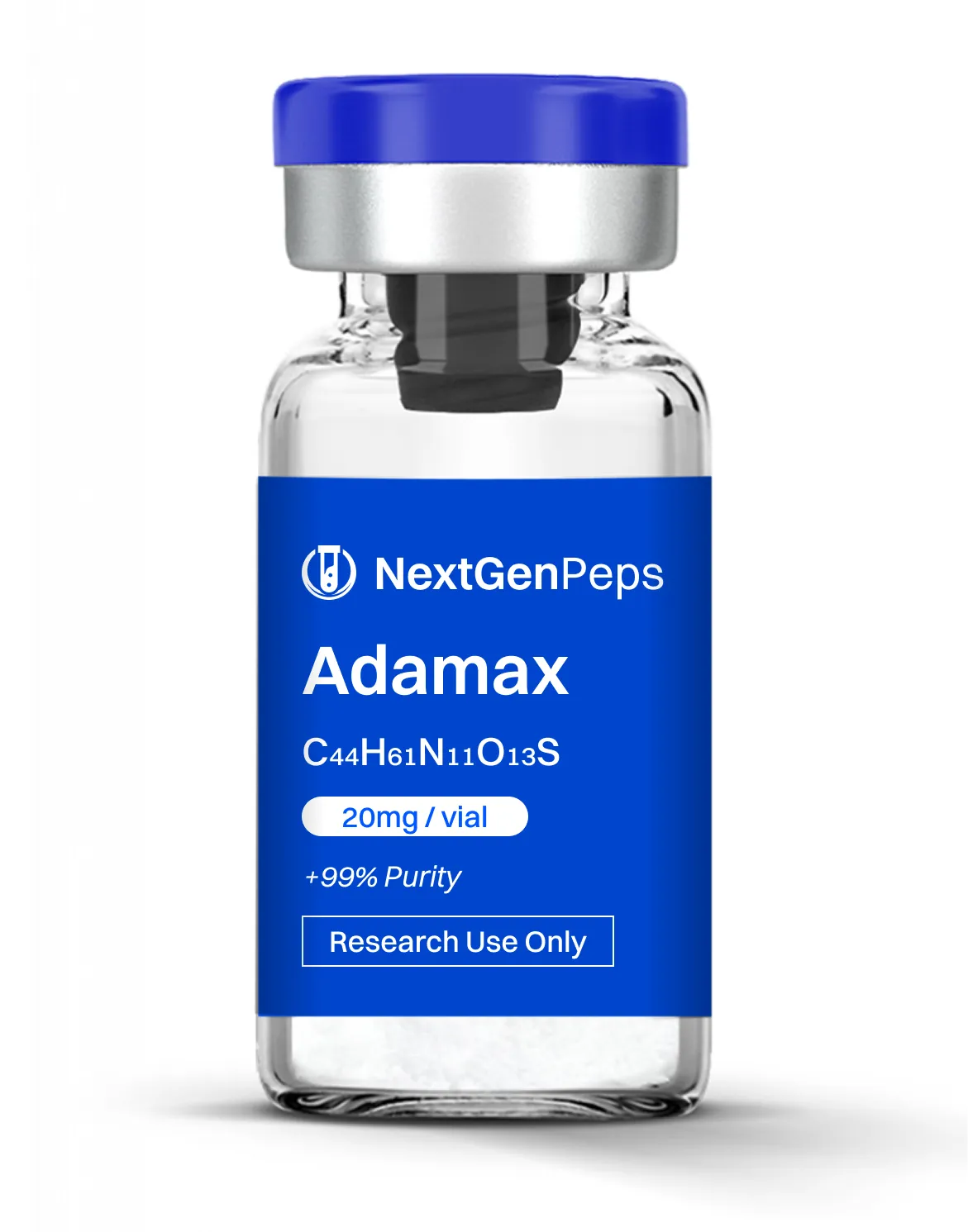






Adamax is a synthetic modified analog of the Semax peptide sequence, incorporating adamantane-related structural elements investigated for its enhanced molecular stability, lipid permeability, and prolonged activity in neuromodulatory and neuroplasticity pathways in preclinical models.
Molecular Composition and Mechanistic Profile
Peptide identity: Adamax is a short-chain synthetic peptide derived from the ACTH(4-10)/Semax core sequence with N-terminal acetylation and C-terminal adamantane-linked modifications
Origin: Designer analog of Semax engineered to improve resistance to enzymatic degradation and membrane permeability relative to the parent structure.
Mechanistically, Adamax has been associated with:
Elevation of brain-derived neurotrophic factor (BDNF) expression and enhanced sensitivity of TrkB receptors, particularly in hippocampal regions, supporting synaptic plasticity and neuronal signaling efficiency in experimental systems.
Modulation of monoaminergic and neurotrophic pathways that influence neural communication, stress-response signaling, and neuroprotective cascades.
Improved structural stability conferred by the adamantane moiety, which is linked to prolonged receptor interaction and resistance to rapid breakdown in in-vitro and animal-model environments.
Effects on synaptic communication and neuroplasticity markers that facilitate investigation of learning and memory related molecular processes.
These overlapping properties position Adamax as a tool compound for studying coordinated neuromodulatory and regenerative signaling in neural tissues.
Integrated Research Applications
Adamax is examined across neural and cognitive-related systems as a modulator of neurotrophic and synaptic homeostasis. Representative domains include:
Neuroplasticity and synaptic models: Investigation of BDNF/TrkB axis activation, synaptic efficiency, and structural plasticity markers in cultured neurons and rodent hippocampal preparations.
Neuroprotective and injury models: Evaluation of cytoprotective signaling under oxidative, ischemic, or excitotoxic challenge conditions in central nervous system tissue preparations.
Cognitive and neuromodulatory pathways: Studies of monoaminergic tone, attention and memory associated signaling networks, and stress adaptation mechanisms in established murine and other laboratory animal systems.
Comparative analog research: Direct comparison with Semax and related ACTH-fragment peptides to isolate the contribution of adamantane modifications to stability, bioavailability across the blood brain barrier, and duration of activity in controlled experimental settings.
Overall, Adamax serves as a research probe for exploring enhanced neurotrophic support and neural signaling resilience at the molecular and systems levels.
Analytical Validation, Formulation, and Storage
NextGenPeps supplies Adamax as a high purity lyophilized research peptide. Typical quality and handling features include:
Purity: ≥99% verified by HPLC.
Formulation: White lyophilized powder in sealed glass vials; intended for reconstitution with appropriate research-grade solvent for experimental use only. No dosing guidance is provided for any organism.
Storage recommendations follow standard peptide practice: Keep lyophilized material in a cool, dark, dry environment; long-term storage at or below −20 °C. Store reconstituted solutions refrigerated, minimize freeze thaw cycles, and use within laboratory-defined stability windows.
These conditions support structural integrity and reproducible experimental outcomes.
NextGenPeps supplies Adamax as a high-purity research peptide intended strictly for controlled laboratory use in vitro or in established animal models, such as murine systems. This compound is not approved as a drug, diagnostic, or dietary ingredient, and is not manufactured, packaged, or marketed for human consumption, self-experimentation, clinical application, or any use outside properly designed and ethically approved research protocols.