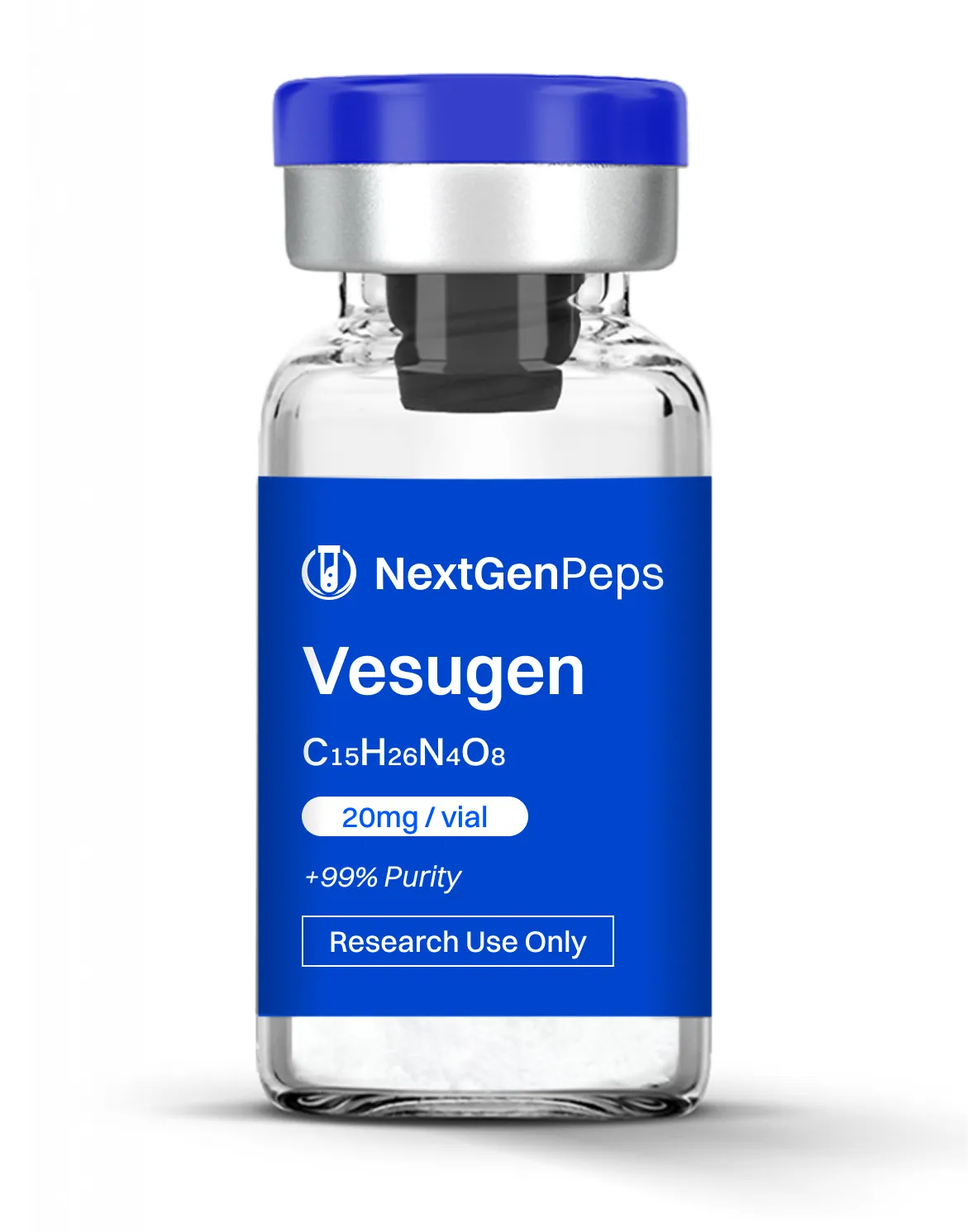






Vesugen is a high-purity, research-grade synthetic tripeptide developed for laboratory studies of vascular endothelial function, vessel wall integrity, and gene-level regulation in target cells.
Molecular Composition and Mechanistic Profile
Vesugen (Lys-Glu-Asp, or KED): A three-amino-acid peptide with the sequence lysine-glutamic acid-aspartic acid. Molecular weight is approximately 390 Da (formula C15H26N4O8). It was designed as a synthetic analog linked to vascular tissue extracts within the Khavinson bioregulator series.
Structural characteristics: The small size supports cell penetration and proposed interactions with nuclear components. Research models suggest it may influence chromatin structure and gene expression related to endothelial cell proliferation (including the Ki-67 marker), connexin-mediated intercellular communication, endothelin-1 balance, and sirtuin pathways. Effects have been examined in systems involving aged endothelium, vascular wall maintenance, and related signaling.
Experimental data from the originating research program indicate associations with normalization of certain endothelial markers, support for proliferative capacity in aging vascular cells, and modulation of genes linked to vessel function and cellular resilience. Some studies have also explored co-administration effects in neurovascular models.
Integrated Research Applications
Vesugen is formulated to support focused investigation of short-peptide effects on vascular pathways. Representative research domains include:
In vitro models examining endothelial cell gene expression, proliferation markers, gap junction proteins, and responses under controlled or aging-related conditions.
Preclinical studies of vascular aging, endothelial dysfunction, atherosclerosis-related changes, and vessel wall integrity in animal models.
Exploratory work on microcirculation, nitric oxide related signaling, and neurovascular interactions.
Using Vesugen as a single, well-characterized entity allows researchers to evaluate tissue-oriented signaling without the variability of complex tissue extracts.
Analytical Validation and Quality Assurance
Commercial research preparations of Vesugen are typically specified at high purity (often ≥98–99%) and characterized by HPLC and mass spectrometry. These methods confirm identity, sequence integrity, and batch consistency for laboratory use.
Storage and Stability Guidelines
Proper storage preserves structural integrity and experimental reproducibility. Typical guidance for lyophilized Vesugen includes:
Room temperature (unopened, lyophilized): Suitable for limited periods when sealed, dry, and protected from light.
Refrigerated storage (2–8 °C): Appropriate for medium-term maintenance of unopened or reconstituted material used over days to weeks.
Frozen storage (≤ −20 °C, preferably lower for long-term): Recommended for extended timelines, with vials kept well sealed to limit moisture and degradation.
Reconstituted solutions are generally stored cold, protected from light, and used within a defined experimental window according to local lab practices to maintain activity and limit contamination risk.