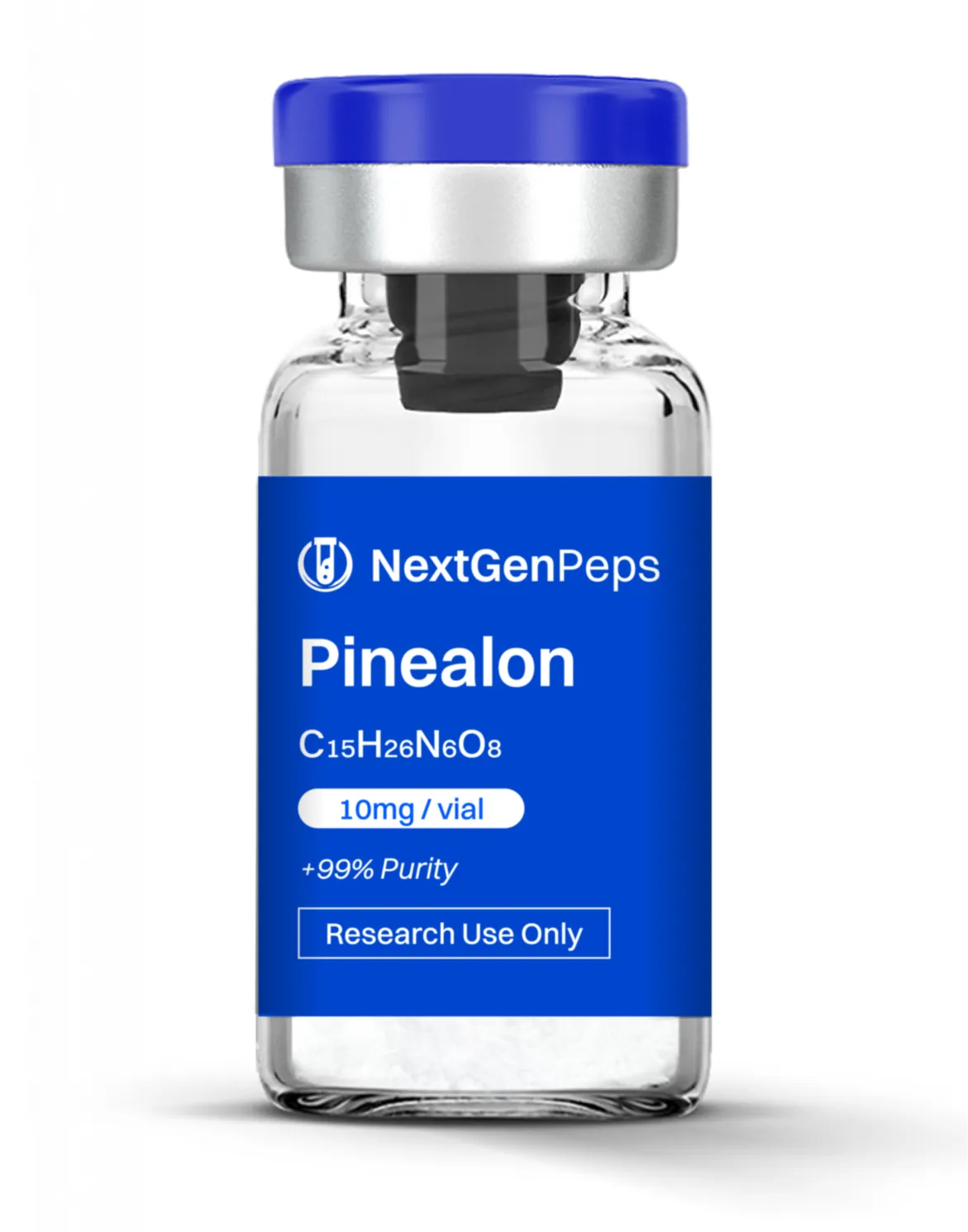






Pinealon Neuroregulatory Tripeptide Research Overview
Pinealon is a high-purity, research-grade synthetic tripeptide bioregulator composed of L‐glutamic acid, L‐aspartic acid, and L‐arginine (Glu‐Asp‐Arg, “EDR”). It is investigated for neuroprotective, nootropic, and circadian-modulating effects, with particular focus on central nervous system aging, oxidative stress resistance, and gene‐level regulation in neural tissues.
Molecular Composition and Mechanistic Profile
Mechanistic features reported in preclinical and technical literature include:
Direct interaction with DNA and chromatin, classifying Pinealon as a peptide bioregulator capable of modulating gene expression patterns related to neuronal metabolism, stress resistance, and brain plasticity.
Neuroprotective activity via reduction of reactive oxygen species (ROS) accumulation, modulation of MAPK/ERK signaling, and anti‐apoptotic effects through caspase‐3 pathway regulation.
Potential to influence serotonin synthesis and other neurotransmitter pathways, with reports of ~1.9‐fold increases in serotonin production in younger neural cell cultures.
These properties support its use as a tool for exploring epigenetic regulation, oxidative stress defense, and neuronal survival.
Integrated Research Applications
Pinealon is used across CNS‐focused and longevity research domains. Representative applications include:
Neuroprotection and ischemia/hypoxia models: Assessment of neuronal survival, ROS levels, mitochondrial function, and apoptosis under hypoxic or oxidative challenge.
Cognitive and behavioral research: Studies of learning, memory retention, attention, and age‐related cognitive decline, often in rodent models.
Circadian rhythm and sleep: Investigation of Pinealon’s influence on pineal‐gland signaling, circadian regulation, and sleep–wake patterns, especially in aging CNS contexts.
Longevity and anti‐aging research: Evaluation of how Pinealon mitigates age‐associated changes in the brain, including structural, oxidative, and behavioral endpoints.
Because of its very short sequence and small size, Pinealon is also studied for membrane and nuclear penetration properties distinct from larger peptides.
Analytical Validation, Formulation, and Storage
Pinealon research products from these vendors are typically supplied as lyophilized powder (e.g., 10 mg or 20 mg per vial).
Form: White to off‐white lyophilized powder intended for reconstitution with
appropriate sterile diluent for in vitro or in vivo research. Storage and care (aligned with your standard wording):
Store vials in a cool, dry place away from light while lyophilized.
After constitution, refrigerate the solution; for longer‐term storage, freezing atapproximately −20 °C is recommended to maintain integrity.
NextGenPeps provides Pinealon strictly for laboratory research purposes. It is not approved for human use and is not intended for consumption, diagnosis, or treatment outside controlled and ethically reviewed experimental settings.