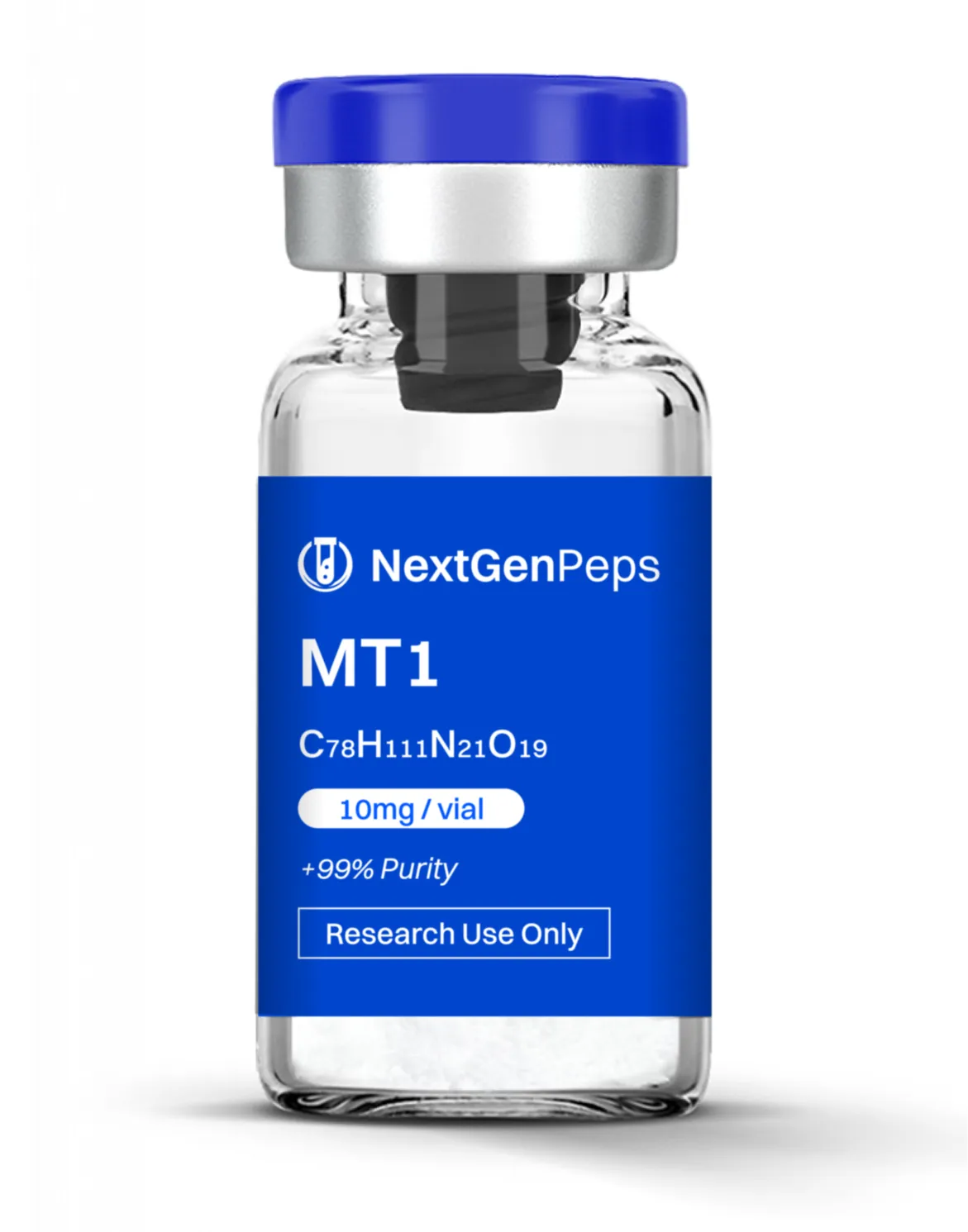






MT‐1 Research Peptide Overview
MT‐1 (also known as Afamelanotide and Melanotan I) is a synthetic 13‐amino acid analog of alpha melanocyte stimulating hormone (α‐MSH), originally developed at the University of Arizona in the 1980s. It has become one of the more well studied peptides in skin and melanocortin research, investigated for its role in melanin production, photoprotection, and broader anti inflammatory signaling.
MT‐1 works primarily by binding to the melanocortin‐1 receptor (MC1R), which sits on the surface of melanocytes and other cell types throughout the body. That binding triggers a rise in cyclic AMP, which then activates a signaling chain that drives melanin production and a range of protective cellular responses:
Eumelanin synthesis: MC1R activation stimulates melanocytes to produce eumelanin, the darker, more photoprotective form of melanin. This increases pigmentation and builds a natural barrier against UV induced cellular damage.
DNA repair support: Beyond pigmentation, elevated eumelanin production appears to support nucleotide excision repair pathways, helping cells deal with UV induced DNA damage more efficiently.
Anti‐inflammatory activity: MC1R signaling also has meaningful effects on immune cells, reducing pro‐inflammatory cytokine output and making MT‐1 relevant to research beyond skin biology.
Antioxidant response: Eumelanin itself scavenges free radicals and absorbs UV energy, adding an antioxidant layer on top of the receptor level signaling effects.
Integrated Research Applications
MT‐1 has found its way into a fairly diverse set of research areas, though skin and photobiology remain its primary home:
Photoprotection and UV research: MT‐1 is most studied for its ability to increase melanin density and protect skin cells from UV damage in cell and animal models. It is one of the few peptides in this space to have translated into a clinically approved product.
Erythropoietic protoporphyria: The approved pharmaceutical form, Scenesse, is used in patients with this rare genetic disorder who experience severe burning pain from even brief light exposure. Clinical trials across the EU and US showed meaningful increases in pain free light exposure time.
Polymorphic light eruption and actinic keratosis: MT‐1 has been studied in Phase 3 trials for polymorphic light eruption and Phase 2 trials for actinic keratosis and squamous cell carcinoma, reflecting interest in its broader photoprotective potential.
Inflammatory and autoimmune models: Because MC1R is expressed on immune cells as well as skin cells, researchers have explored MT‐1 in inflammatory and fibrotic models, where its receptor signaling appears to reduce inflammatory markers and limit tissue remodeling.
Neuroscience and metabolic research: Earlier work found that melanocortin receptor activation by MT‐1 also touches on appetite, metabolism, and neurological signaling, areas that continue to attract interest as the broader melanocortin system is better understood.
Analytical Validation, Formulation, and Storage
Research‐grade MT‐1 is supplied as a lyophilized white powder in glass vials at ≥99% purity, verified by HPLC with a batch‐specific certificate of analysis included.
Formulation: Lyophilized powder for reconstitution with an appropriate aqueous solvent, supplied without dosing instructions of any kind.
Storage follows standard peptide handling practice:
Store lyophilized vials at or below −20 °C in a cool, dark, dry environment.
After reconstitution, refrigerate at 2–8 °C, avoid repeated freeze thaw cycles, and use within laboratory defined timeframes.
NextGenPeps supplies MT‐1 as a high purity research peptide intended strictly for controlled laboratory use in vitro or in established animal models. This compound is not approved as a drug, diagnostic, or dietary ingredient in this context, and is not manufactured, packaged, or marketed for consumption, self experimentation, clinical application, or any use outside properly designed and ethically approved research protocols.