





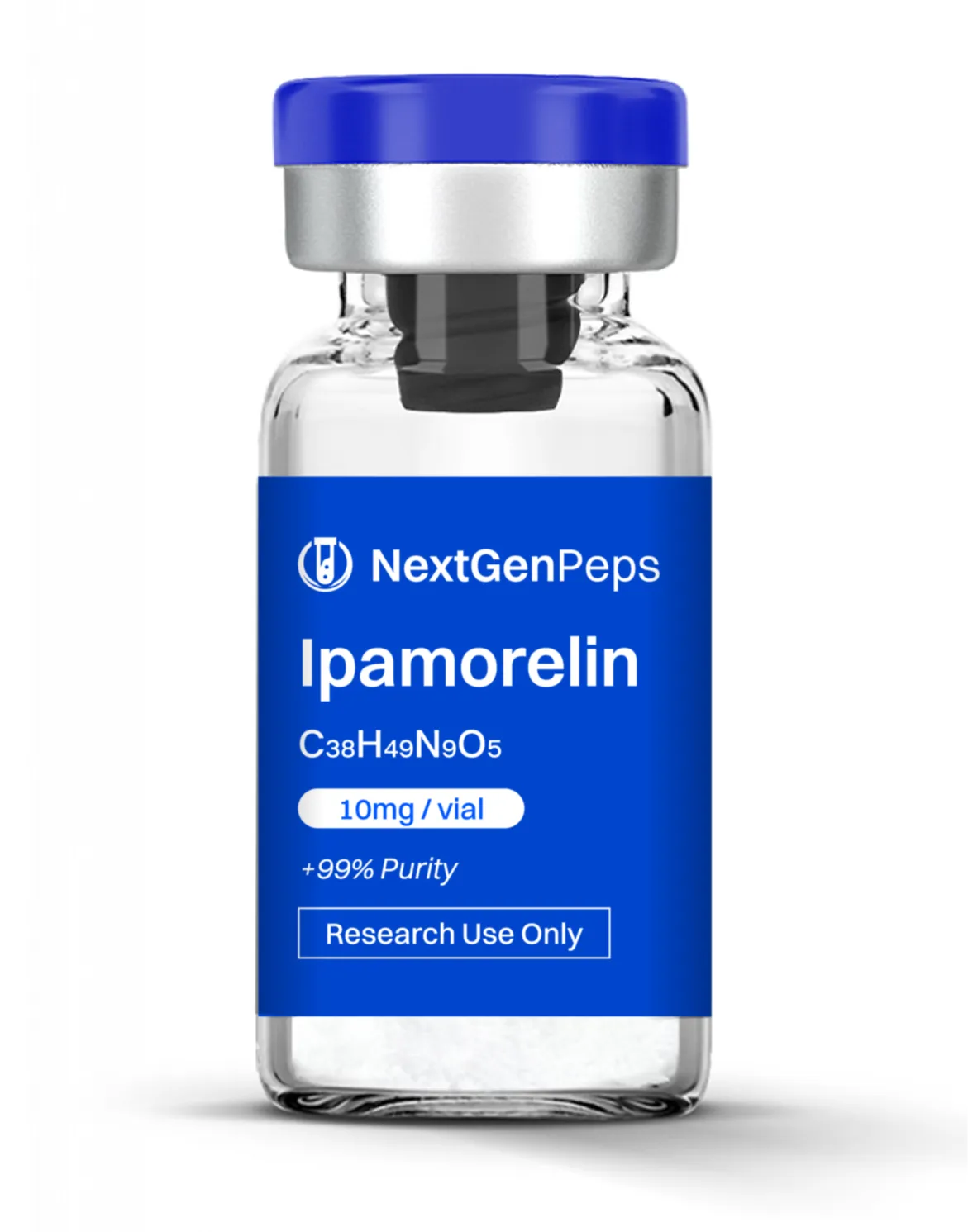
CJC-1295
The CJC-1295 + Ipamorelin system is a research-grade peptide combination designed to model coordinated modulation of the growth hormone (GH)–insulin‐like growth factor 1 (IGF‐1) axis through dual, yet complementary, receptor pathways in preclinical settings.
Molecular Identity and Mechanistic Profile
CJC-1295 (no DAC / Mod GRF 1‐29): A synthetic 29–amino acid analog of growth hormone–releasing hormone (GHRH) that binds selectively to GHRH receptors on pituitary somatotrophs, promoting pulsatile GH release and downstream IGF‐1 signaling in experimental models.
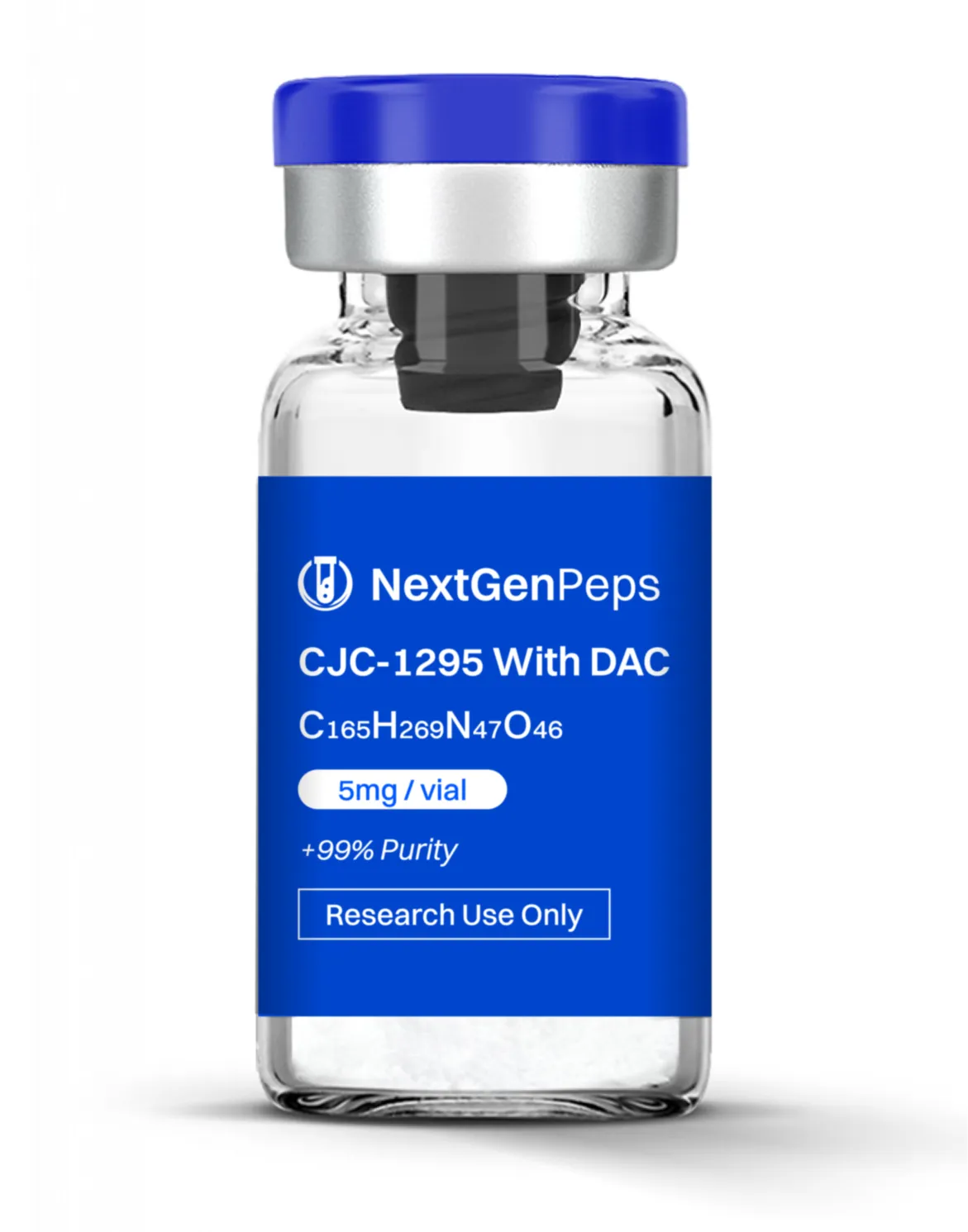
CJC-1295 with DAC: Incorporates a Drug Affinity Complex (DAC) moiety that forms covalent bonds with circulating albumin, extending systemic half‐life into the multi‐day range and enabling sustained GH and IGF‐1 elevations in long‐term studies.
These peptides allow researchers to probe how fast-onset, short‐acting ghrelin receptor stimulation (Ipamorelin) interacts with GHRH receptor–mediated signaling (CJC‐1295) under both short‐window and extended‐release conditions (with DAC) in controlled models.
Integrated Experimental Rationale and Applications
CJC‐1295 shapes the amplitude and duration of GH pulses and IGF‐1 levels. Experimental domains include:
In vitro and ex vivo models assess receptor selectivity, downstream cAMP signaling, and transcriptional changes in bone, muscle, and metabolic tissues.
In vivo preclinical studies evaluating GH/IGF‐1–linked outcomes such as lean mass preservation, nitrogen balance, and metabolic efficiency under catabolic or stress conditions.
Pharmacokinetic–pharmacodynamic modeling contrasting rapid Ipamorelin clearance (short terminal half‐life) with the prolonged exposure profile of CJC‐1295, particularly in DAC‐modified formulations.
These experimental paradigms support investigation of coordinated effects on muscle development, bone modeling, and glucose–insulin dynamics within a unified protocol rather than separate peptide administrations.
Representative Research Observations (Preclinical/Experimental)
Across laboratory and preclinical literature cited by suppliers, CJC‐1295 and Ipamorelin exposure has been associated with:
Dose‐dependent increases in circulating GH and IGF‐1, with CJC‐1295 achieving sustained IGF‐1 elevation for multiple days following repeated dosing in early human trials and advanced animal models.
Transient GH spikes following Ipamorelin administration, consistent with a short half‐life and tightly delimited GH release window, enabling precise timing studies of GH pulsatility.
Potential improvements in lean body mass indices, muscle repair dynamics, and bone‐related endpoints in test systems, suggesting a role for these peptides as tools in modeling anabolic and anti‐catabolic environments.
Modulation of metabolic and nitrogen‐handling markers, including evidence of nitrogen conservation and altered urea cycle enzyme expression in catabolic models exposed to Ipamorelin, particularly when paired with CJC‐1295.
These findings support the use of the blend to interrogate how GH secretagogue patterns influence tissue remodeling, substrate utilization, and systemic homeostasis at multiple time scales.
DAC versus Non‐DAC CJC-1295 in Research Design
CJC-1295 (no DAC): Shorter acting, closer to native GHRH signaling dynamics, often chosen where investigators wish to preserve tightly pulsatile GH secretion and minimize prolonged receptor engagement.
CJC-1295 w/ DAC: Engineered via DAC–albumin conjugation to extend peptide residence time, supporting experimental models that require sustained GH stimulation across days rather than hours.
Pairing Ipamorelin with non‐DAC CJC‐1295 emphasizes acute, controllable pulses from both GHSR and GHRH receptors, whereas substituting or adding CJC‐1295 w/ DAC enables comparison of short‐burst versus extended‐profile GH modulation in otherwise similar experimental frameworks.
Analytical Characterization, Handling, and Regulatory Status
Commercial research suppliers typically specify ≥99% peptide purity verified by high‐performance liquid chromatography (HPLC) and mass spectrometry (MS), supporting batch‐to‐batch reproducibility and structural identity in laboratory use. Standard guidance indicates storage of lyophilized material at low temperature, with reconstituted solutions kept refrigerated and protected from light for short‐term experimental use, and deep‐freeze conditions recommended for long‐term preservation.
These compounds are sold strictly as Research Use Only (RUO) agents; they are not FDA‐approved drugs and are not intended for human or veterinary administration, clinical therapy, or diagnostic procedures of any kind