






Collagen synthesis (GHK-Cu)
GHK-Cu stimulated collagen synthesis in fibroblast cultures at picomolar to nanomolar concentrations.
Stimulation of collagen synthesis in fibroblast cultures by GHK-Cu →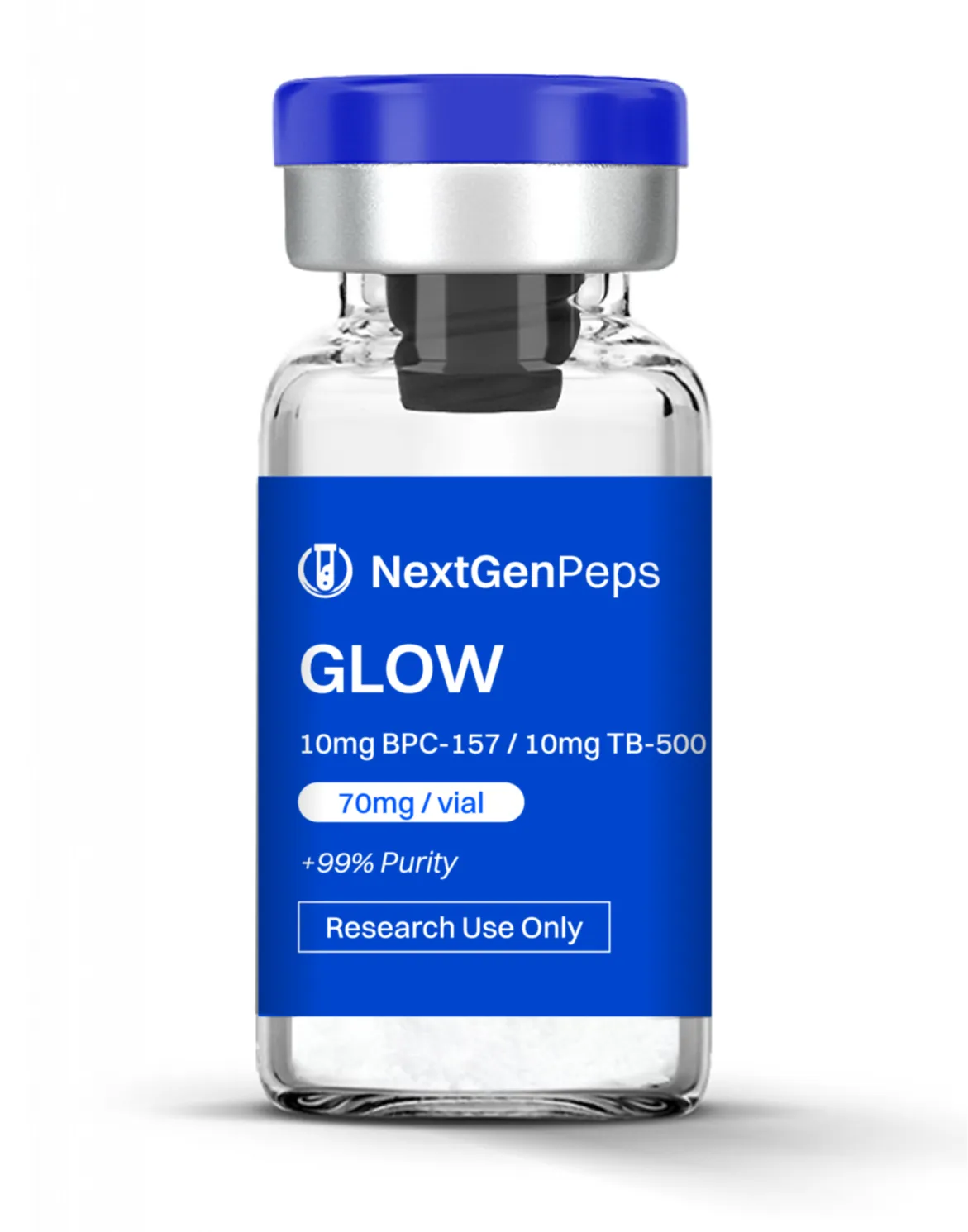
$107.00each · 70mg / Vial
4.8· 4 reviewsout of 5In stock
Buy GLOW peptide, a research blend of GHK-Cu, BPC-157 and TB-500, in 70 mg and 50 mg vials. 99%+ HPLC purity, public COA on every lot. Ships within 24 hours.
Size
Bundle & Save
Need more?
Secure checkout · Visa · Mastercard · American Express · Discover · PayPal · Venmo · Apple Pay
99.71%
Reported purity · Tested by Bioviridian
GLOW, in brief. GLOW is a fixed-ratio blend of three peptides in one vial: GHK-Cu, BPC-157 and TB-500. No published study has tested the three together, so the results below come from each peptide on its own in cell and animal work: more collagen synthesis in fibroblast cultures, more tendon cell migration and faster skin regrowth in rat wounds. GLOW is a research tool rather than a characterised formulation. NextGenPeps supplies GLOW as a 70 mg or 50 mg lyophilised research material for laboratory use only.
Strength. 70 mg (50 mg GHK-Cu, 10 mg BPC-157, 10 mg TB-500) or 50 mg (30 mg GHK-Cu, 10 mg BPC-157, 10 mg TB-500) of lyophilised powder in a sealed vial.
Appearance. Blue to violet lyophilised powder.
Identity and purity. 70 mg: identity by LC-MS/MS and purity of 99.71% by RP-HPLC on the current lot (September 25, 2026). 50 mg: identity and purity by UHPLC-MS, reported per component at 99.66%, 99.80% and 99.72% (January 15, 2026). Both tested by independent labs.
Endotoxin. Under 0.05 EU/mL on the current 70 mg lot, tested per USP <85>.
Certificate of analysis. Every lot is tested by an independent lab and the certificate of analysis is published in the NextGenPeps COA library.
Fulfilment. Ships within 24 hours from the United States, with free US shipping on orders over $150.
GLOW is not a single molecule. It combines GHK-Cu, BPC-157 and TB-500 in one vial at a fixed ratio. KLOW is the same three plus KPV. The full write-up, including how KLOW differs from GLOW, is in What Is KLOW Peptide? The 4-Peptide Blend and What It Did in Animal Studies.
No animal study of GLOW itself is published. The results below are for each component on its own.
GHK-Cu (cell work): collagen synthesis rose in fibroblast cultures at picomolar to nanomolar concentrations.[1]
BPC-157 (cell work): tendon fibroblasts showed more outgrowth, better survival under oxidative stress and more migration in vitro.[2]
BPC-157 (rodent work): a review of rodent studies links it to new vessel growth and the nitric oxide system.
TB-500 (thymosin beta-4): in rat full-thickness wounds, re-epithelialization rose 42% at day 4 and up to 61% at day 7, with more collagen deposition and angiogenesis.[3]
Lyophilised: store the sealed vial at or below -20 °C, protected from light.
Reconstituted: hold at 2 to 8 °C, protected from light. Reconstitute with sterile or bacteriostatic water.
Avoid repeated freeze-thaw cycles. All three components dissolve together at a fixed ratio.
Keep solutions away from chelators such as EDTA and reducing agents, which can strip copper from GHK-Cu. A clearly different color from blue-violet is a reason to check the lot.
No. None of the three components is an FDA-approved drug, and this material is supplied for research use only, not as a drug, cosmetic, supplement or diagnostic. In April 2026 the FDA said it would remove BPC-157, TB-500 (defined there as the LKKTETQ fragment, not the full-length protein in GLOW) and injectable GHK-Cu from Category 2 of its compounding list, which did not place them on the list of substances that may be compounded.
Research Use Only. The statements made within this website have not been evaluated by the US Food and Drug Administration. These materials are not intended to diagnose, treat, cure or prevent any disease and are not intended for human or veterinary use. Studies described on this page are reported for scientific context and are not guidance of any kind.
GHK-Cu stimulated collagen synthesis in fibroblast cultures at picomolar to nanomolar concentrations.
Stimulation of collagen synthesis in fibroblast cultures by GHK-Cu →BPC-157 increased tendon fibroblast outgrowth, survival under oxidative stress and migration in vitro.
BPC 157 promotes tendon healing via tendon outgrowth, cell survival and migration →A review of rodent studies links BPC-157 to new vessel growth (angiogenesis) and the nitric oxide system.
BPC 157 and blood vessels →Thymosin beta-4 increased re-epithelialization by 42% at day 4 and up to 61% at day 7 in rat full-thickness wounds, with more collagen deposition and angiogenesis.
Thymosin beta4 accelerates wound healing →Maquart FX, Pickart L, Laurent M, et al. · FEBS Lett 1988 · PubMed
Chang CH, Tsai WC, Lin MS, Hsu YH, Pang JH · J Appl Physiol 2011 · PubMed
Malinda KM, Sidhu GS, Mani H, et al. · J Invest Dermatol 1999 · PubMed
GLOW is supplied as lyophilized powder in a sealed, labelled vial, 70 mg or 50 mg total peptide, with the lot's certificate of analysis published in the NextGenPeps COA library. Please inspect the sealed package when it arrives and contact support promptly if the package or labeling appears damaged.
Orders ship within 24 hours from the United States via USPS for orders placed before the 5:00 PM PDT cutoff. Transit times are typically 3–7 business days, depending on destination and carrier conditions. Tracking information is provided when available.
Store lyophilized GLOW at −20 °C or below in the sealed vial, protected from light. After reconstitution with sterile or bacteriostatic water, hold the solution at 2–8 °C, protected from light, and avoid repeated freeze-thaw cycles.
Due to the nature of research materials, NextGenPeps orders are final and are not eligible for refunds, returns, or exchanges. Review the shipping and reship policies before ordering.
No. NextGenPeps materials are supplied strictly for laboratory research and development use and are not intended for human or animal consumption, clinical use, diagnostic use, cosmetic use, or dietary use.
4.8out of 5 · 4 reviews
Very reliable and impressive, COA purity matches the label.
Liam I.
Distribution of GHK-Cu, BCP157, and TB500 is well calculated and maintains high purity for each part of the blend.
Mackenzie E.
Stayed clear and transparent during reconstitution every single time
Mateo C.
Everything arrived undamaged, with materials sealed from anything that could taint the vial
Peter Y.
GLOW is a research blend of three peptides in one lyophilized vial: GHK-Cu (a copper-binding tripeptide found in human plasma), BPC-157 (a 15-residue peptide from a gastric protein) and TB-500 (synthetic full-length thymosin beta-4). Each has its own preclinical literature on tissue repair. GLOW is not an approved drug, and no published study has tested the three together.
The NextGenPeps 70 mg vial contains 50 mg GHK-Cu, 10 mg BPC-157 and 10 mg TB-500. The 50 mg vial contains 30 mg GHK-Cu, 10 mg BPC-157 and 10 mg TB-500. GHK-Cu is the majority by mass and gives the powder its blue color. Each lot's purity and identity are on its certificate of analysis.
In research, each component is studied for a different stage of tissue repair: BPC-157 for blood supply and the early injury response, thymosin beta-4 for cell migration and new vessel growth, and GHK-Cu for collagen and extracellular matrix remodeling. These findings come from cell and animal studies of the single peptides. The blend's combined effect has not been studied.
NextGenPeps supplies GLOW in 70 mg and 50 mg vials for laboratory research, with an independent certificate of analysis for every lot and endotoxin testing on the 70 mg vial. Orders ship within 24 hours from the United States. GLOW is sold for in vitro and approved animal research only.
GLOW is reconstituted with sterile or bacteriostatic water following the laboratory's own procedure: add the diluent slowly down the inside wall of the vial and swirl gently rather than shaking. All three components dissolve together into a blue solution with a fixed ratio. Store the solution at 2 to 8 °C, protected from light.
There are no safety studies of the blend. Thymosin beta-4 has been tolerated in small phase 2 trials of topical and eye-drop formulations, and topical GHK-Cu is a common cosmetic ingredient, but BPC-157 has almost no controlled clinical safety data. None of the components is FDA-approved, and GLOW is sold for research use only.
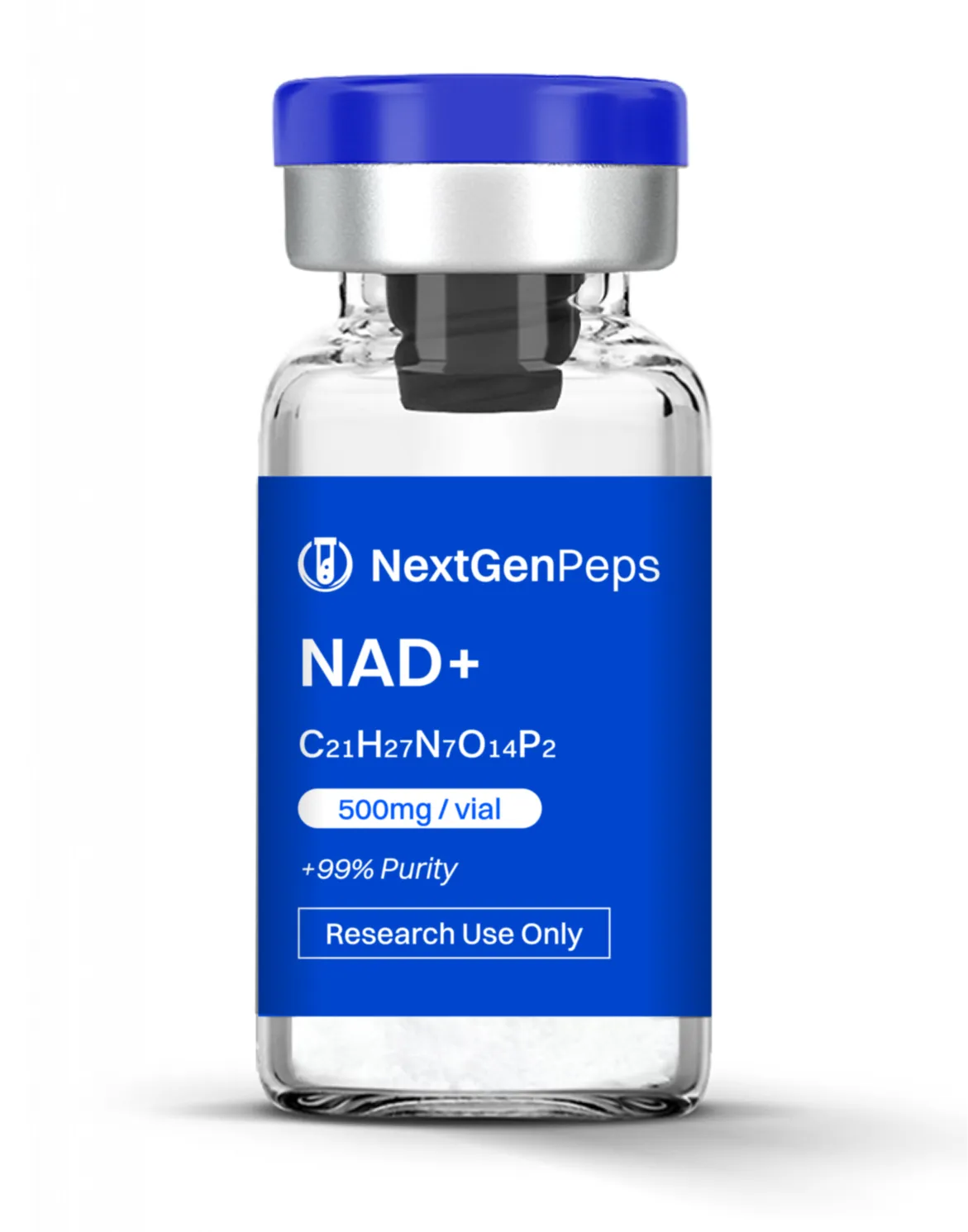
✓ 99.72% purity
$89.00$71.00
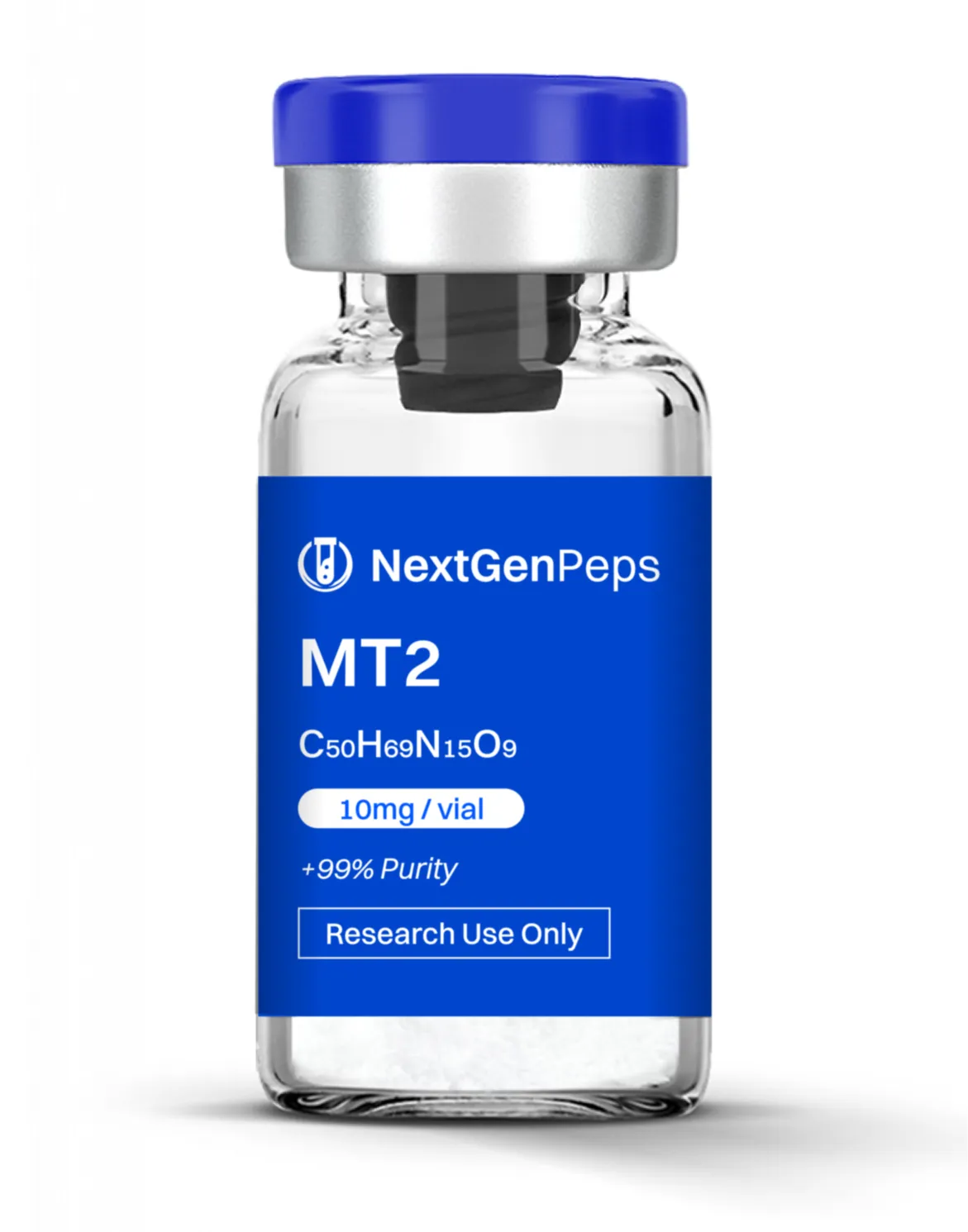
✓ 99.81% purity
$98.00$78.00
✓ 99.715% purity
$44.00$35.00
✓ 99.79% purity
$52.00$42.00
✓ 98.848% purity
$52.00$42.00