


Oral BPC-157 and fistula healing
BPC-157 given in rats' drinking water healed colon and skin defects and closed colocutaneous fistulas, as it did when injected.
Klicek et al., J Pharmacol Sci 2008 →
$110.00each
4.7· 3 reviewsout of 5In stock
250mcg BPC-157 / 250mcg TB-500 / 1250mcg GHK-Cu
GLOW Capsules: the GLOW research blend in oral form, 1,250 mcg GHK-Cu, 250 mcg BPC-157 and 250 mcg TB-500 per capsule. Ships within 24 hours from the US.
Bundle & Save
Need more?
Secure checkout · Visa · Mastercard · American Express · Discover · PayPal · Venmo · Apple Pay
GLOW Capsules, in brief. Repairing damaged tissue happens in stages: blood supply returns, cells move in and new vessels form, then collagen is laid down to hold the repair together. GLOW is a blend of three peptides, each studied for a different one of those stages. GHK-Cu, a copper-binding tripeptide found in plasma, drives collagen synthesis in fibroblast cultures [1]. BPC-157, a 15-residue fragment of a gastric protein, is studied for blood vessel formation and the early injury response [2]. TB-500 (thymosin beta-4) is studied for cell migration and new vessel growth [3]. GLOW Capsules put the same three peptides, at the same 5 : 1 : 1 ratio as the GLOW 70 mg vial, into an oral capsule: 1,250 mcg GHK-Cu, 250 mcg BPC-157 and 250 mcg TB-500 each. The animal wound results for these peptides come almost entirely from topical or injected routes; oral data exist mainly for BPC-157 in rats, and no study has tested the blend by any route. NextGenPeps supplies GLOW Capsules for laboratory use only.
GLOW Capsules are the GLOW peptide blend in a fixed-amount oral capsule rather than a vial of powder. The three peptides and their ratio are the same as in the GLOW 70 mg vial; only the format, the amount per unit and the route a study would use are different.
For the background on the blend itself, what GLOW peptide is and how each component fits the repair sequence, see the GLOW vial page. This page covers what is specific to the capsule:
Composition. Each capsule is stated to hold 1,250 mcg GHK-Cu, 250 mcg BPC-157 and 250 mcg TB-500, 1,750 mcg of peptide in total.
Route. A capsule suits oral-route animal designs. Most published wound results for the three peptides used topical or injected routes, so they do not transfer automatically to oral work.
Evidence. Of the three, only BPC-157 has a body of oral rat studies. Oral data on GHK-Cu and thymosin beta-4 in repair models are thin, and the oral blend has never been studied.
Three peptides, at a 5 : 1 : 1 ratio by mass (Figure 1). The product listing states 1,250 mcg of GHK-Cu, 250 mcg of BPC-157 and 250 mcg of TB-500 per capsule. GHK-Cu is about 71% of the peptide mass, and BPC-157 and TB-500 about 14% each, which is the same split as the GLOW 70 mg vial (50 mg, 10 mg and 10 mg). One capsule holds 1/40 of that vial's peptide mass.
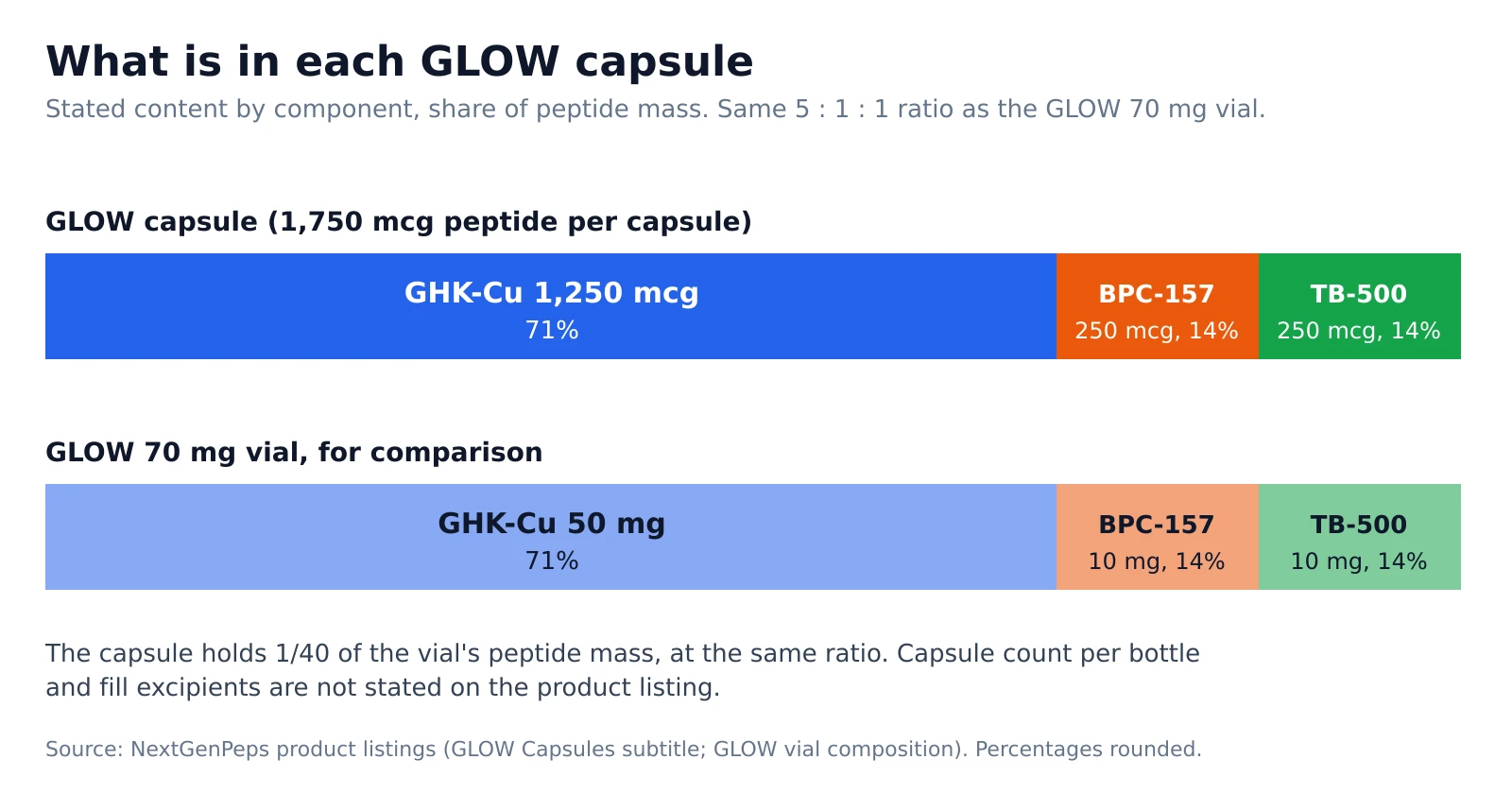
Figure 1. What is in each GLOW capsule. Stated peptide content per capsule, with the GLOW 70 mg vial for comparison. Source: NextGenPeps product listings.
What the listing does not state is also worth recording. The number of capsules per bottle, the capsule shell material and any fill excipients are not given. The listing does not specify whether the TB-500 is full-length thymosin beta-4, as in the GLOW vial, or the seven-residue LKKTETQ fragment that also goes by that name.
In principle, the same way as the vial: each peptide acts on a different stage of repair. GHK-Cu stimulates collagen synthesis in fibroblasts at picomolar to nanomolar concentrations [1]. BPC-157 work in rodents links it to blood vessel formation and the nitric oxide system [2]. Thymosin beta-4 binds actin and is linked to cell migration, new vessel growth and lower inflammation [3].
The capsule adds a question the vial does not: how much of each peptide survives the gut. Most peptides are broken down by stomach acid and digestive proteases before they can be absorbed intact. BPC-157 is derived from a gastric juice protein and is unusually stable in gastric juice for a peptide, which is why an oral rat literature exists for it [7,8]. GHK-Cu is a small tripeptide, and thymosin beta-4 is a 43-residue protein; neither has a comparable record of oral repair studies.
What the oral route does and does not show. Oral BPC-157 has produced healing effects in rat models from the same research group that reported its injected effects [7,8]. For GHK-Cu and thymosin beta-4, oral activity in repair models has not been established, and for the three-peptide capsule there are no data at all.
Wounds closed faster in rats treated with each peptide than in untreated or vehicle-treated rats (Figure 2). These are single-peptide studies, and every number below comes from a topical or injected route, not from oral dosing.
GHK-Cu, topical, ischemic wounds. In 24 rats, wounds treated with a GHK-Cu gel shrank by 64.5% by day 13, against 45.6% with the gel vehicle alone and 28.2% untreated. Treated wounds also had lower TNF-alpha, MMP-2 and MMP-9 [4].
BPC-157, topical hydrogel, alkali burns. In rats (10 per group), burns treated with BPC-157 hydrogel were 76.9% to 81.6% closed at day 18, depending on concentration, against 60.0% with plain hydrogel [5].
Thymosin beta-4, topical or injected, full-thickness wounds. Re-epithelialization, the regrowth of the skin's surface layer, was 42% greater than with saline at day 4 and up to 61% greater at day 7, with more collagen deposition and new vessel growth [6].
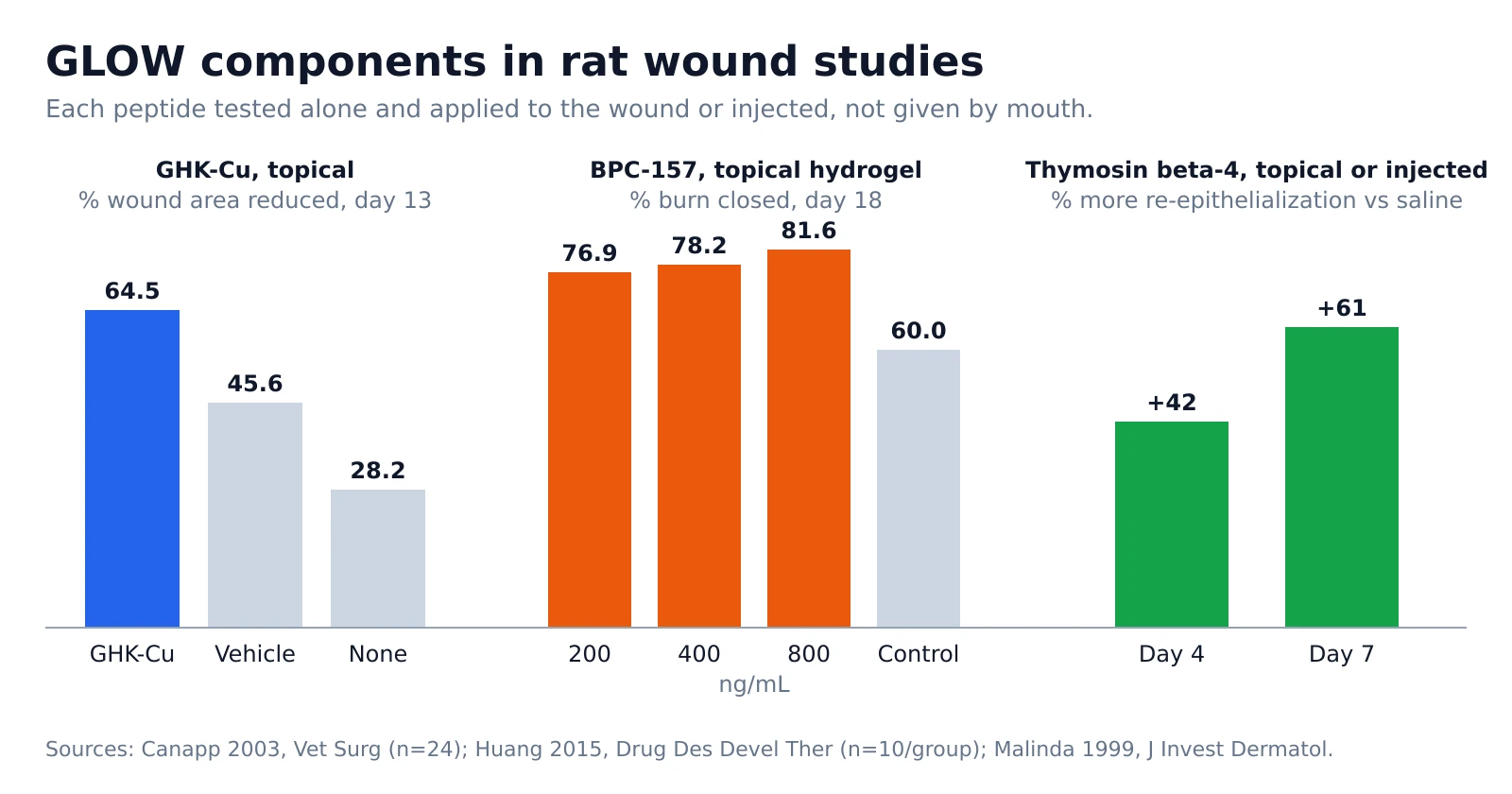
Figure 2. GLOW components in rat wound studies. Each peptide was tested alone and applied to the wound or injected. Sources: Canapp 2003 [4], Huang 2015 [5], Malinda 1999 [6].
The oral evidence for the capsule's components rests on BPC-157. In rats with surgically created colon-to-skin fistulas, BPC-157 given in drinking water healed the colon and skin defects and closed the fistulas, as it did when injected; the effect held when nitric oxide synthesis was blocked [7]. In rats left with short bowel after a large small-intestine resection, BPC-157 in drinking water or by injection reversed the post-operative weight loss and increased villus height, crypt depth and muscle thickness over four weeks [8]. Both studies come from the Zagreb group that produced most BPC-157 research, and their abstracts report direction of effect rather than effect sizes.
The capsule and the GLOW vial hold the same three peptides at the same ratio, but they serve different study designs.
Route studied. The vial is lyophilized powder reconstituted into solution, the form used in the injected and topical animal studies above. The capsule is an oral format, matching the drinking-water designs used in oral BPC-157 rat work.
Amount per unit. One capsule holds 1,750 mcg of peptide; the 70 mg vial holds 40 times that. Capsules give fixed units; a reconstituted vial can be divided to any volume.
Evidence base. Injected and topical routes carry most of the published animal data for all three components. The oral route has rat data for BPC-157 only.
For protocols that need to vary one component independently, the single peptides (GHK-Cu, BPC-157 or TB-500) are the better fit than either blend. KLOW is the same blend with KPV added as an anti-inflammatory arm.
Product: GLOW Capsules, oral capsule format of the GLOW three-peptide blend
Components per capsule: GHK-Cu 1,250 mcg; BPC-157 250 mcg; TB-500 250 mcg (as stated on the product listing)
Ratio: 5 : 1 : 1 by mass, the same as the GLOW 70 mg vial
GHK-Cu: Glycyl-L-histidyl-L-lysine copper(II); C14H22CuN6O4; about 401.9 g/mol
BPC-157: Gly-Glu-Pro-Pro-Pro-Gly-Lys-Pro-Ala-Asp-Asp-Ala-Gly-Leu-Val; C62H98N16O22; about 1419.5 g/mol
TB-500: Thymosin beta-4 peptide; whether full-length (43 residues) or the LKKTETQ fragment is not stated for the capsule
Form: Oral capsule; capsule count, shell and excipients not stated
Identity and purity: Every lot is tested by independent labs and the certificate of analysis is published in the NextGenPeps COA library
Regulatory status: No component is FDA-approved; research use only
None of the three components is an FDA-approved drug, in any form. On April 15, 2026, the FDA said it would remove twelve peptides, including BPC-157, TB-500 (defined there as the LKKTETQ fragment) and injectable GHK-Cu, from Category 2 of its interim list of bulk substances that raise significant safety concerns for pharmacy compounding; removal did not place them on the list of substances that may be compounded [9]. At its July 23, 2026 meeting, the FDA's Pharmacy Compounding Advisory Committee voted 8 to 6, with one abstention, to recommend adding BPC-157 and the TB-500 fragment to that list. The votes are not binding, and FDA must still complete rulemaking [10].
For sport, the World Anti-Doping Agency prohibits BPC-157 as a non-approved substance and thymosin beta-4 and its derivatives, including TB-500, as peptide hormones and growth factors [11].
Oral-route questions that the vial cannot answer directly.
Oral delivery of repair peptides. Whether a fixed-ratio oral blend reproduces any of the effects reported for injected or topical single peptides in animal models.
Gastrointestinal repair models. The area where oral BPC-157 has its strongest record, including fistula and short bowel models in rats [7,8].
Peptide stability in the gut. How much intact GHK-Cu, BPC-157 and thymosin beta-4 survives simulated gastric and intestinal conditions.
Route comparison. Side-by-side designs comparing oral capsules with the reconstituted GLOW vial at matched peptide amounts.
Every lot is tested by independent labs and the certificate of analysis is published in the NextGenPeps COA library.
Stated composition. 1,250 mcg GHK-Cu, 250 mcg BPC-157 and 250 mcg TB-500 per capsule.
Fulfilment. Orders ship within 24 hours from the United States, with free US shipping on orders over $150.
Research use only. GLOW Capsules are sold strictly for in vitro and approved animal research. They are not for human or veterinary use and are not sold as a drug, cosmetic, dietary product or diagnostic.
Storage. Keep capsules sealed in the original container at 2 to 8 °C, dry and protected from light. Close the container promptly after opening to limit moisture uptake.
Color. GHK-Cu is a blue copper complex, so the fill may look blue to violet depending on excipients. A clearly different color is a reason to check the lot.
In vitro use. Capsule contents include whatever fill excipients the capsule carries, which are not stated. For cell work where excipients could interfere, the lyophilized GLOW vial or the single peptides are cleaner starting materials.
Compatibility. Keep dissolved capsule contents away from chelators such as EDTA and reducing agents, which can strip copper from GHK-Cu.
Dosing. No dosing instructions are supplied, and none should be inferred from the studies above.
Oral activity of the blend. No study has given GHK-Cu, BPC-157 and TB-500 together by mouth, or by any other route.
Oral GHK-Cu and thymosin beta-4. Their published repair effects come from topical and injected routes; how much survives oral delivery intact is not established.
Which TB-500 the capsule holds. Full-length thymosin beta-4 and the LKKTETQ fragment share the name, and the capsule listing does not specify which.
Stability in capsule form. Published stability data cover each peptide alone, not three peptides with copper(II) in a dry capsule fill.
Research Use Only. The statements made within this website have not been evaluated by the US Food and Drug Administration. These materials are not intended to diagnose, treat, cure or prevent any disease and are not intended for human or veterinary use. Studies described on this page are reported for scientific context and are not guidance of any kind.
BPC-157 given in rats' drinking water healed colon and skin defects and closed colocutaneous fistulas, as it did when injected.
Klicek et al., J Pharmacol Sci 2008 →After extensive small bowel resection, BPC-157 in drinking water reversed weight loss and increased villus height, crypt depth and muscle thickness in rats over 4 weeks.
Sever et al., Dig Dis Sci 2009 →In 24 rats, topical GHK-Cu reduced ischemic wound area by 64.5% by day 13, against 45.6% with vehicle and 28.2% untreated. Topical route, not oral.
Canapp et al., Vet Surg 2003 →Maquart FX, Pickart L, Laurent M, et al. · FEBS Lett 1988 · PubMed · DOI
GHK-Cu stimulated collagen synthesis in fibroblast cultures from picomolar concentrations, peaking at 1 nM, without changing cell number. In vitro only.
Seiwerth S, Brcic L, Vuletic LB, et al. · Curr Pharm Des 2014 · PubMed
Review of rodent work linking BPC-157 to angiogenesis and the nitric oxide system. Written by the group that produced most of the BPC-157 literature.
Goldstein AL, Hannappel E, Kleinman HK · Trends Mol Med 2005 · PubMed
Review of thymosin beta-4's actin binding and its links to cell migration, angiogenesis and reduced inflammation in repair models. Narrative review, not new data.
Canapp SO, Farese JP, Schultz GS, Gowda S, Ishak AM, Swaim SF · Vet Surg 2003 · PubMed · DOI
In 24 rats, ischemic wound area fell 64.5% by day 13 with topical tripeptide-copper complex, against 45.6% with vehicle and 28.2% untreated, with lower TNF-alpha, MMP-2 and MMP-9. Small study, topical route only.
Huang T, Zhang K, Sun L, Xue X, Zhang C, Shu Z, et al. · Drug Des Devel Ther 2015 · PubMed · DOI · Free full text
Rat alkali burns treated with BPC-157 hydrogel were 76.9% to 81.6% closed at day 18 against 60.0% with plain hydrogel (10 rats per group). Topical route only; mechanism data from cultured endothelial cells.
Malinda KM, Sidhu GS, Mani H, Banaudha K, Maheshwari RK, Goldstein AL, et al. · J Invest Dermatol 1999 · PubMed · DOI
In rat full-thickness wounds, topical or intraperitoneal thymosin beta-4 increased re-epithelialization by 42% at day 4 and up to 61% at day 7 over saline, with more collagen and angiogenesis. No oral arm.
Klicek R, Sever M, Radic B, Drmic D, et al. · J Pharmacol Sci 2008 · PubMed · DOI
BPC-157 given in drinking water or by injection healed colon and skin defects and closed colocutaneous fistulas in rats, independent of nitric oxide blockade. The abstract reports direction of effect, not effect sizes; single research group.
Sever M, Klicek R, Radic B, Brcic L, et al. · Dig Dis Sci 2009 · PubMed · DOI
After extensive small bowel resection in rats, BPC-157 in drinking water or by injection reversed weight loss and increased villus height, crypt depth and muscle thickness over 4 weeks. Same research group as reference 7; abstract gives no absolute values.
US Food and Drug Administration · FDA, April 2026
FDA's interim 503A bulks list, updated April 15, 2026, removing BPC-157, the TB-500 fragment and injectable GHK-Cu from Category 2. Regulatory status only.
AJMC staff · AJMC, July 2026
Report of the July 23, 2026 Pharmacy Compounding Advisory Committee votes, including BPC-157 and the TB-500 fragment. Secondary source; votes are not binding.
World Anti-Doping Agency · WADA, effective January 2026
Lists BPC-157 under non-approved substances and thymosin beta-4 and its derivatives, including TB-500, under peptide hormones and growth factors. Sport regulation only.
GLOW Capsules is supplied in the product format and quantity shown for the selected variant. Please inspect the sealed package when it arrives and contact support promptly if the package or labeling appears damaged.
Orders are shipped within the United States via USPS. Transit times are typically 3–7 business days, depending on destination and carrier conditions. Tracking information is provided when available.
Storage requirements are product-specific. Keep GLOW Capsules in its original labeled container and follow the product documentation or manufacturer instructions supplied with the order. Contact support if the applicable storage guidance is not available.
Due to the nature of research materials, NextGenPeps orders are final and are not eligible for refunds, returns, or exchanges. Review the shipping and reship policies before ordering.
No. NextGenPeps materials are supplied strictly for laboratory research and development use and are not intended for human or animal consumption, clinical use, diagnostic use, cosmetic use, or dietary use.
4.7out of 5 · 3 reviews
Quick and easy to purchase, no trouble getting it delivered either.
Mark M.
This GLOW is optimally formulated for vulnerology research. The structural integrity of each peptide in the blend stayed strong without indications of degrading.
Camila Y.
I hate having to sign up for a website before I even know what is on there. Being able to browse freely and compare without going back and forth from my inbox is so much better.
Nathan B.
GLOW Capsules are the GLOW research blend of GHK-Cu, BPC-157 and TB-500 in an oral capsule rather than a vial of lyophilized powder. Each capsule is stated to hold 1,250 mcg GHK-Cu, 250 mcg BPC-157 and 250 mcg TB-500, the same 5 : 1 : 1 ratio as the GLOW 70 mg vial. The capsule format suits oral-route animal research designs. GLOW Capsules are not an approved drug and are sold for research use only.
GLOW is a blend of three peptides, each with its own preclinical literature on tissue repair: GHK-Cu, a copper-binding tripeptide studied for collagen synthesis; BPC-157, a 15-residue gastric protein fragment studied for blood vessel formation; and TB-500 (thymosin beta-4), studied for cell migration and new vessel growth. No published study has tested the three together. The GLOW vial page covers the blend in depth; GLOW Capsules are the same blend in oral form.
The product listing states 1,250 mcg of GHK-Cu, 250 mcg of BPC-157 and 250 mcg of TB-500 per capsule, 1,750 mcg of peptide in total, with GHK-Cu about 71% of the mass. The listing does not state the capsule count per bottle, the shell material or any fill excipients. It also does not specify whether the TB-500 is full-length thymosin beta-4 or the seven-residue LKKTETQ fragment.
The blend has not been studied orally or by any other route. Of its components, only BPC-157 has an oral rat literature: given in drinking water, it healed colon-to-skin fistulas and reversed weight loss after small bowel resection in rats, much as it did when injected. Published wound results for GHK-Cu and thymosin beta-4 come from topical or injected routes, and their oral activity in repair models is not established.
Both formats hold the same three peptides at the same ratio. The GLOW vial is lyophilized powder reconstituted into solution, the form that matches the topical and injected animal studies that make up most of the components' literature. The capsule is an oral format with a fixed 1,750 mcg of peptide per unit, suited to oral-route designs, where published data exist mainly for BPC-157.
No. None of the three components is an FDA-approved drug in any form. In 2026 the FDA removed BPC-157, the TB-500 fragment and injectable GHK-Cu from its Category 2 compounding list without making them eligible for compounding, and an advisory committee's July 2026 vote to add BPC-157 and the TB-500 fragment is not binding. GLOW Capsules are sold for research use only.
✓ 99.72% purity
$89.00$71.00
✓ 99.81% purity
$98.00$78.00
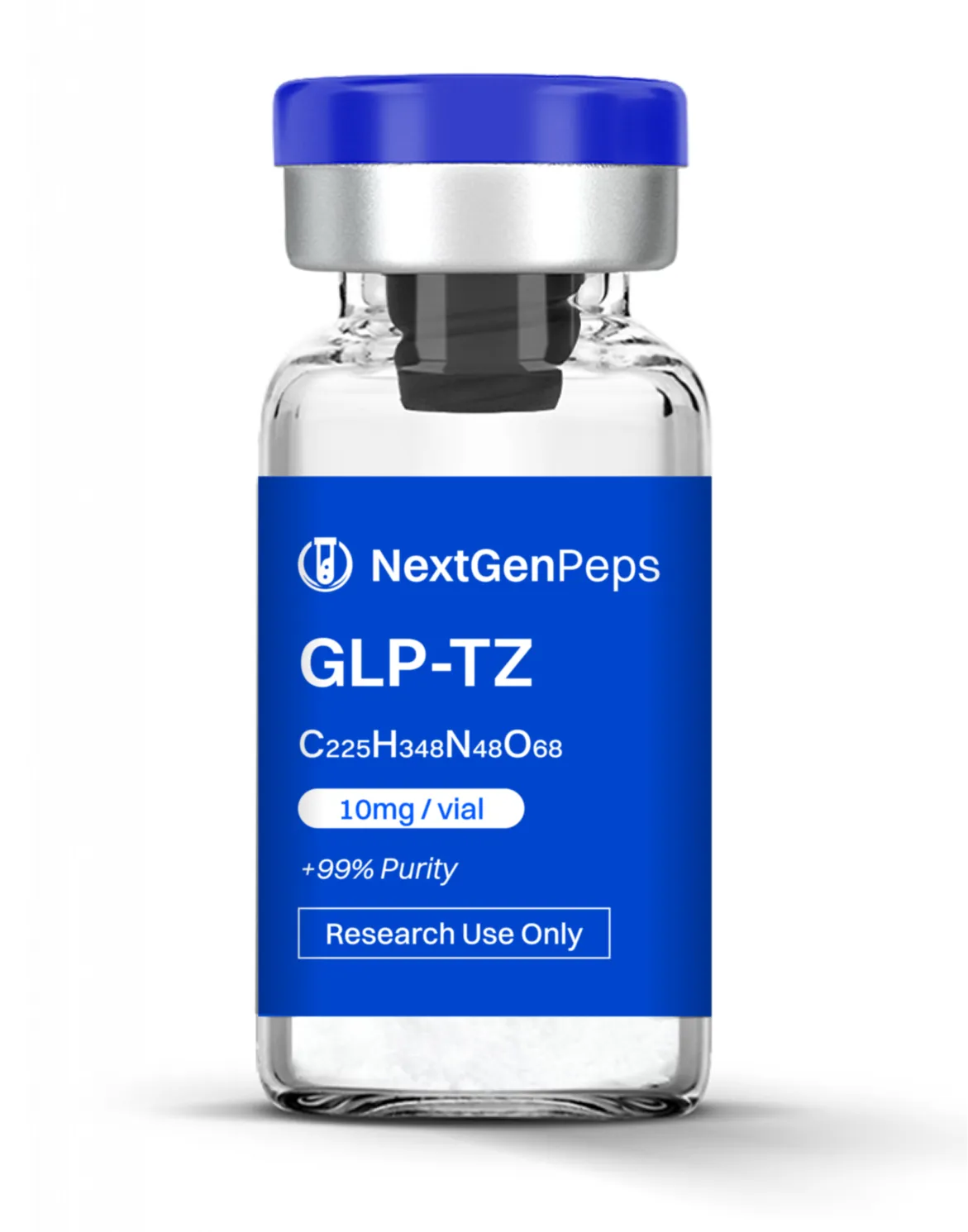
✓ 99.76% purity
$88.00$70.00
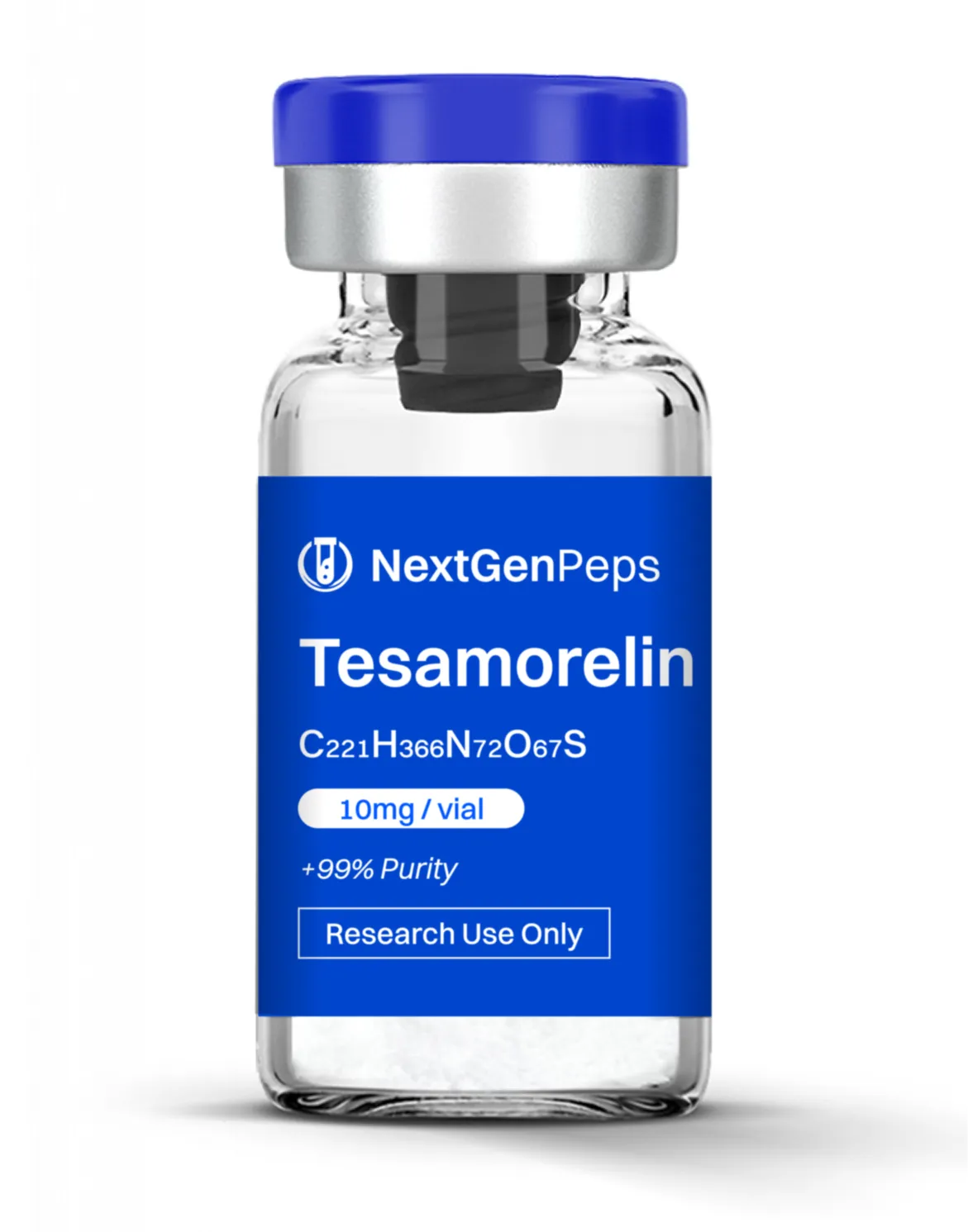
✓ 99.77% purity
$92.00$74.00
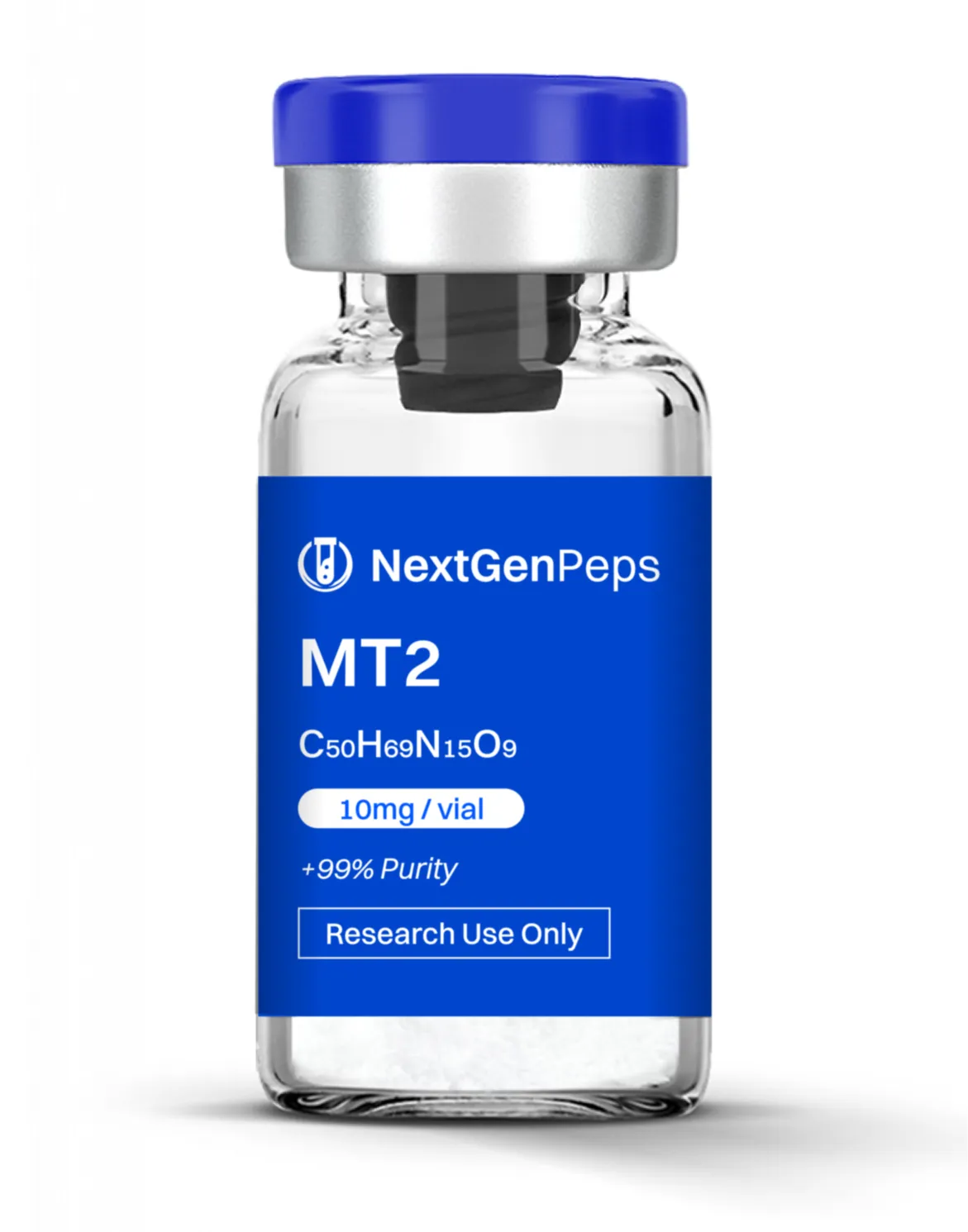
✓ 99.715% purity
$44.00$35.00