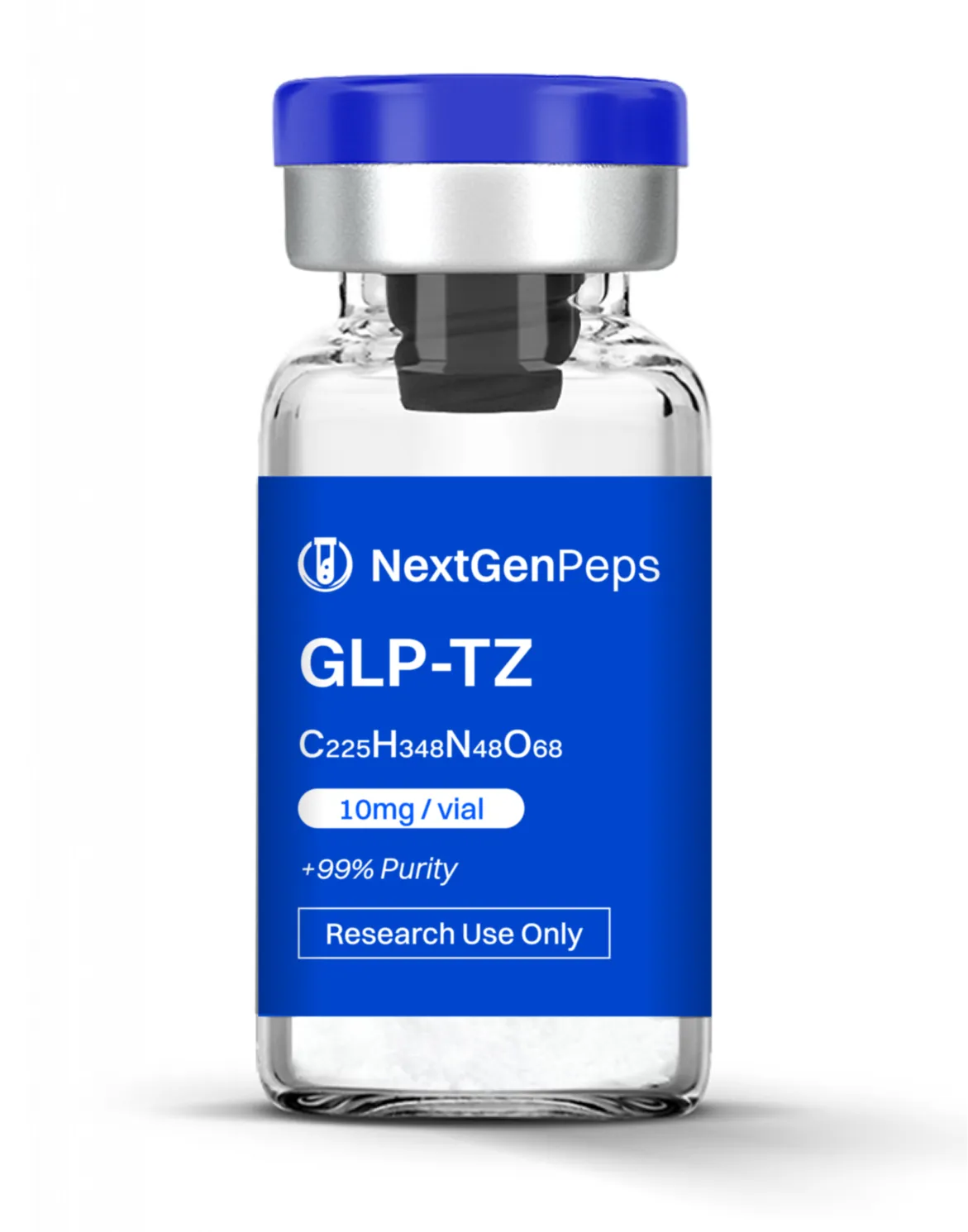
GLP-TZ, in brief. GLP-TZ is a single synthetic peptide that switches on two different gut hormone receptors at once: the GIP receptor and the GLP-1 receptor. Those two receptors normally answer to two separate hormones released from the gut after a meal, and both of them push the pancreas to release insulin only when glucose is already high. The reason for building one molecule that reaches both is to ask what the GIP arm adds on top of the GLP-1 arm, a question that is awkward to answer when two separate molecules are given together. In cell assays GLP-TZ behaves much like native GIP at the GIP receptor, and more weakly at the GLP-1 receptor, where it favours cAMP signalling over the arrestin route. In obese mice it lowered food intake and body weight, and raised insulin sensitivity further than a GLP-1 receptor agonist did at matched weight loss. The molecule itself is a 39-residue chain carrying a long fatty diacid that binds albumin, which is what slows its clearance. NextGenPeps supplies GLP-TZ as a lyophilised research material in 10 mg and 20 mg vials for laboratory use only.
What does GLP-TZ do?
It turns on two incretin receptors with one molecule. Incretins are hormones the gut releases when food arrives, and their job is to tell the pancreas that glucose is on the way. Two of them matter here: glucose-dependent insulinotropic polypeptide (GIP) and glucagon-like peptide-1 (GLP-1). Each has its own receptor. GLP-TZ binds both, which is why it is classed as a dual incretin receptor agonist rather than a GLP-1 receptor agonist.[1,2]
In practice that means three things:
At the GIP receptor, it behaves like the native hormone: a full agonist, with binding affinity and cAMP potency close to GIP itself.[1,2]
At the GLP-1 receptor, it is weaker than native GLP-1 and biased: strong on cAMP, very weak at recruiting beta-arrestin, and it drives much less receptor internalisation.[2]
In rodents, that combination lowers food intake, lowers body weight and raises insulin sensitivity, and part of the insulin sensitivity gain can be traced to the GIP arm on its own.[1,3]
NextGenPeps supplies GLP-TZ for in vitro research and approved animal studies only. It is not sold as a drug, supplement or diagnostic.
How does GLP-TZ work?
Both targets are class B G-protein-coupled receptors that couple to Gs. Agonist binding raises cAMP inside the cell, and in a pancreatic beta cell that rise amplifies insulin release when glucose is already elevated. Because the amplification depends on glucose, neither receptor drives insulin secretion on its own in a low-glucose state.[1,6] The GLP-1 arm also reaches feeding circuits: in rodents, GLP-1 receptor agonists act on hindbrain and hypothalamic sites reached through circumventricular organs rather than by crossing the blood-brain barrier generally.[8]
Figure 1. How GLP-TZ signals through two receptors.
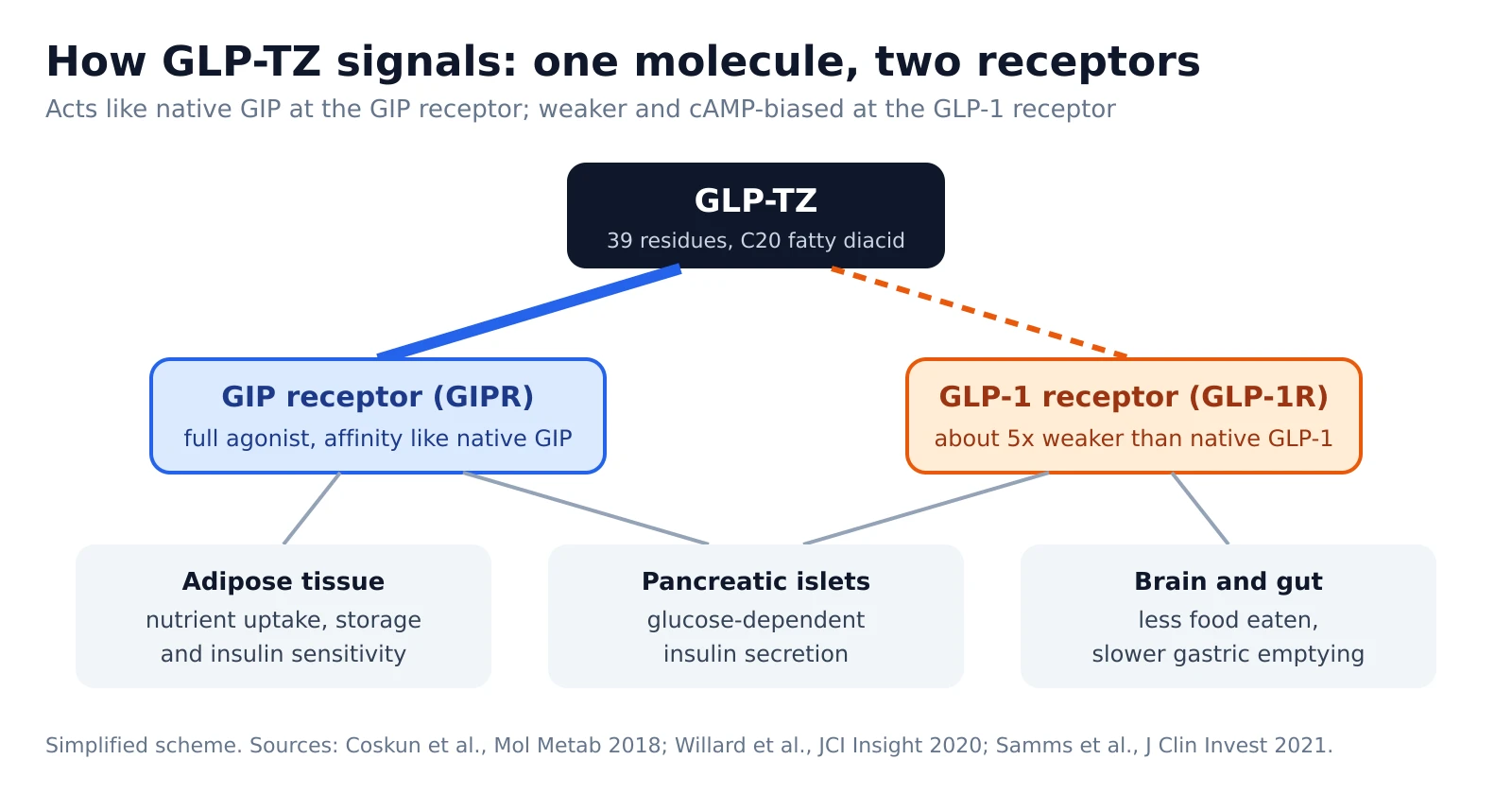
GLP-TZ engages the GIP receptor with affinity close to the native hormone and the GLP-1 receptor about five times more weakly, feeding into adipose tissue, pancreatic islet and brain and gut responses.[1,2,3]
The two halves of the molecule are not matched, and the numbers show it. In cells expressing the human receptors, GLP-TZ bound the GIP receptor with a Ki of 0.135 nM and raised cAMP with an EC50 of 0.0224 nM, both close to native GIP. At the GLP-1 receptor it was weaker, with a Ki of 4.23 nM, roughly five times lower affinity than native GLP-1, and a cAMP EC50 of 0.934 nM. In the same assays GLP-S bound the GLP-1 receptor at 1.97 nM with a cAMP EC50 of 0.0571 nM.[1]
Figure 2. GLP-TZ potency at the GIP and GLP-1 receptors.
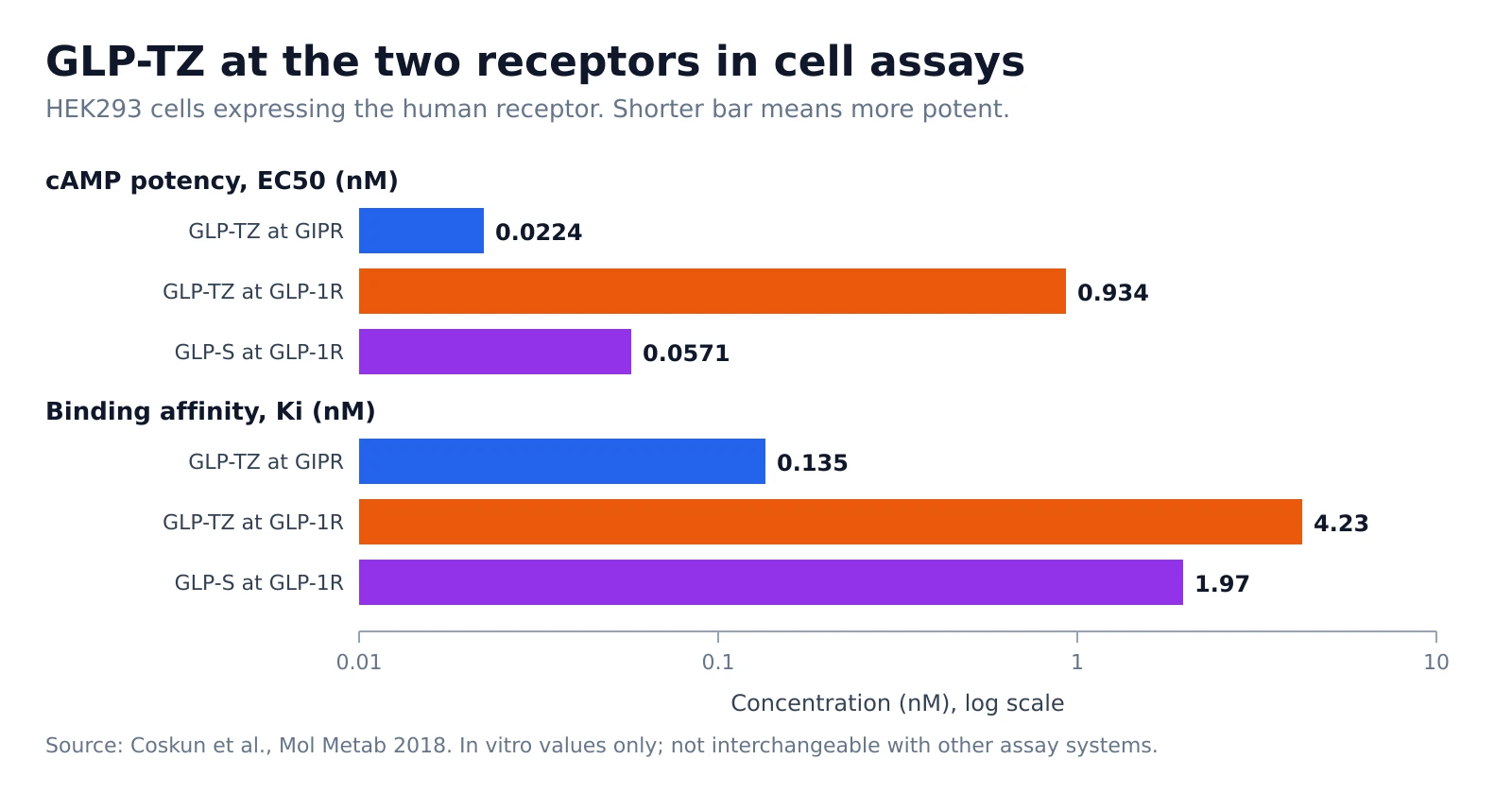
In HEK293 cells expressing the human receptors, GLP-TZ is far more potent at the GIP receptor than at the GLP-1 receptor on both binding and cAMP readouts. Values are in vitro only and are not interchangeable with other assay systems.[1]
Measuring Gs activation directly gives the same picture. GLP-TZ was a full agonist at the GIP receptor (EC50 0.379 nM against 1.43 nM for GIP) but only a partial agonist at the GLP-1 receptor, reaching 51% of the maximum GLP-1 effect (EC50 0.617 nM against 1.63 nM for GLP-1).[2]
The imbalance continues past the G protein. At the GLP-1 receptor, GLP-TZ recruited beta-arrestin2 so weakly that a potency value could not be assigned, staying under 10% of the maximum GLP-1 effect, and it internalised the receptor far less than GLP-1 did (43.6% of maximal internalisation, EC50 101.9 nM against 22.2 nM). At the GIP receptor it recruited beta-arrestin2 as a full agonist (EC50 2.34 nM against 1.58 nM for GIP) and internalised the receptor to the same extent as GIP (EC50 18.1 nM against 18.2 nM). In isolated mouse islets, beta-arrestin1 limited the insulin response to GLP-1 but not the response to GIP or to GLP-TZ, which is the authors' explanation for why weak arrestin coupling at the GLP-1 receptor may help rather than hinder.[2]
What did GLP-TZ do in animal studies?
In obese mice it lowered food intake and body weight, and it left them more sensitive to insulin than weight loss alone accounts for.
In diet-induced obese mice starting at roughly 45 g, chronic dosing produced a dose-dependent fall in body weight that was greater than the fall produced by GLP-S, and the loss came mainly from fat rather than lean tissue. Food intake fell more steeply and stayed down longer over the first 7 to 10 days, and energy expenditure rose slightly from day 7 onwards, an increase not seen with GLP-S in the same experiment.[1]
The sharpest result comes from a clamp study. Obese mice were dosed once daily for 14 days and then measured with a hyperinsulinaemic-euglycaemic clamp, the standard way to quantify insulin sensitivity. GLP-TZ at 3 nmol/kg and GLP-S at 10 nmol/kg produced the same weight loss, yet the glucose infusion rate rose 4.7-fold against vehicle for GLP-TZ and 3.5-fold for GLP-S. A pair-fed group, eating exactly as much as the GLP-TZ group but given no compound, reached 3.0-fold. The authors attribute roughly 30% of the GLP-TZ effect to something other than weight loss.[3]
Figure 3. What GLP-TZ did in obese mice after 14 days.
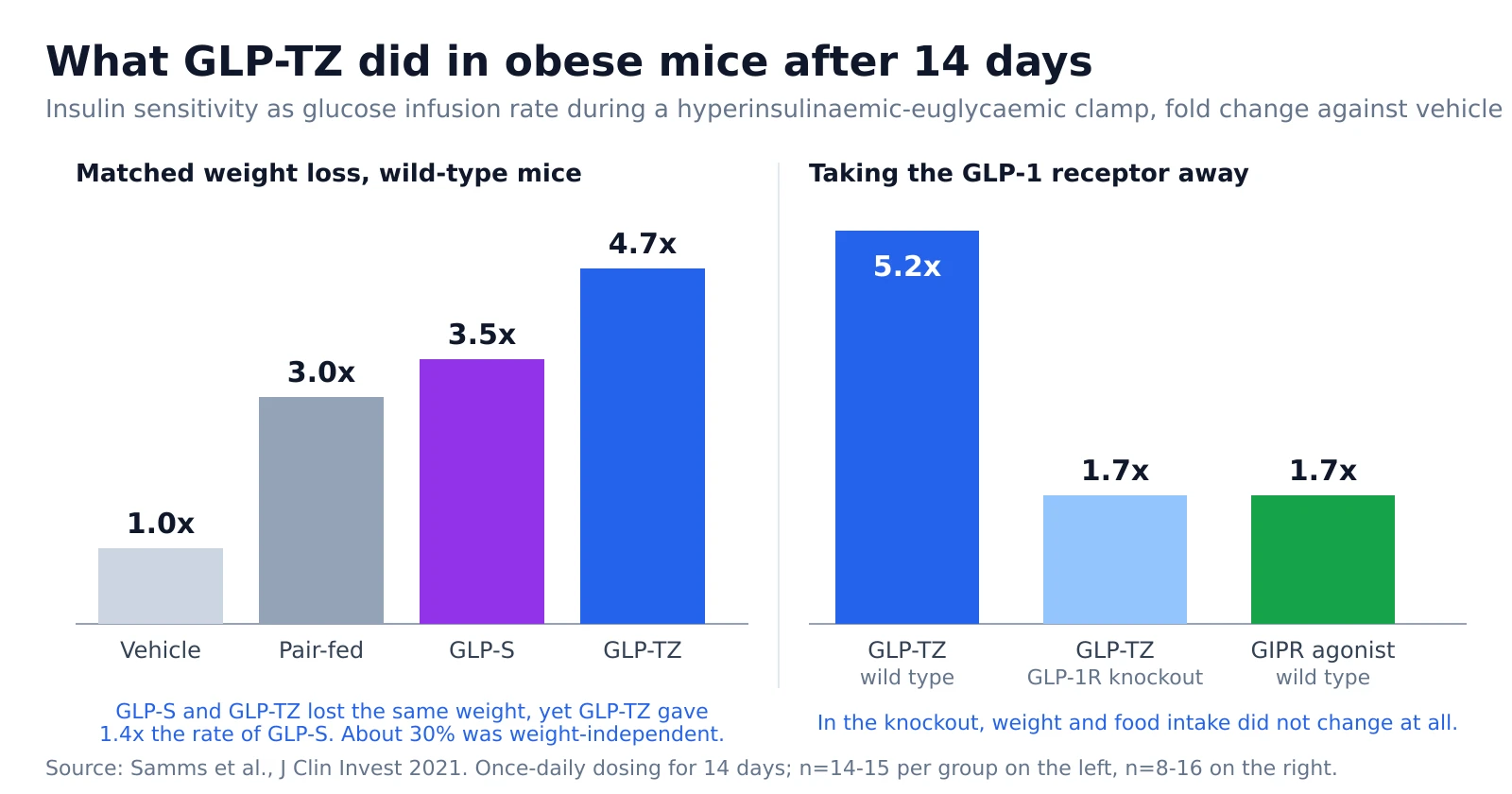
Clamp glucose infusion rate after 14 days of once-daily dosing in obese mice, as fold change against vehicle. At matched weight loss GLP-TZ reached 4.7-fold against 3.5-fold for GLP-S, with a pair-fed group at 3.0-fold. Removing the GLP-1 receptor left a 1.7-fold rise with no change in weight or food intake.[3]
Two further experiments pin that extra component on the GIP arm. In mice lacking the GLP-1 receptor entirely, fed a 60% fat diet for 12 weeks until they weighed over 50 g, GLP-TZ changed neither body weight nor food intake, yet still raised the glucose infusion rate 1.7-fold. A selective long-acting GIP receptor agonist given to wild-type obese mice reproduced the same 1.7-fold rise while lowering body weight by only about 4%. Both treatments lowered circulating branched-chain amino acids and raised catabolic gene expression in brown adipose tissue, while endogenous glucose production did not shift in any group, which places the effect in peripheral tissue rather than liver.[3]
Feeding behaviour shifted as well as fell. In mice offered a choice between a low-fat and a high-fat diet, GLP-TZ moved intake towards the low-fat option and away from the high-fat one, and it also reduced intake of nutritive tastants (fructose, sucrose) and of a non-nutritive one (sucralose). Meal pattern analysis across 14 days showed smaller and less frequent meals.[4]
GLP-TZ, GLP-S and GLP-RT: which receptors each one targets
The three NextGenPeps incretin research compounds differ in how many receptors each molecule engages. The list below states receptor targets and chemical class only. It is not a comparison of how well any of them performs.
GLP-S. Class: GLP-1 receptor agonist. Receptor targets: GLP-1 receptor only.
GLP-TZ. Class: dual incretin receptor agonist. Receptor targets: GLP-1 receptor and GIP receptor.
GLP-RT. Class: triple receptor agonist. Receptor targets: GLP-1 receptor, GIP receptor and glucagon receptor.
Each is supplied as a separate research material. Choosing between them is a question of which receptors an experiment needs to engage.
What is GLP-TZ made of?
A 39-residue synthetic peptide with a fatty acid chain attached partway along it. The backbone carries two copies of a non-coded amino acid, alpha-aminoisobutyric acid (Aib), at positions 2 and 13. Aib at position 2 is the standard way to block dipeptidyl peptidase-4, the enzyme that clips the first two residues off native incretins within minutes. The lysine at position 20 carries a C20 fatty diacid attached through a linker, and the C-terminus is amidated.[1]
The fatty diacid governs how long the molecule persists. It binds reversibly to serum albumin, which keeps the peptide in circulation and slows renal clearance. The practical consequence in assay work is a large albumin shift: adding 1% human serum albumin moved apparent potency 26-fold at the GIP receptor and 81-fold at the GLP-1 receptor, while the native hormones were unaffected. Assay buffers differing in albumin content will therefore return different numbers.[2]
The published sequence begins Tyr-Aib-Glu-Gly-Thr-Phe-Thr-Ser-Asp-Tyr. The molecular formula is C225H348N48O68 and the molecular weight is 4813.5 g/mol, with a monoisotopic mass of 4810.52 Da.[1]
GLP-TZ at a glance
Compound: GLP-TZ, a synthetic dual incretin receptor agonist peptide
Class: Lipidated 39-residue peptide; agonist at the GIP receptor and the GLP-1 receptor
Structure: 39 residues with Aib at positions 2 and 13, a C20 fatty diacid on the lysine at position 20, and an amidated C-terminus[1]
Molecular formula: C225H348N48O68
Molecular weight: 4813.5 g/mol; monoisotopic mass 4810.52 Da
Strength: 10 mg or 20 mg per vial, depending on the variant selected
Identity and purity: Identity by LC-MS/MS and purity by RP-HPLC at 214 nm; 99.76% on the current 10 mg lot (independent lab, September 25, 2026). The certificate is published in the NextGenPeps COA library
Endotoxin: Under 0.05 EU/ml on the current 10 mg lot, tested per USP <85>
Appearance: White lyophilised powder, sealed vial
Reconstitution: Sterile or bacteriostatic water
Receptor potency: GIP receptor Ki 0.135 nM, cAMP EC50 0.0224 nM; GLP-1 receptor Ki 4.23 nM, cAMP EC50 0.934 nM (human receptors in HEK293 cells)[1]
Regulatory status: Research use only. Not an approved drug, supplement or diagnostic
Is GLP-TZ FDA approved?
No. GLP-TZ is not an approved drug, not a supplement and not a diagnostic, and it has no approved use of any kind. It is supplied as a research material for in vitro work and approved animal studies. Research-grade material is not manufactured to the potency and sterility standards applied to pharmaceutical products, so quantitative work should calibrate against its own reference.
What is GLP-TZ used to study?
GLP-TZ is reached for when an experiment needs both incretin receptors engaged by one molecule, or when the question is what the GIP arm contributes. Each field below leans on a different property.
Dual incretin receptor pharmacology. Binding, cAMP, Gs activation and arrestin assays at the two receptors side by side, with native GIP and GLP-1 as reference agonists.[1,2]
Biased and imbalanced agonism. One ligand that is balanced at one receptor and strongly cAMP-biased at another is a clean model system for studying signalling bias.[2]
Adipose tissue and insulin sensitivity. Clamp studies, tissue glucose uptake and branched-chain amino acid measurements in rodent models of diet-induced obesity.[3]
Feeding behaviour and macronutrient choice. Two-choice diet paradigms, tastant intake and meal pattern analysis in mice.[4]
Assay design. The large albumin shift makes it a useful test case for how protein binding distorts apparent potency.[2]
Buying GLP-TZ for research: what each vial includes
GLP-TZ is supplied as lyophilised powder in a sealed, labelled vial, in a 10 mg or a 20 mg strength. The current 10 mg lot was analysed by an independent laboratory on September 25, 2026: identity by LC-MS/MS, purity by RP-HPLC at 214 nm, content by HPLC quantitation, and endotoxin per USP <85>. Purity was 99.76% and endotoxin came in under 0.05 EU/ml. Every lot is tested by independent labs and the certificate of analysis is published in the NextGenPeps COA library.
Verified identity, purity and endotoxin. 99.76% purity and under 0.05 EU/ml endotoxin on the current 10 mg lot, with the certificate published in the COA library. The 20 mg vial has no certificate of its own published yet; refer to the COA library for the lot shipped.
Two strengths. 10 mg per vial or 20 mg per vial, selected at the variant level.
US-based fulfilment. Orders ship within 24 hours from the United States, with free US shipping on orders over $150.
Research use only. GLP-TZ is sold strictly for in vitro and approved animal research. It is not for human or veterinary use and is not sold as a drug, supplement or diagnostic.
GLP-TZ handling, storage and analytical notes
Format. Supplied as lyophilised powder in a sealed vial and reconstituted with sterile or bacteriostatic water. No dosing instructions are supplied, and none should be inferred from the studies above.
Storage. Keep the sealed vial cold (2 to 8 °C, or −20 °C for longer holding) and protected from light. After reconstitution, hold the solution at 2 to 8 °C and avoid repeated freeze-thaw cycles.
Albumin in assays. Because the C20 diacid binds albumin, apparent potency depends heavily on the protein content of the buffer: a 26-fold shift at the GIP receptor and an 81-fold shift at the GLP-1 receptor were recorded on adding 1% human serum albumin. Report the albumin concentration alongside any EC50 value.[2]
Analytical. Identity is confirmed by LC-MS/MS against the expected mass of 4810.52 Da monoisotopic, and purity by RP-HPLC at 214 nm. Lipidated peptides can show tailing and carryover on reversed-phase columns, so blank injections between runs are worth including.
Naming. GLP-TZ is the NextGenPeps catalogue code for this dual incretin receptor agonist. GIP and GLP-1 on this page mean the native hormones, not catalogue products. GLP-S and GLP-RT are separate NextGenPeps research materials with different receptor targets.
What is not established about GLP-TZ
Which cells the GIP arm acts on. The weight-independent insulin sensitisation is attributed to white adipose tissue, but GIP receptor expression there sits mainly in pericytes and mesothelial cells rather than in adipocytes, so the responsible cell type is unsettled.[5] Inducing the GIP receptor in adipocytes alone was enough to drive large weight loss in mice through futile calcium cycling, which argues the tissue matters even where the cell type does not fit.[7]
How far rodent results carry. Every quantitative result on this page comes from mice or from cells expressing human receptors. Species differences in incretin receptor pharmacology are well documented, and findings do not transfer automatically.[6]
Whether GIP receptor agonism or antagonism is the better strategy. Both directions have produced metabolic benefit in animal models and the field has not resolved why.[6]
Assay-dependent numbers. Potency values move by one to two orders of magnitude with albumin content, so figures from different laboratories are not directly comparable.[2]
Research Use Only. The statements made within this website have not been evaluated by the US Food and Drug Administration. These materials are not intended to diagnose, treat, cure or prevent any disease and are not intended for human or veterinary use. Studies described on this page are reported for scientific context and are not guidance of any kind.