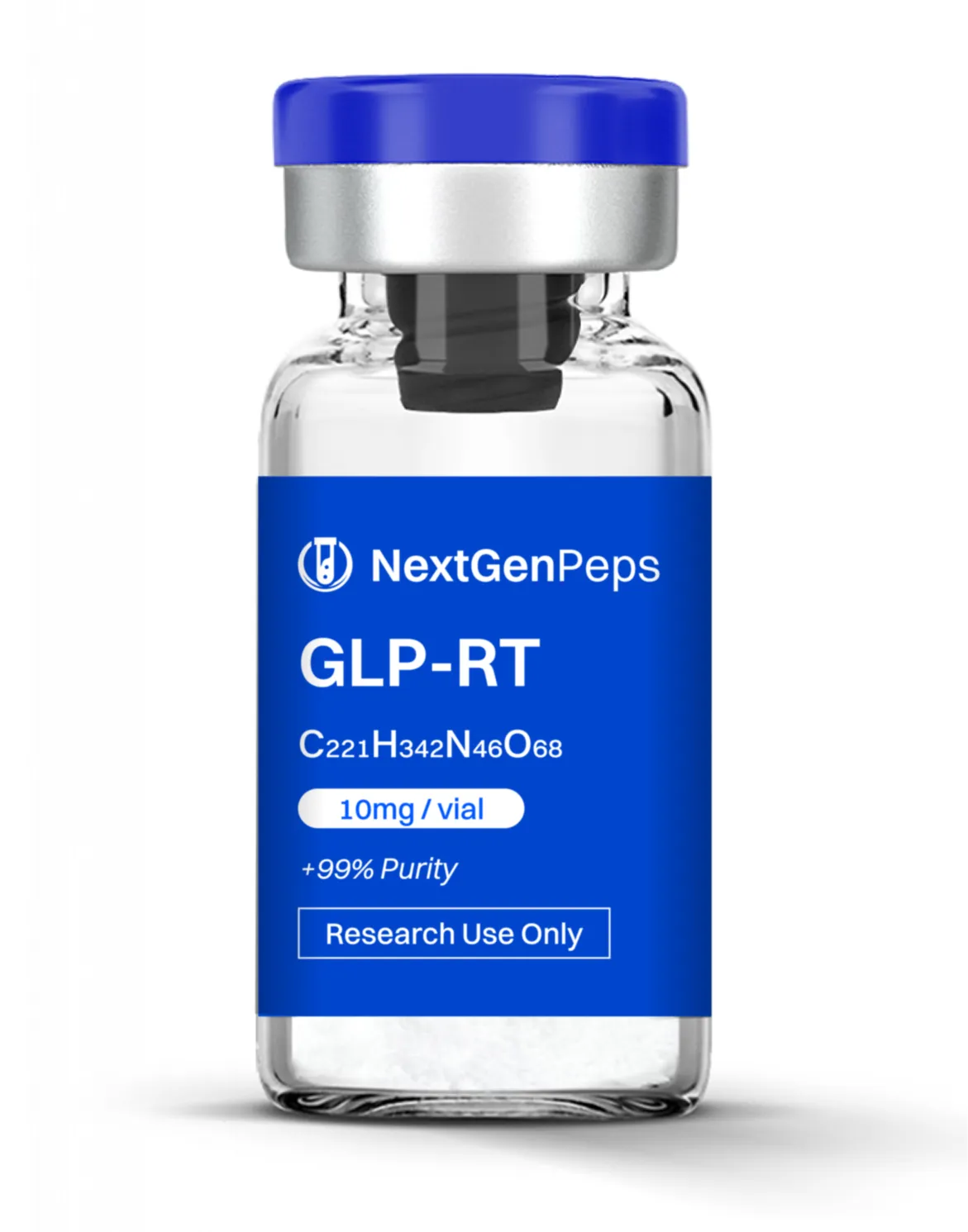
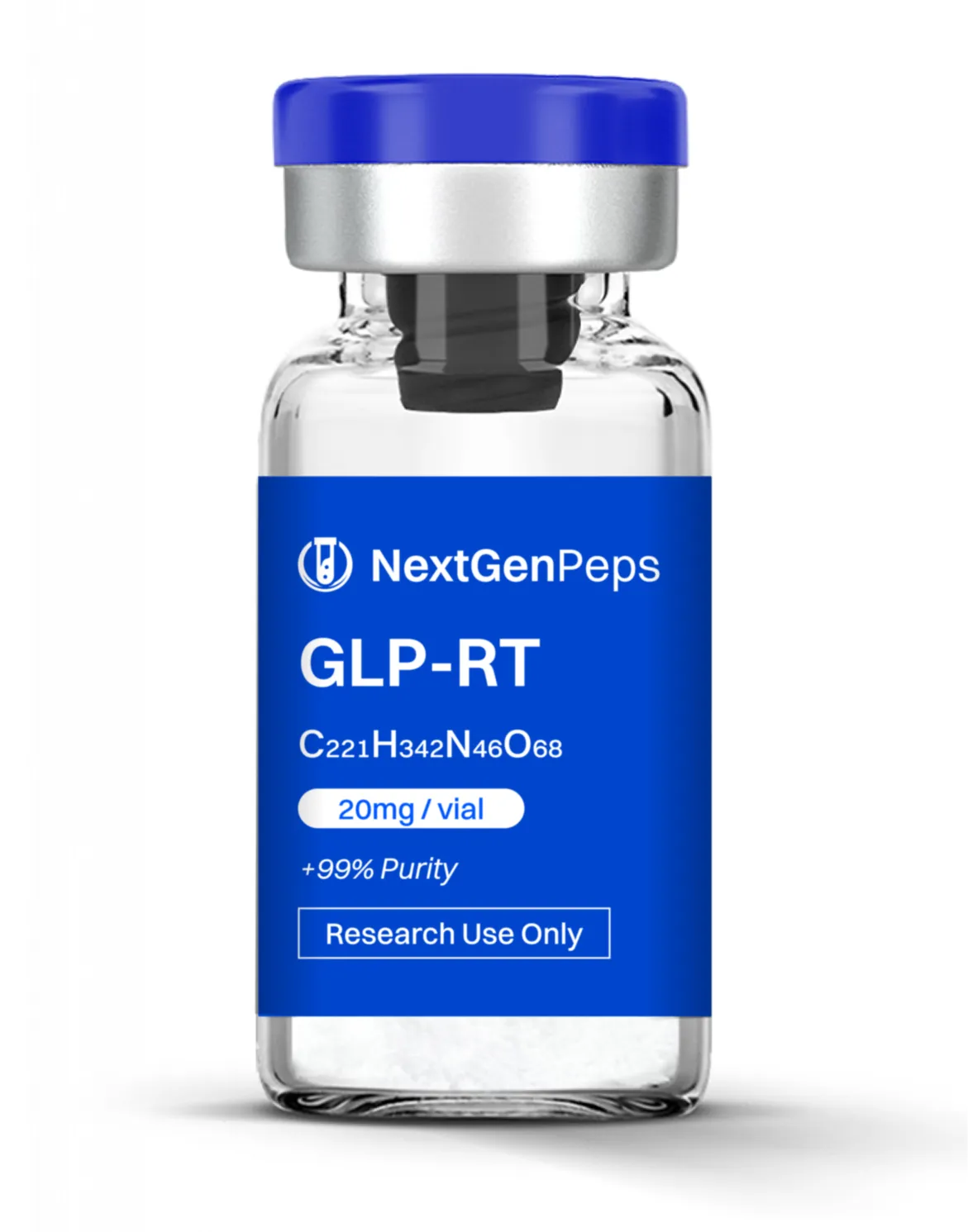
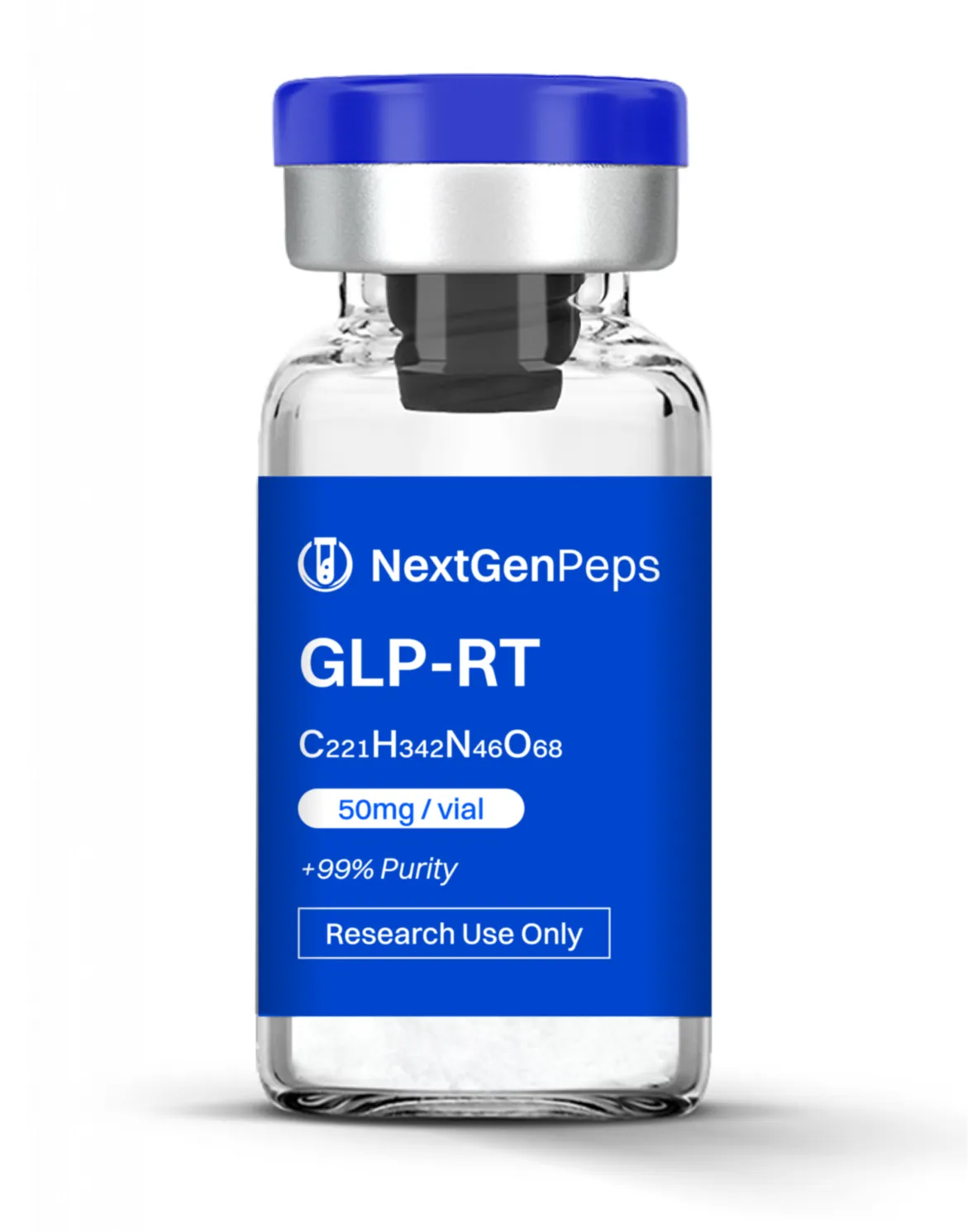






GLP-RT Overview
GLP-RT (LY3437943) is a high-purity, research-grade synthetic peptide developed as a triple receptor agonist that simultaneously targets GLP‐1, GIP, and glucagon receptors. Its single, continuous helical conformation and long plasma half‐life make it a central tool for modeling intensive incretin/glucagon‐based metabolic interventions.
Molecular Composition and Mechanistic Profile
GLP-RT adopts a single continuous helix where:
The N‐terminal segment engages the receptor transmembrane domain.
The C‐terminal segment interacts with extracellular regions of GLP‐1 and GIP
receptors.
It exhibits the following potencies (EC50):
GIP receptor: 0.0643 nM
GLP‐1 receptor: 0.775 nM
Glucagon receptor: 5.79 nM
The peptide shows a terminal half‐life of ~6 days, undergoes primarily hepatic metabolism, and shows little interaction with cytochrome P450 enzymes.
Integrated Research Applications
GLP-RT is used to study intensive metabolic modulation across several domains:
Glycemic control and diabetes: Triple agonism allows investigation of potent HbA1c lowering, fasting and post‐prandial glucose improvements, and β‐cell function compared with single or dual incretin agents.
Metabolic liver disease: Randomized trials in metabolic dysfunction–associated steatotic liver disease (MASLD/MASH) evaluate its impact on liver fat content, inflammation, and fibrosis markers.
Kidney and cardio‐metabolic protection: Comparative animal studies against liraglutide and GLP-TZ explore effects on diabetic kidney disease and broader cardio‐renal endpoints.
Ligand–receptor structural work clarifies how GLP-RT simultaneously engages GLP‐1R, GIPR, and GCGR to create a distinctive metabolic signature, including reductions in gastric emptying rate, food intake, and body‐weight set‐point.
Analytical Validation, Formulation, and Storage
HPLC purity: 99.4–99.5%.
Source: Fully synthetic; supplied as lyophilized powder.
Counterion: Typically supplied as a sodium salt; TFA counterion from HPLC
purification may be present and can contribute to total mass and influence solubility.
Storage and handling guidelines:
Delivered lyophilized; store at or below −20 °C to maintain long‐term stability.
Reconstitute with appropriate sterile buffer for in vitro or in vivo experimental work, following standard peptide‐handling SOPs. Residual TFA:
TFA salt can account for up to ~20% of total mass; peptide content is generally ≥80% of the net weight.
TFA typically improves aqueous solubility and does not interfere with standard in vitro assays, though highly sensitive assays should consider its presence.
NextGenPeps supplies GLP-RT exclusively for laboratory research in vitro or in approved animal models. This compound is not approved for human use and is not marketed as a drug, supplement, or diagnostic agent.