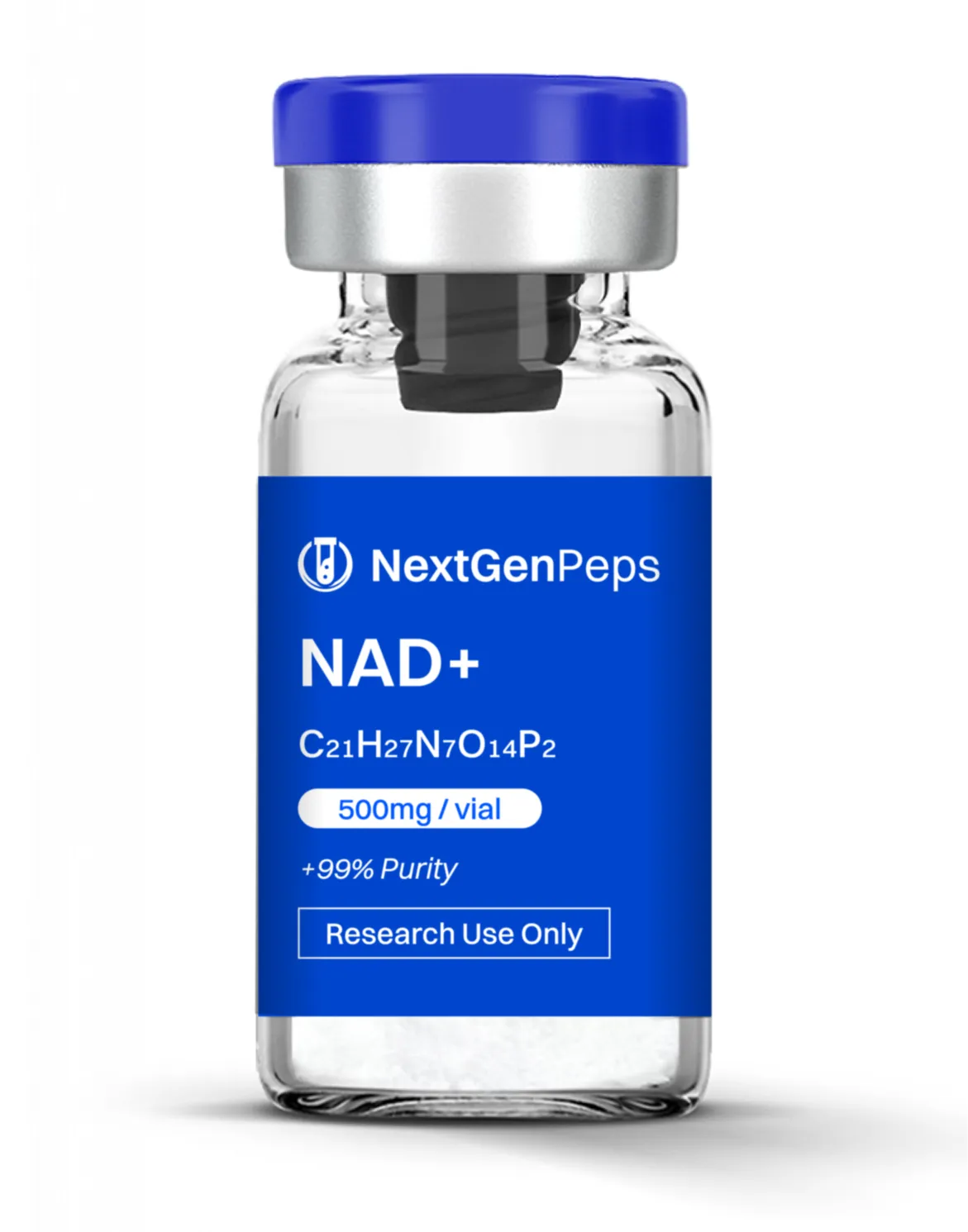






NAD+ Cellular Coenzyme Research Overview
NAD+ (nicotinamide adenine dinucleotide, oxidized form) is a high-purity, research-grade redox coenzyme central to cellular energy production, DNA repair, and stress-response signaling. In laboratory settings, NAD+ and its precursors are core tools for probing mitochondrial metabolism, aging biology, and neuroprotective mechanisms.
Molecular Composition and Mechanistic Profile
Chemical identity: Nicotinamide adenine dinucleotide (NAD+), a pyridine nucleotide composed of two nucleotides (adenosine and nicotinamide) joined by a pyrophosphate bridge.
Mechanistically, NAD+:
Serves as an essential redox cofactor in glycolysis, the tricarboxylic acid (TCA) cycle, and oxidative phosphorylation, cycling between NAD+ and NADH to shuttle electrons to the mitochondrial respiratory chain.
Acts as a substrate for NAD+‐dependent enzymes, including sirtuins (deacetylases), PARPs (poly‐ADP‐ribose polymerases), and CD38/CD157, thereby linking NAD+ levels to chromatin state, DNA repair, calcium signaling, and cell survival.
Participates in DNA repair via PARP‐mediated responses and supports base‐excision repair pathways; exogenous NAD+ has shown concentration‐ and timing‐dependent protection in neuronal ischemia models.
Age and stress‐related NAD+ decline is associated with hallmarks of aging and multiple metabolic and neurodegenerative disorders, making NAD+ metabolism a key experimental target.
Integrated Research Applications
NAD+ powders (e.g., 100 mg and 500 mg vials) are used as reference compounds or experimental variables in diverse research programs. Major domains include:
Redox biochemistry and mitochondrial function: Studies of ATP production, electron transport chain efficiency, ROS generation, and mitochondrial resilience under metabolic or hypoxic stress.
Cellular aging and longevity: In vitro and animal models where NAD+ boosting (via NAD+ itself or precursors like NMN and NR) increases stress resistance, improves metabolism, and can extend lifespan in lower organisms.
Neuroprotection and neurodegeneration: Experiments in Parkinson’s and ischemia models showing that NAD+ supplementation can reduce dopaminergic neuron loss, decrease DNA damage, and support base‐excision repair and sirtuin‐mediated survival pathways.
Cardiometabolic and vascular research: Work on insulin sensitivity, blood pressure, vascular function, cardiomyocyte survival, and ischemia–reperfusion injury, with NAD+ metabolism as a therapeutic target.
Synergistic antioxidant systems: Combined studies of NAD+ with glutathione/GlyNAC and other antioxidants to explore multi‐target “longevity” or resilience stacks in cellular and animal models.
These applications position NAD+ as a central node for linking bioenergetics, genome maintenance, and cellular stress adaptation.
Analytical Validation, Formulation, and Care
Research NAD+ products from these suppliers are typically provided as lyophilized powder at defined content per vial (e.g., 100 mg or 500 mg), intended for reconstitution immediately before use. Common specifications include:
Purity ≥99%, verified by third‐party or internal analytical testing (e.g., HPLC).
Appearance: solid, white lyophilized powder in sealed glass vials (often 5–10
mL).
Product notes emphasize that all materials meet pharmaceutical‐grade standards but are supplied strictly for research, without dosing instructions and not for human or animal use.
Storage and Stability
Vendors recommend standard small‐molecule handling to preserve NAD+ stability:
Store lyophilized vials in a cool, dry place away from heat, light, and moisture, commonly at or below 8 °C, with colder storage (“the colder the better”) preferred for long‐term stability.
After reconstitution, refrigerate immediately and freeze at about −20 °C for extended storage, minimizing freeze–thaw cycles.
These practices help maintain NAD+ integrity and reproducible performance in repeated experiments.
NextGenPeps supplies NAD+ as a high-purity research compound intended solely for controlled laboratory experimentation, including in vitro systems and approved animal models. This material is not approved as a drug, diagnostic agent, or dietary ingredient and is not intended for human consumption, clinical use, or any application outside properly authorized research settings.