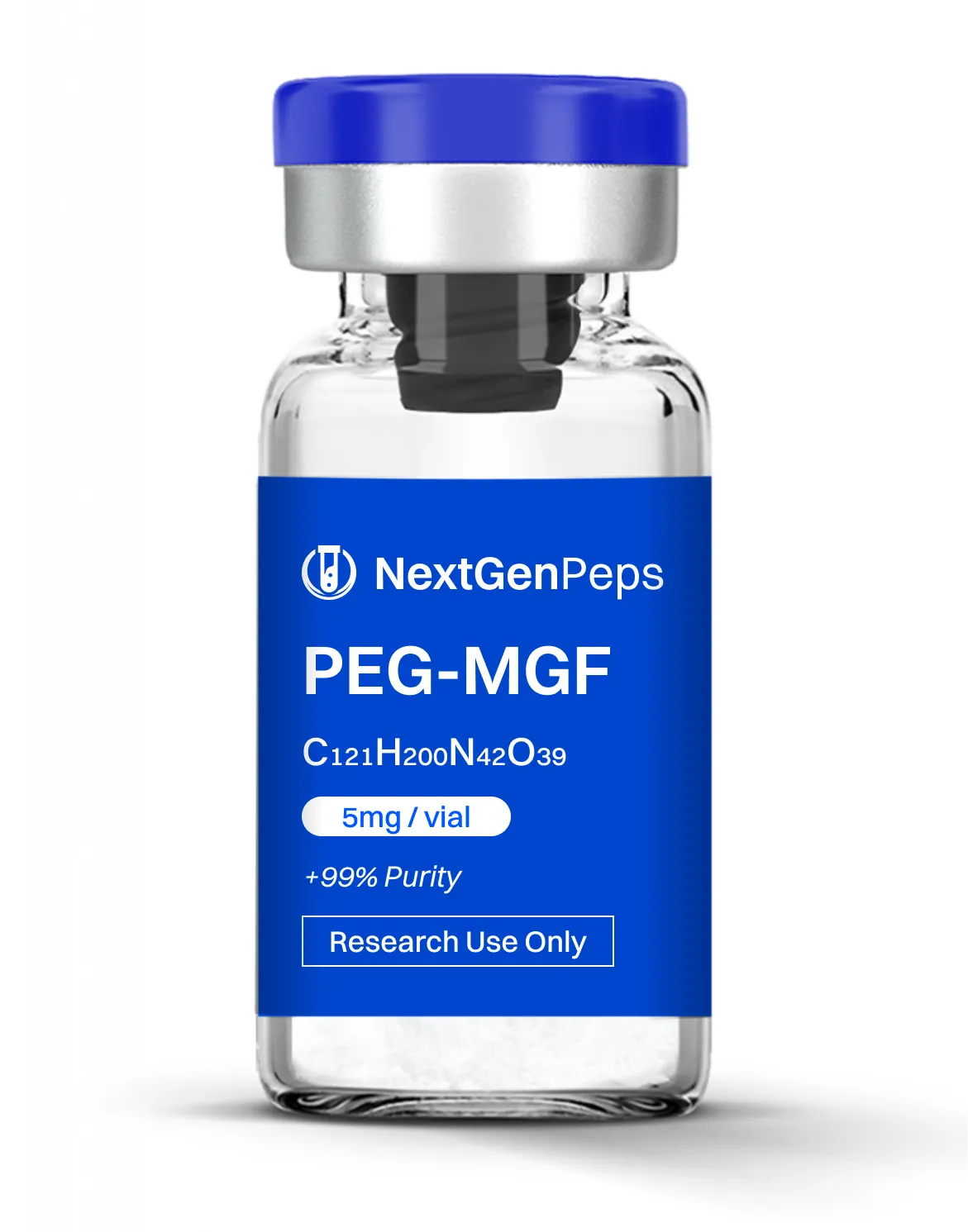






PEG-MGF is a high-purity, research-grade pegylated form of Mechano Growth Factor (MGF), a natural splice variant of insulin like growth factor-1 (IGF-1). It is designed for studies of muscle repair, satellite cell activation, tissue regeneration, and related recovery pathways. The polyethylene glycol (PEG) attachment extends the peptide’s short natural half life, making it more practical for controlled laboratory work.
Molecular Composition and How It Works
PEG-MGF is a synthetic version of the 24-amino-acid C-terminal E-peptide from the IGF-1Ec (human) / IGF-1Eb (rodent) splice variant, covalently linked to a polyethylene glycol chain. Native MGF appears locally in muscle after mechanical stress or injury and has a half-life of only about 5–7 minutes. PEGylation shields the peptide from rapid breakdown, extending activity to several hours or longer (commonly reported in the 24–72 hour range depending on PEG size).
It primarily activates muscle satellite cells (the stem-cell-like cells that repair and grow muscle fibers). Research indicates it can promote satellite cell proliferation, support myoblast activity, and aid local tissue repair signals. Effects have also been examined in models of cardiac protection, neuroprotection, and broader tissue regeneration. Unlike mature IGF-1, the MGF E-peptide appears to act partly through pathways that do not rely solely on the classic IGF-1 receptor.
The PEG modification improves stability and systemic reach while preserving the core peptide’s repair oriented signaling profile in experimental systems.
Research Applications
PEG-MGF is used as a single, well defined tool for studying longer acting MGF-like signaling. Common research areas include:
In vitro muscle cell and satellite cell models looking at proliferation, differentiation timing, and responses to mechanical or injury like stress.
Preclinical models of muscle repair, hypertrophy after overload or damage, and recovery of tendons, ligaments, or other connective tissues.
Exploratory work on cardiac tissue after injury, neuroprotection, and regenerative processes in aging or atrophy models.
Using the pegylated form allows researchers to examine sustained effects without the extreme dosing frequency required by native MGF, while avoiding the variability of undefined mixtures.
Analytical Validation and Quality
Research-grade PEG-MGF is typically supplied at high purity (≥98–99% by HPLC) with identity confirmed by mass spectrometry. These checks verify the peptide sequence and successful PEG attachment. Products are usually lyophilized powder in sealed vials (common sizes 2 mg or similar), labeled with content, reconstitution guidance, and research use only statements. This supports consistent dosing across experiments.
Storage and Stability
Proper storage protects the peptide and PEG attachment:
Unopened lyophilized powder: Store sealed, dry, and protected from light. Room temperature is suitable only for short periods; refrigerated (2–8 °C) works for medium-term; frozen (≤ −20 °C, preferably colder for long-term) is preferred for extended storage.
Reconstituted solutions: Keep cold, shielded from light, and use within a defined window according to lab protocols to maintain activity and limit contamination risk. Avoid repeated freeze-thaw cycles.