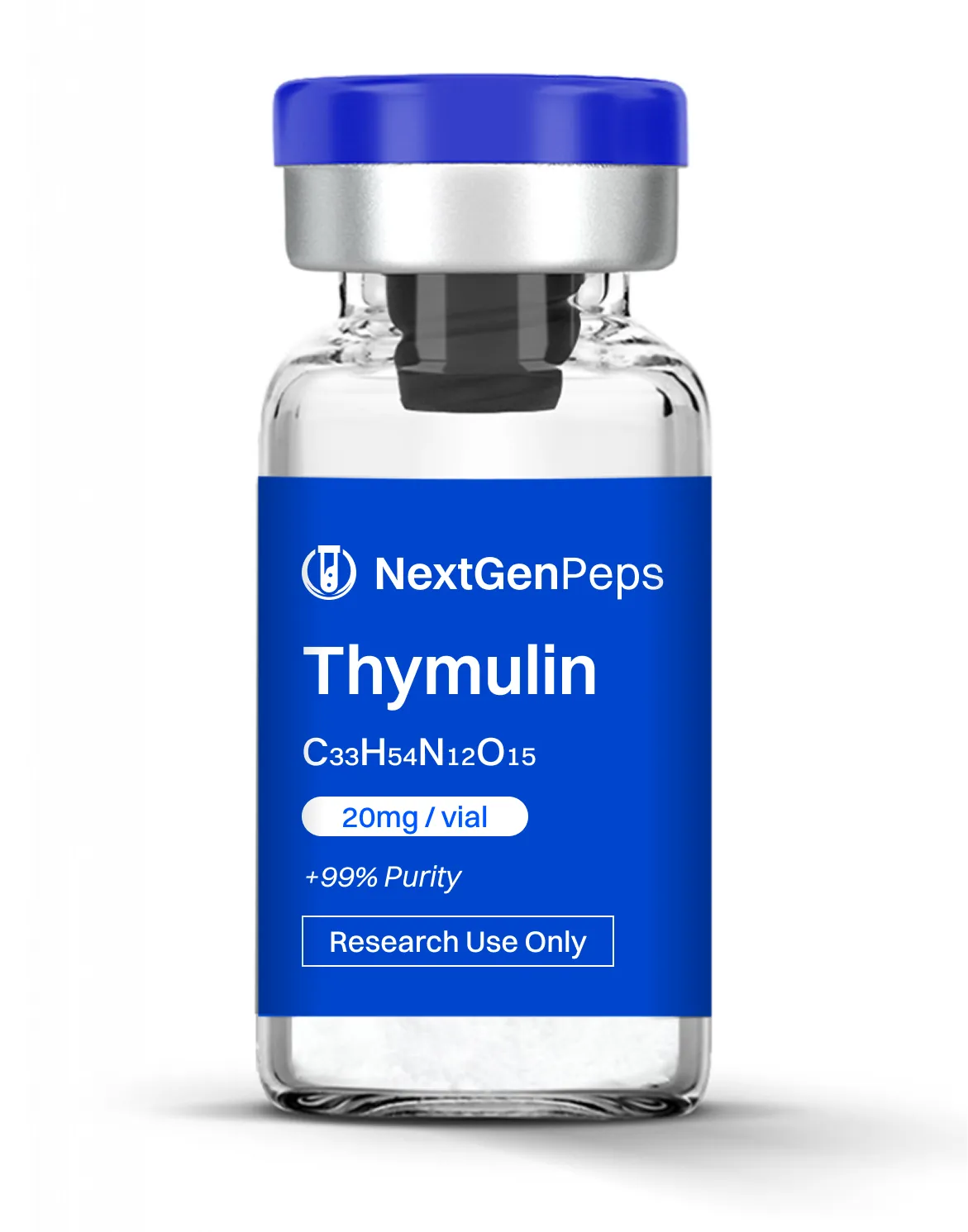






Thymulin is a high-purity, research-grade zinc-dependent nonapeptide hormone produced exclusively by thymic epithelial cells. It is designed for laboratory investigation of T-cell differentiation, immune regulation, age-related inflammation, and related pathways. Originally identified as Facteur Thymique Sérique (FTS or Serum Thymic Factor), it is the only known thymic hormone that requires zinc for biological activity.
Molecular Composition and Mechanistic Profile
Thymulin (pGlu-Ala-Lys-Ser-Gln-Gly-Gly-Ser-Asn): A nine-amino-acid peptide with an N-terminal pyroglutamic acid residue. Molecular weight is approximately 859 Da for the peptide alone. Biological activity depends on stoichiometric binding of one zinc ion (Zn²⁺), which stabilizes the active conformation. The zinc-free form (apo-thymulin) is inactive.
Structural characteristics: Zinc coordination involves specific residues and enables the peptide to support T-cell maturation markers, modulate cytokine production, and influence both intrathymic and peripheral immune cell function. Research models show effects on CD marker expression, natural killer cell activity, and balancing of pro- and anti-inflammatory signals. Circulating levels decline with age in parallel with thymic involution.
Experimental data indicate support for T-lymphocyte differentiation, reduction of excessive inflammatory cytokine output (including via NF-κB pathway modulation in some models), analgesic and anti-inflammatory actions in certain systems, and recent findings of restrained age-associated myeloid inflammation with improved tumor control and immunotherapy responsiveness in aged mice.
Integrated Research Applications
Thymulin enables focused study of zinc-dependent thymic signaling and immune homeostasis. Representative research domains include:
In vitro models examining T-cell differentiation markers, cytokine profiles, and responses in thymocyte or peripheral blood mononuclear cell cultures.
Preclinical models of immune aging, chronic inflammation, infection challenge, autoimmune-like conditions, and cancer immunotherapy combinations, particularly in aged animals.
Exploratory work on neuroendocrine-immune interactions, zinc status effects, and restoration of age-related declines in thymic hormone activity.
Using Thymulin as a single, well-characterized zinc-dependent entity allows researchers to evaluate precise effects without the variability of complex thymic extracts.
Analytical Validation and Quality Assurance
Commercial research preparations of Thymulin are typically specified at high purity (often ≥95–99%) and characterized by HPLC and mass spectrometry. These methods confirm identity, sequence integrity, and suitability for laboratory use. Zinc content or binding capacity may be noted for active formulations.
Product configurations commonly include lyophilized powder in sealed vials, with labeling that documents peptide content, suggested reconstitution volumes, and research-use disclaimers. This supports standardized dosing across experiments.
Storage and Stability Guidelines
Proper storage preserves structural integrity and zinc-dependent activity. Typical guidance for lyophilized Thymulin includes:
Room temperature (unopened, lyophilized): Suitable for limited periods when sealed, dry, and protected from light.
Refrigerated storage (2–8 °C): Appropriate for medium-term maintenance of unopened or reconstituted material used over days to weeks.
Frozen storage (≤ −20 °C, preferably lower for long-term): Recommended for extended timelines, with vials kept well sealed to limit moisture and degradation.
Reconstituted solutions are generally stored cold, protected from light, and used within a defined experimental window according to local lab practices to maintain potency and limit microbial risk. Zinc availability should be considered in experimental design where activity depends on the metal ion.