SLU-PP-332, in brief. Muscle cells carry a set of switches called estrogen-related receptors (ERRs) that turn on the genes for burning fat and building mitochondria, the same genes that endurance exercise turns on. SLU-PP-332 is a small synthetic molecule, made at Saint Louis University, that flips those switches directly. It is not a peptide and has nothing to do with estrogen despite the receptor name. In mice it raised energy use, shifted muscle toward oxidative fibers and extended treadmill running by about 70% without any training [1]. In obese mice it cut fat gain about tenfold and the treated mice lost about 12% of their body weight over a month, with no change in food intake [3,4]. No clinical trial of SLU-PP-332 has been published or registered. NextGenPeps supplies SLU-PP-332 as 250 mcg capsules, 60 per bottle, for laboratory use only.
What does SLU-PP-332 do?
It makes muscle behave as if it had been trained for endurance. SLU-PP-332 activates the ERR family of nuclear receptors, which control the genes for mitochondria and fat burning, and in mice that was enough to change both how the muscle is built and how far the animals could run [1].
In practice that means three things in animal and cell models:
More mitochondria. Treated mouse muscle had more mitochondria, more mitochondrial DNA and more respiratory chain protein, and cultured muscle cells respired harder [1].
More oxidative muscle fibers. Treated mice gained type IIa fibers, the fatigue-resistant fast oxidative type, and ran longer and further on a treadmill [1].
More energy spent. Obese mice burned more energy and more fat while eating the same amount, and gained far less fat than untreated controls [3,4].
NextGenPeps supplies SLU-PP-332 for in vitro research and approved animal studies only. It is not sold as a drug, supplement, diagnostic or performance product.
How does SLU-PP-332 work?
It is a pan-agonist of the three estrogen-related receptors, ERRα, ERRβ and ERRγ, with the strongest pull on ERRα.
ERRs are nuclear receptors: proteins that sit on DNA and switch groups of genes on or off. They share part of their name with the estrogen receptor but do not bind estrogen. ERRα in particular drives the genes for mitochondrial biogenesis, oxidative phosphorylation and fatty acid oxidation. In full-length receptor assays SLU-PP-332 reached half-maximal activation at 98 nM for ERRα, 230 nM for ERRβ and 430 nM for ERRγ, about 4.4-fold selectivity for ERRα over ERRγ (Figure 2) [2]. Chemically it is an analogue of the older tool compound GSK4716, with a naphthalene ring in place of an isopropylphenyl group [2].
Within an hour in mouse muscle it switched on part of the gene program that a single bout of aerobic exercise switches on, including Ddit4 (about 3-fold) and Slc25a25 (about 11-fold) [2]. That response needed ERRα: it was lost in muscle cells lacking ERRα, and mice with ERRα deleted from muscle gained no endurance from the compound [1,2].
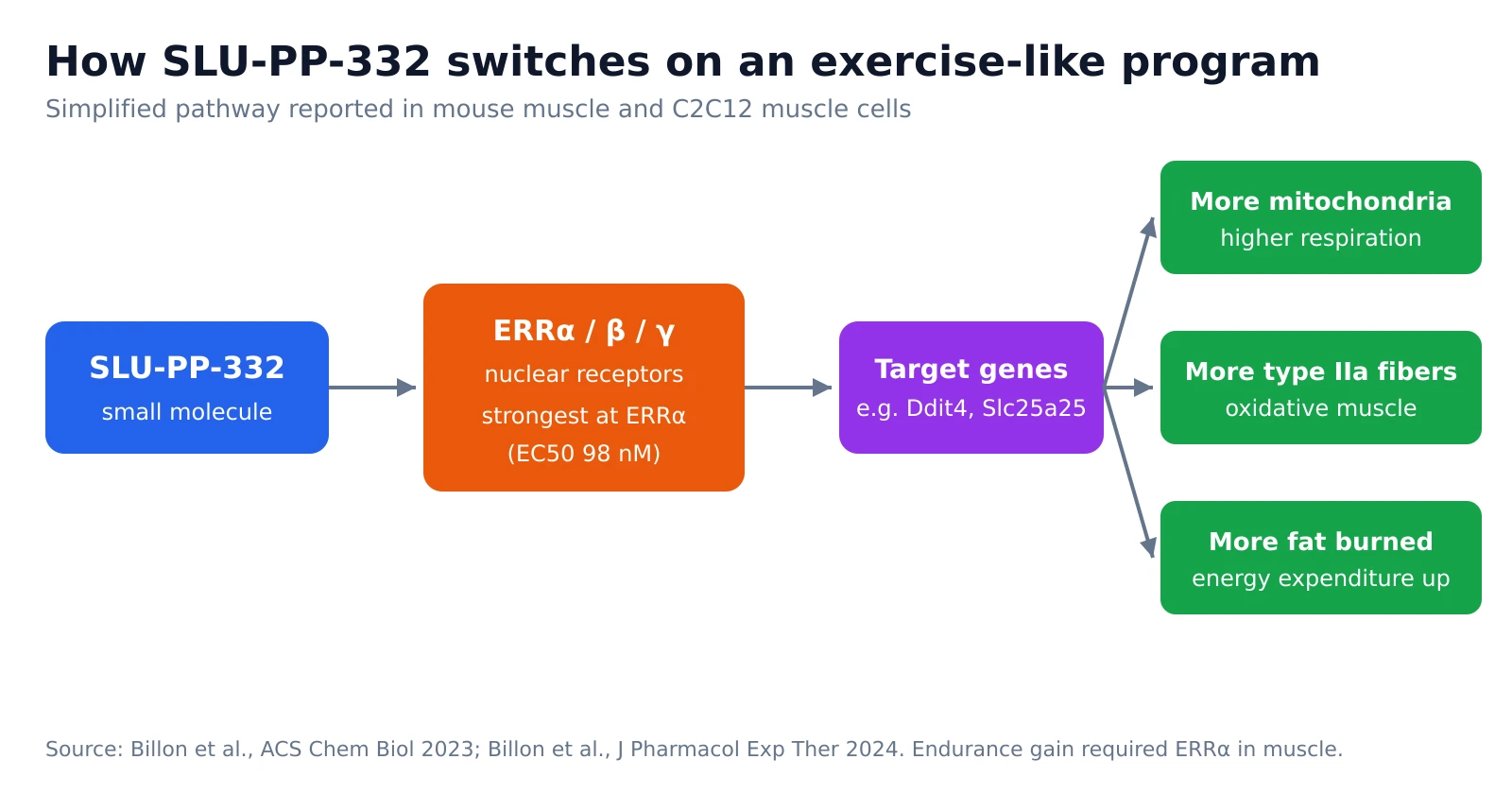
Figure 1. How SLU-PP-332 switches on an exercise-like program. A simplified view of the pathway reported in mouse muscle and C2C12 muscle cells. Source: Billon et al., ACS Chem Biol 2023 and J Pharmacol Exp Ther 2024 [1,3].
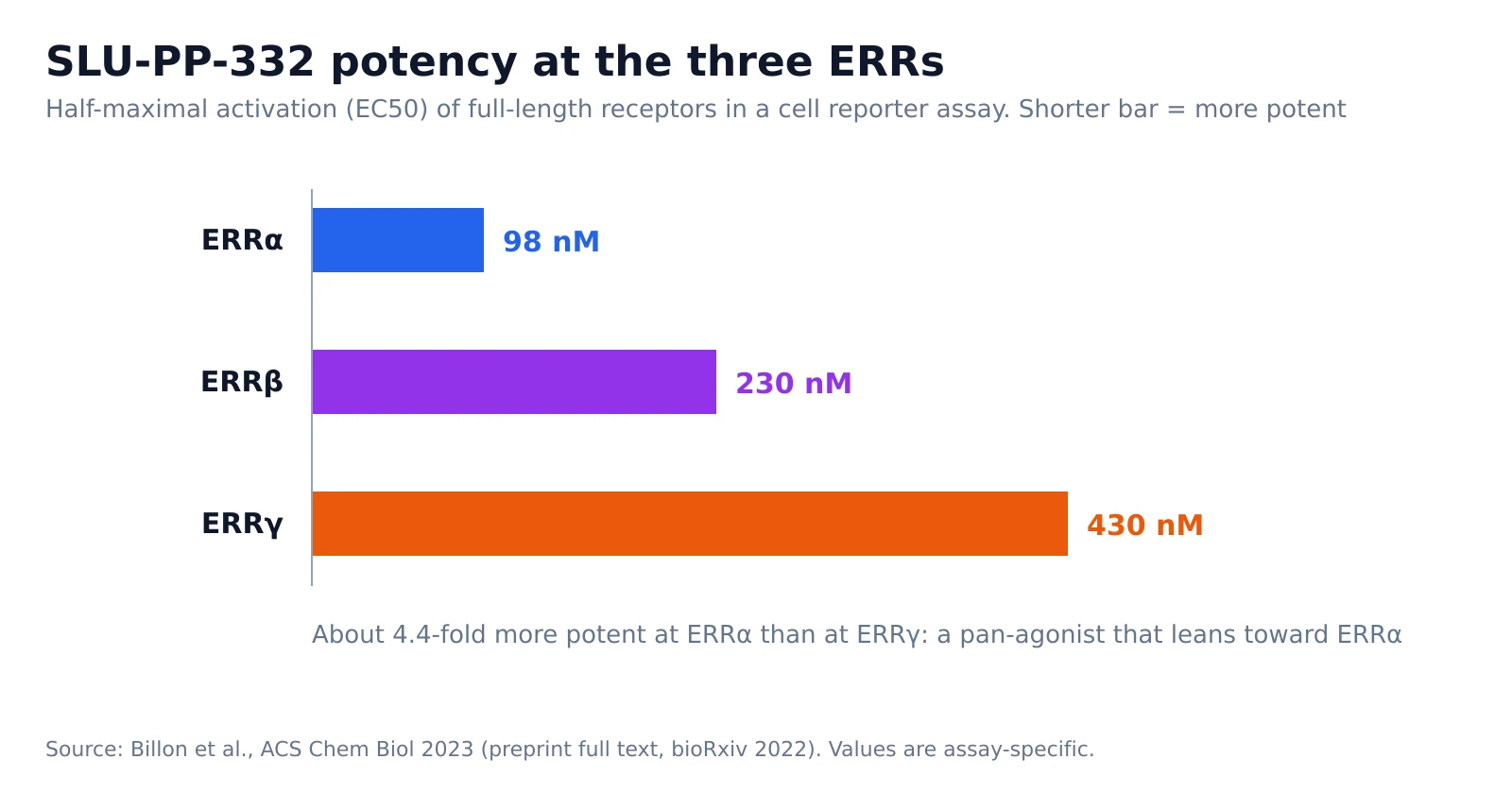
Figure 2. SLU-PP-332 potency at the three ERRs. Half-maximal activation of full-length receptors in a cell reporter assay; lower is more potent. Source: Billon et al., bioRxiv 2022, published in ACS Chem Biol 2023 [1,2]. Values are assay-specific.
What did SLU-PP-332 do in animal studies?
The mice ran further and stayed leaner. Those are the two results that made the compound known, and both come from the group that developed it.
Endurance. Young male C57BL/6J mice given SLU-PP-332 by injection for about a week ran about 70% longer and about 45% further on a treadmill to exhaustion than vehicle-treated mice (n=6 per group), with no exercise training [1,2]. Their muscle showed more type IIa fibers, more mitochondria and higher succinate dehydrogenase staining, a marker of oxidative capacity [2].
Obesity. Diet-induced obese mice treated twice a day for about a month gained about ten times less fat than untreated mice and lost about 12% of their own body weight, while eating the same amount of food and without moving more [3,4]. The paper also reports higher energy expenditure and fatty acid oxidation, and better insulin sensitivity, in diet-induced obese and leptin-deficient ob/ob mice [3].
Heart and kidney. In mice with pressure-overload heart failure, SLU-PP-332 and a second ERR agonist improved ejection fraction, reduced fibrosis and increased survival without changing heart enlargement; ERRγ carried most of that effect [5]. In 21-month-old mice, eight weeks of treatment reversed age-related albuminuria, podocyte loss, mitochondrial dysfunction and kidney inflammation [6].
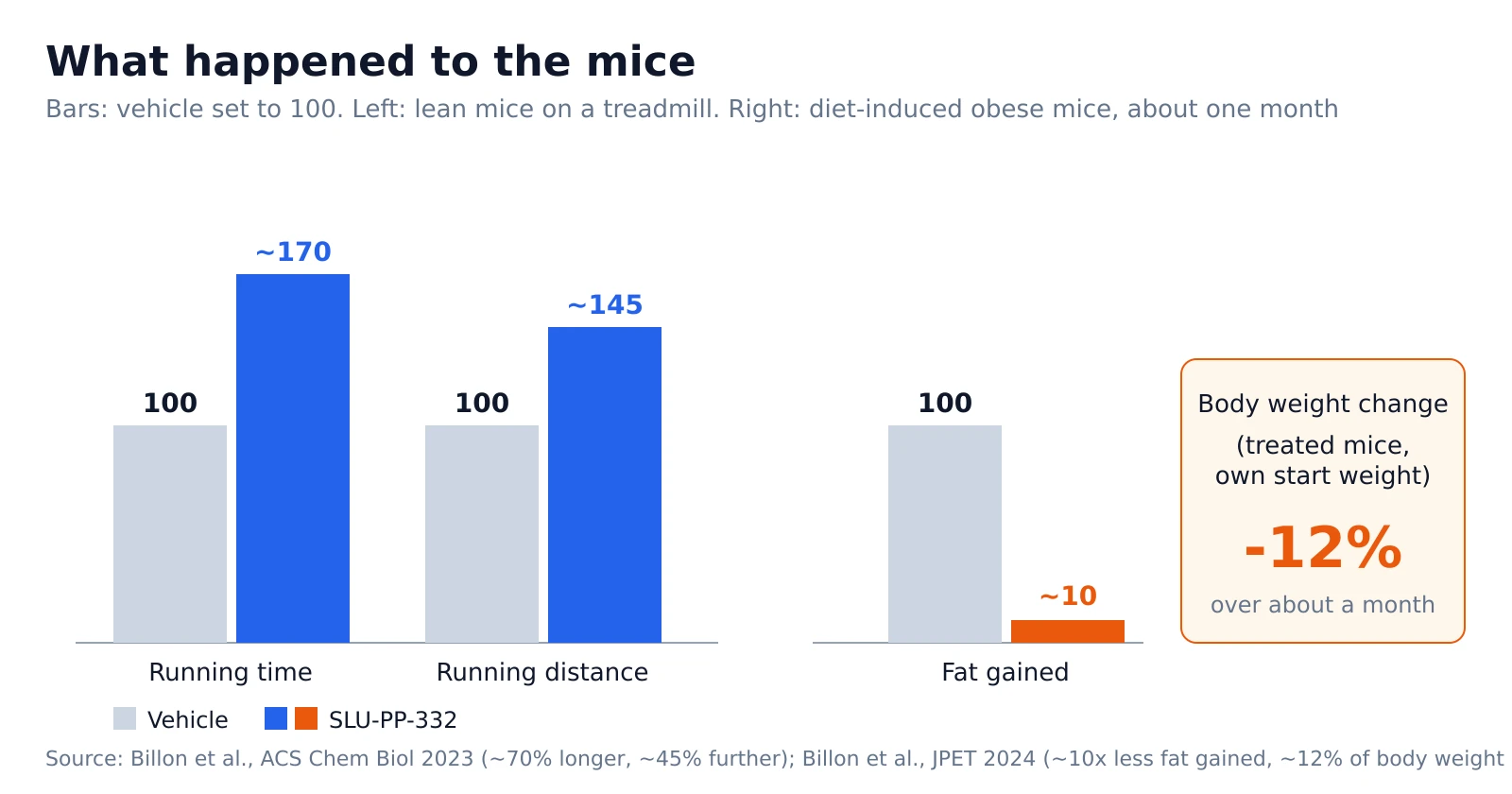
Figure 3. What happened to the mice. Bars: vehicle set to 100 for running time, running distance and fat gained. The separate body weight panel shows the treated obese mice's own weight change (about 12% lost over about a month), not a comparison with vehicle. Endurance from lean mice after about a week of treatment; fat gain and body weight from diet-induced obese mice. Sources: Billon et al., ACS Chem Biol 2023 and J Pharmacol Exp Ther 2024 [1,3,4]. The studies shown used injected compound, not oral capsules.
SLU-PP-332 vs SLU-PP-915
Both are pan-ERR agonists from the same research program, but they are structurally different molecules [5]. SLU-PP-332 is the original, published compound with the endurance, obesity, heart and kidney data above. SLU-PP-915 is a structurally distinct agonist tested alongside it in the heart failure model, where both compounds improved cardiac function [5]. Results from one should not be assumed for the other.
What is SLU-PP-332 made of?
It is a small organic molecule, not a peptide: no amino acids, no sequence, and a molecular weight under 300.
SLU-PP-332 is an acylhydrazone. A 4-hydroxybenzoyl group is joined through a hydrazone link (C(=O)NH-N=CH) to a naphthalene ring. It is made by condensing 2-naphthaldehyde with 4-hydroxybenzohydrazide [2]. The formula is C18H14N2O2 and the molecular weight is 290.32 g/mol [8].
SLU-PP-332 at a glance
Compound: SLU-PP-332, (E)-4-hydroxy-N'-(naphthalen-2-ylmethylene)benzohydrazide [2]
Class: Synthetic small molecule; pan-agonist of estrogen-related receptors ERRα, ERRβ and ERRγ. Not a peptide
Structure: Acylhydrazone linking a 4-hydroxyphenyl group to a naphthalene ring; CAS 303760-60-3; PubChem CID 5404083 [8]
Molecular formula and weight: C18H14N2O2, 290.32 g/mol [8]
Strength: 250 mcg per capsule, 60 capsules per bottle (15 mg per bottle)
Identity and purity: 99.31% by UHPLC with mass spectrometry on the current lot (July 18, 2025), tested by an independent lab; the certificate is published in the COA library
Appearance: Capsules in a sealed bottle
Potency: EC50 98 nM (ERRα), 230 nM (ERRβ), 430 nM (ERRγ) in full-length receptor assays [2]
Regulatory status: Not an approved drug anywhere; no clinical trials published or registered. Research use only
Is SLU-PP-332 legal or FDA approved?
It is not FDA approved, and it has never been tested in a clinical trial. SLU-PP-332 is an experimental research compound: all published efficacy data come from mice and cultured cells [1,3,5,6]. The developing group described it in 2023 as being at an early stage, with structural refinement and further animal safety work still ahead of any clinical testing [4]. NextGenPeps sells it only as a research chemical for in vitro and approved animal work.
What is SLU-PP-332 used to study?
Researchers use it as a chemical switch for ERR signalling, to ask what happens when the exercise gene program is turned on without exercise.
Exercise mimetics. Endurance, fiber-type switching and mitochondrial biogenesis in sedentary mice, and how much of the exercise response runs through ERRα [1].
Obesity and metabolic syndrome. Fat mass, energy expenditure, fatty acid oxidation and insulin sensitivity in diet-induced obese and ob/ob mice [3].
Heart failure. Cardiac fatty acid metabolism and mitochondrial function in pressure-overload models, where ERRγ is the main mediator [5].
Kidney aging. Mitochondrial dysfunction and inflammation through the cGAS-STING and STAT3 pathways in aged mouse kidney [6].
Muscle cell aging. In primary myoblasts cultured from biopsies of physically inactive donors, 10 µM SLU-PP-332 for 48 hours lowered reactive oxygen species by 37.7%, raised glutathione by 117.4% and improved myotube formation [7].
Buying SLU-PP-332 for research: what each bottle includes
Every lot is tested by independent labs and the certificate of analysis is published in the NextGenPeps COA library. The current lot was analysed by UHPLC with mass spectrometry for identity and content, at 99.31% purity.
Verified identity and purity. 99.31% by UHPLC-MS on the current lot; the certificate is published in the COA library.
Defined content. 250 mcg of SLU-PP-332 per capsule, 60 capsules per bottle.
US-based fulfilment. Orders ship within 24 hours from the United States, with free US shipping on orders over $150.
Research use only. SLU-PP-332 is sold strictly for in vitro and approved animal research. It is not for human or veterinary use and is not sold as a drug, supplement, diagnostic or performance product.
SLU-PP-332 handling, storage and analytical notes
Format. Supplied as capsules in a sealed bottle, 250 mcg per capsule. No dosing instructions are supplied, and none should be taken from the studies above, which used injected compound at doses set per kilogram.
Storage. Keep the bottle tightly closed, dry and protected from light, at 2 to 8 °C, the condition recorded on the lot's certificate. Avoid humid storage and leaving the bottle open.
Solubility. SLU-PP-332 is hydrophobic (computed XLogP 3.7) and poorly soluble in water; in vitro work typically dissolves it in DMSO [8].
Naming. "SLU" stands for Saint Louis University. SLU-PP-332 is distinct from SLU-PP-915, a later ERR agonist, and from GSK4716, the older ERR tool compound it was derived from. Despite frequent use of the word online, it is not a peptide.
What is not established about SLU-PP-332
Clinical data. No clinical trial has been published or registered, so there are no clinical safety or efficacy data.
Oral exposure. The published endurance, obesity and heart studies gave SLU-PP-332 by injection. How well it is absorbed when given orally has not been established in published work.
Independent replication. The endurance and obesity results come from the group that developed the compound [1,3]; independent replication is limited.
Long-term effects. The longest published treatment is eight weeks, in aged mice [6]. Effects of longer ERR activation are unknown.
Research Use Only. The statements made within this website have not been evaluated by the US Food and Drug Administration. These materials are not intended to diagnose, treat, cure or prevent any disease and are not intended for human or veterinary use. Studies described on this page are reported for scientific context and are not guidance of any kind.