Research purposes only. Products are not for human consumption.Shop Now
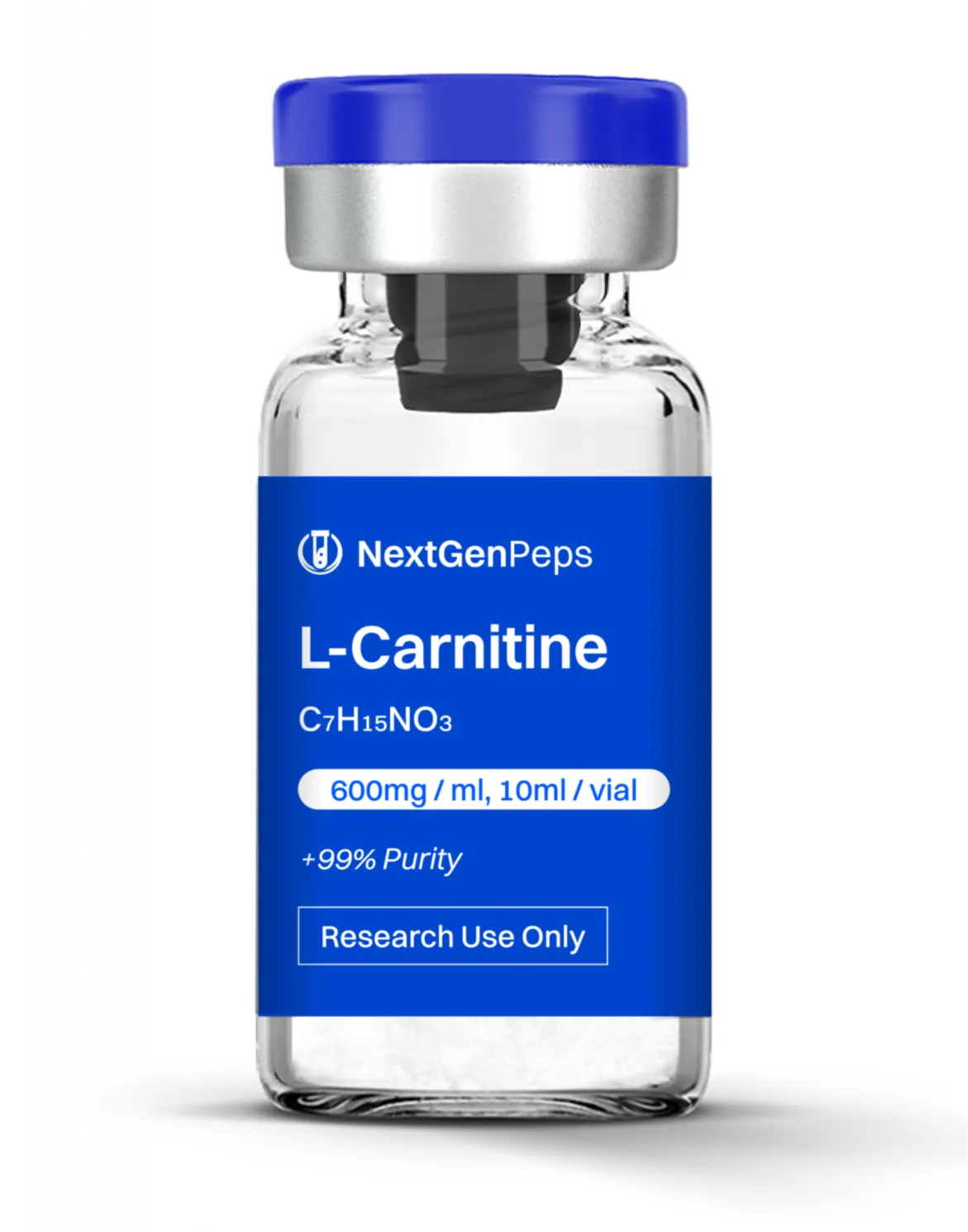
L-Carnitine - 600mg
99.47% HPLC purityLot-tested · COA below

L-Carnitine

5.0· 3 reviewsout of 5In stock

Buy L-Carnitine (600 mg vial), the fatty acid carrier studied in mitochondrial and metabolic research. Independent lab COA on every lot. Ships in 24 hours.

Regular price $79.00Sale price $63.00You save $16.00 (20%)
1

Bundle & Save

Need more?

Select and SubscribeSave 20%
Order within 15h 11m to ship Mon, Nov 9Cutoff 5:00 PM PST · ships next business day
U.S. delivery availableFree shipping on orders over $150.00
Reship policyWrong item sent? We reship it free. Transit issues reviewed case by case.

Secure checkout · Visa · Mastercard · American Express · Discover · PayPal · Venmo · Apple Pay

Test results · tested sample

99.47%

Reported purity · Tested by Bioregen

Tested
May 7, 2026
Labeled
600mg
Lab
Bioregen
View certificate (PDF) →

Product details

L-Carnitine, in brief. Fat is the densest fuel a cell can burn, but the long-chain fatty acids that make up most of it cannot cross into the mitochondria, where the burning happens, on their own. L-carnitine is the carrier that gets them in. It is a small, water-soluble molecule, not a peptide, made in animal tissues from a modified form of the amino acid lysine and also taken in from food. Enzymes attach a fatty acid to carnitine on the outside of the mitochondrion, a transporter swaps it across the inner membrane, and a second enzyme hands the fatty acid over for beta-oxidation inside. Carnitine then goes back out for the next load. It also works in reverse, carrying surplus fuel fragments out of mitochondria so they do not pile up. Almost all of it sits in heart and skeletal muscle, the tissues that burn the most fat. NextGenPeps supplies L-Carnitine as a 600 mg research material for laboratory use only.

What does L-Carnitine do?

It carries fat into the mitochondria so it can be burned. Without carnitine, long-chain fatty acids stay in the cytosol, because they cannot cross the inner mitochondrial membrane unaided.[1,2] That single job explains most of what carnitine is studied for: tissues that run on fat, such as heart and skeletal muscle, hold almost all of it.[2]

In practice that means three things:

  • Fuel import. It moves long-chain fatty acids into the mitochondrial matrix for beta-oxidation and ATP production.[1,2]

  • Fuel export. It carries excess acyl groups out of mitochondria as acylcarnitines, which relieves overload when fuel supply outruns the cell's ability to burn it.[3,4]

  • A fuel switch. By buffering the acetyl and acyl pool it helps mitochondria move between burning fat and burning glucose; obese rats short of carnitine lost that flexibility and regained it with supplementation.[4]

NextGenPeps supplies L-Carnitine for in vitro research and approved animal studies only. It is not sold as a drug, supplement or diagnostic.

How does L-Carnitine work?

Through a three-step relay across two membranes, known as the carnitine shuttle (Figure 1). On the outer mitochondrial membrane, carnitine palmitoyltransferase 1 (CPT1) swaps the coenzyme A on a fatty acyl-CoA for carnitine, making an acylcarnitine. Carnitine-acylcarnitine translocase (CACT) then carries that acylcarnitine across the inner membrane in exchange for a free carnitine. On the matrix side, CPT2 swaps carnitine back for coenzyme A, releasing the fatty acyl-CoA for beta-oxidation and freeing the carnitine to return.[2]

The CPT1 step is the control point for the whole pathway. It is inhibited by malonyl-CoA, the first intermediate in fat synthesis, so a cell that is building fat automatically stops importing it for burning.[2] Cells take carnitine up from their surroundings through a high-affinity transporter, OCTN2, which the kidney also uses to hold on to it.[1]
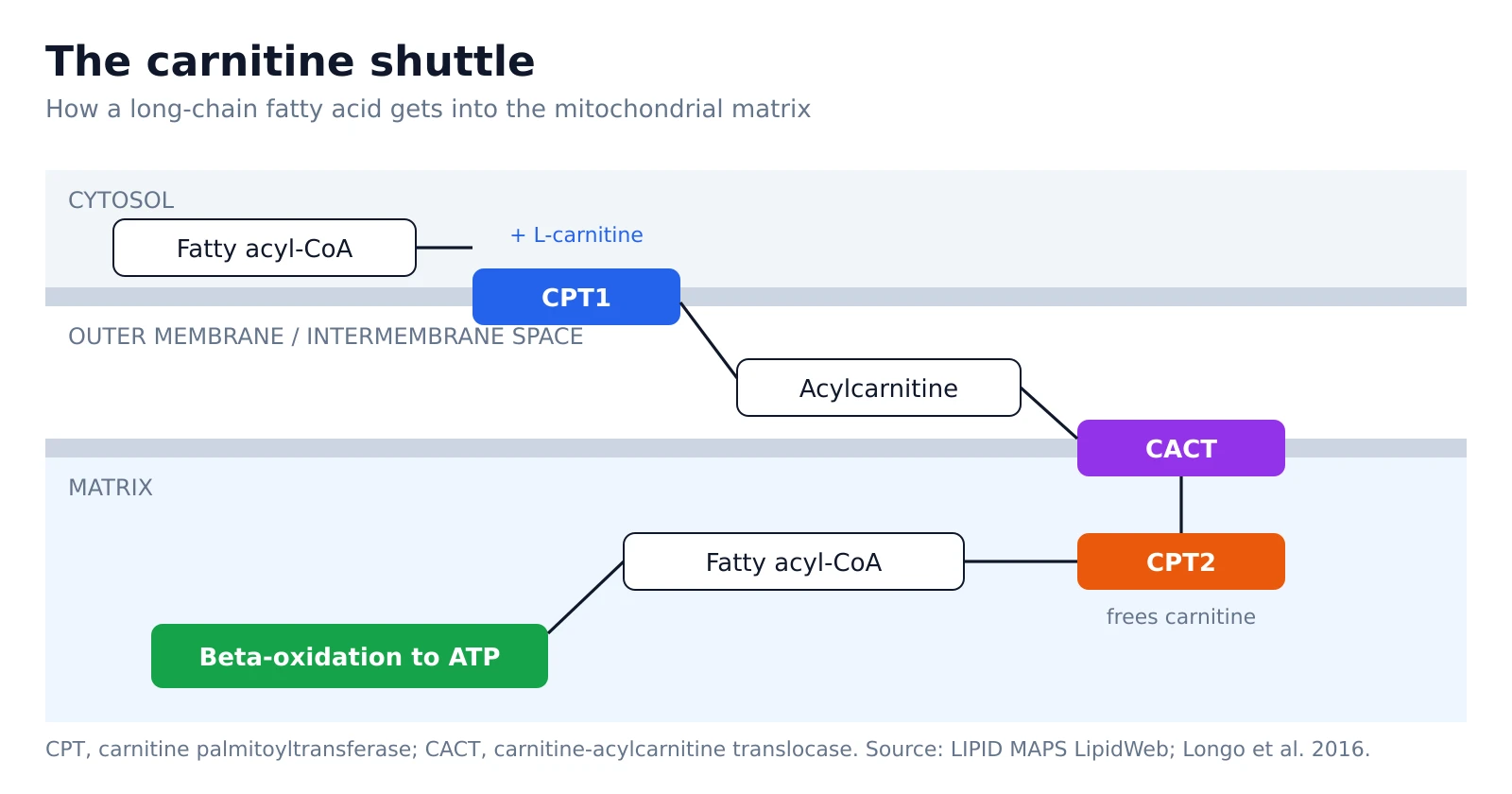
Diagram of the carnitine shuttle: fatty acyl-CoA in the cytosol is joined to L-carnitine by CPT1 on the outer membrane to form acylcarnitine, CACT carries it across the inner membrane, and CPT2 in the matrix releases fatty acyl-CoA for beta-oxidation and frees carnitine.

Figure 1. The carnitine shuttle. Carnitine is attached by CPT1, carried across the inner membrane by CACT, and removed again by CPT2 so the fatty acid can enter beta-oxidation. Based on LIPID MAPS and Longo et al.[1,2]

What did L-Carnitine do in animal studies?

In obese and diabetic rodents it raised energy expenditure and improved glucose handling, usually without changing body weight. Results on weight itself are mixed, and one well-known mouse study found a downside through gut bacteria.

Obese diabetic mice. When genetically obese, diabetic mice were fed chow containing 0.5% L-carnitine, insulin-stimulated energy expenditure rose from 172 to 210 kJ per kg fat-free mass per hour, and the daily respiratory exchange ratio rose from 0.886 to 0.914 (p<0.01), a shift toward burning more carbohydrate. Plasma acetylcarnitine rose 2.3-fold and made up 86% of the circulating acylcarnitine pool. Insulin-stimulated glucose disposal improved in these mice and in normal mice on a high-fat diet, while body weight and food intake did not change (Figure 2).[3]
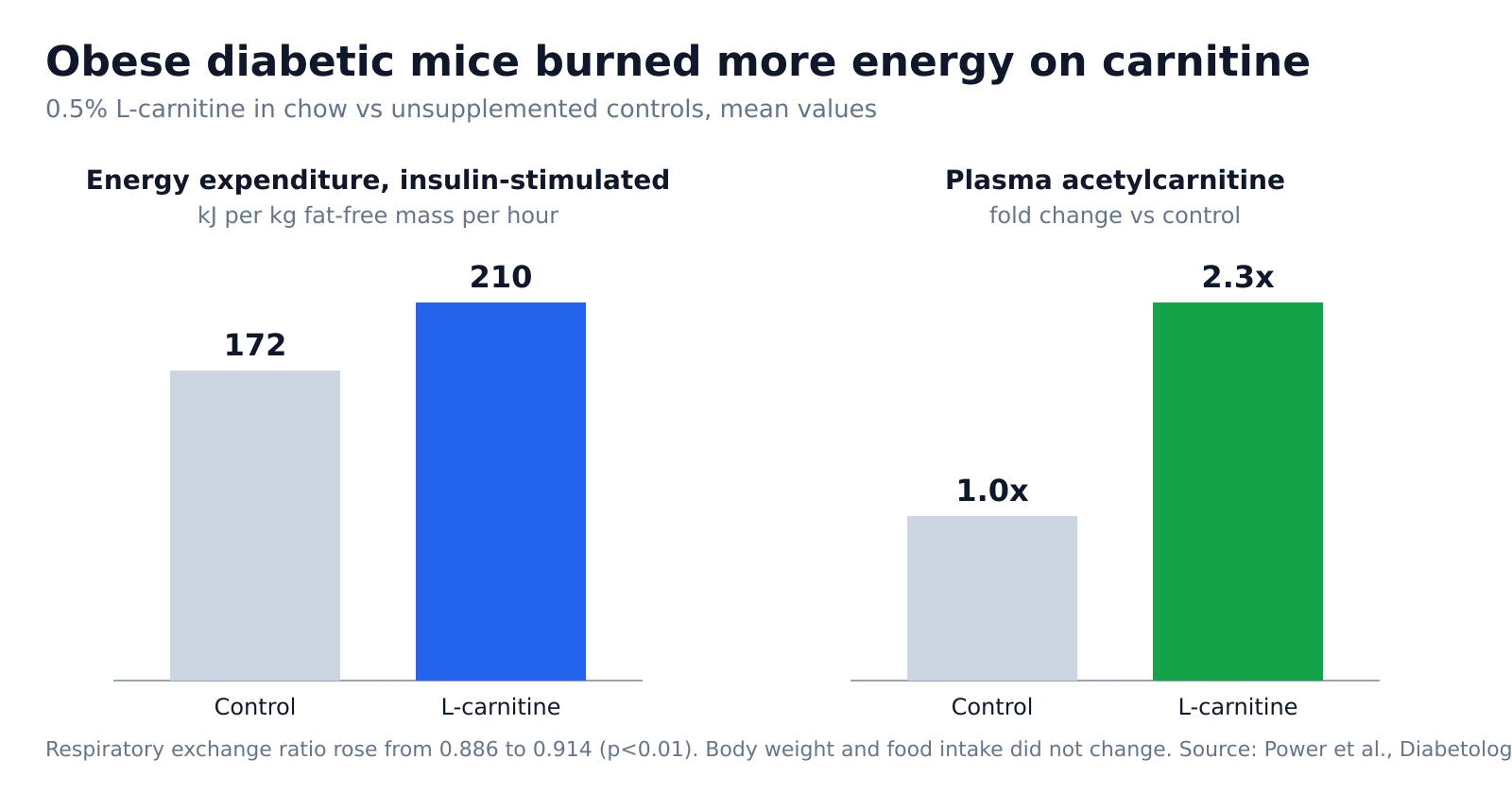
Bar chart: in obese diabetic mice fed 0.5% L-carnitine, insulin-stimulated energy expenditure was 210 versus 172 kJ per kg fat-free mass per hour in controls, and plasma acetylcarnitine was 2.3 times the control level.

Figure 2. Energy expenditure and acetylcarnitine in obese diabetic mice. Mice fed chow with 0.5% L-carnitine burned about 22% more energy under insulin stimulation than unsupplemented controls, and carried 2.3 times as much acetylcarnitine in plasma, with no change in body weight. Data from Power et al., Diabetologia 2007.[3]

Aged and obese rats. Rats kept on a high-fat diet for 12 months, along with old and genetically diabetic animals, had lower whole-body carnitine. Their muscle mitochondria oxidized fat incompletely and switched poorly to pyruvate. Eight weeks of oral carnitine reversed those mitochondrial defects, increased acetylcarnitine efflux and urinary excretion, and improved glucose tolerance.[4]

High-fat-fed mice and body weight. In C57BL/6J mice on a high-fat diet for 12 weeks, 0.5% dietary L-carnitine lowered body weight, abdominal fat and serum leptin and raised liver CPT1 activity.[5] A 2022 dose study found that 0.5% to 4% L-carnitine reduced weight gain, visceral fat and glucose intolerance in high-fat-fed mice.[6] The 2007 mouse study above, by contrast, found no weight change.[3]

Carnitine deficiency. The juvenile visceral steatosis (jvs) mouse lacks a working OCTN2 transporter.[8] Only 28% of jvs pups were alive at day 28 against 100% of normal pups, with hypoglycemia from day 21; on a carnitine-rich diet, hypoglycemia was absent at day 28.[10] Adult jvs mice develop an enlarged heart, and carnitine given from one month of age significantly suppressed that hypertrophy.[9]

Gut bacteria and TMAO. In mice, gut bacteria convert dietary L-carnitine to trimethylamine (TMA), which the liver oxidizes to TMAO. Carnitine-fed mice had plasma TMAO of 114 µM against 17 µM on chow (Figure 3). In atherosclerosis-prone Apoe-knockout mice, carnitine in the drinking water roughly doubled aortic root plaque, and suppressing gut bacteria with antibiotics completely blocked that increase.[7]
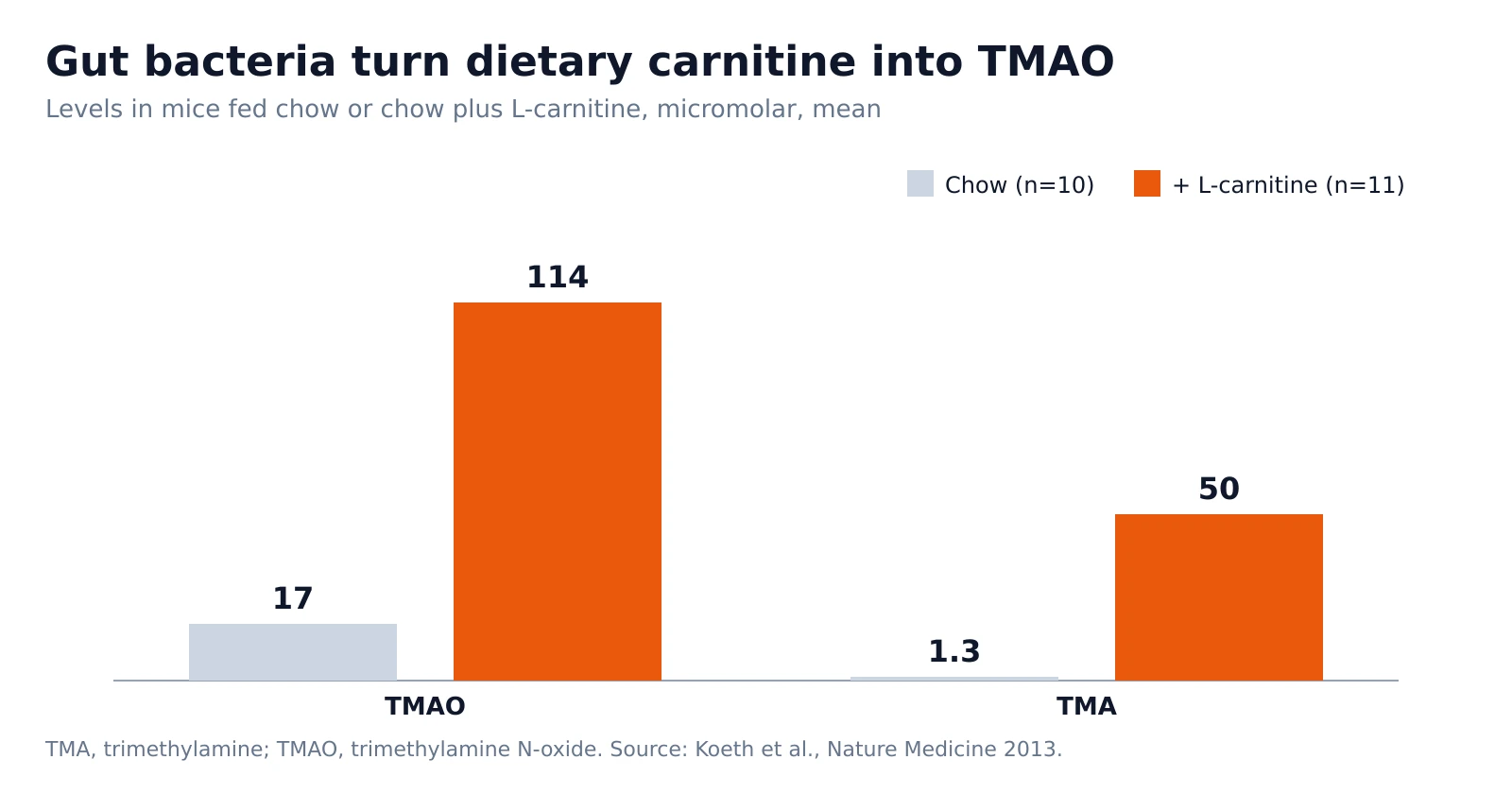
Bar chart: plasma TMAO was 114 micromolar in carnitine-fed mice versus 17 on chow, and TMA was 50 versus 1.3 micromolar.

Figure 3. TMAO and TMA in carnitine-fed mice. Gut bacteria turned dietary carnitine into TMA and TMAO, raising plasma TMAO about sevenfold. Data from Koeth et al., Nature Medicine 2013.[7]

L-Carnitine vs acetyl-L-carnitine

They are the same carrier, with and without an acetyl group. Acetyl-L-carnitine is L-carnitine with an acetyl group attached at the 3-hydroxyl, the same position where fatty acids are attached in the shuttle.[2] It is also the main form carnitine takes after a load: in carnitine-fed mice acetylcarnitine was 86% of the plasma acylcarnitine pool and 88% of the skeletal muscle pool.[3]

  • L-carnitine: C7H15NO3, 161.20 g/mol; the free carrier used by CPT1, CACT and CPT2.[11]

  • Acetyl-L-carnitine: C9H17NO4, about 203.2 g/mol (calculated); the acetyl ester, formed when mitochondria export surplus two-carbon units.[3,4]

  • For research design: the two are not interchangeable doses of one compound. Studies should state which form, and whether results are reported as free carnitine, acetylcarnitine or total carnitine.

What is L-Carnitine made of?

L-carnitine is a small quaternary ammonium compound: a four-carbon butanoic acid backbone with a hydroxyl group on carbon 3 and a trimethylammonium group on carbon 4. Its systematic name is (R)-3-hydroxy-4-(trimethylammonio)butanoate, and because it carries both a positive and a negative charge it exists as an inner salt.[2,11] It is not a peptide and contains no peptide bonds.

In animal cells it is built from trimethyllysine, released when proteins that contain it are broken down, by way of butyrobetaine.[2]

L-Carnitine at a glance

  • Compound: L-carnitine (levocarnitine)

  • Class: Quaternary ammonium compound; amino acid derivative, not a peptide

  • Structure: (R)-3-hydroxy-4-(trimethylammonio)butanoate, inner salt[11]

  • Molecular formula: C7H15NO3[11]

  • Molecular weight: 161.20 g/mol[11]

  • Strength: 600 mg per vial

  • Identity and purity: Every lot is tested by independent labs and the certificate of analysis is published in the NextGenPeps COA library.

  • Appearance: Solid powder in a sealed vial. The pharmaceutical form is described as a white, crystalline, hygroscopic powder[11]

  • Reconstitution: Water or aqueous buffer; readily soluble in water[11]

  • Half-life: About 17.4 hours (apparent terminal) after intravenous dosing, in the prescribing information for a levocarnitine product[11]

  • Regulatory status: Levocarnitine is FDA-approved by prescription (Carnitor) for primary systemic carnitine deficiency and some secondary deficiencies.[11] The NextGenPeps material is research use only

Is L-Carnitine FDA approved?

As a prescription drug, yes, for specific deficiency conditions. Levocarnitine tablets, oral solution and injection (Carnitor) are approved for primary systemic carnitine deficiency and for secondary carnitine deficiency caused by inborn errors of metabolism; the injection is also approved for carnitine deficiency in end-stage renal disease on dialysis.[11] Research-grade material is a different product: it is not manufactured to a pharmaceutical label and is not approved for any use.

What is L-Carnitine used to study?

Researchers use it whenever fatty acid supply to mitochondria, or the clearance of surplus fuel from them, is the variable of interest.

  • Fatty acid oxidation. Carnitine supply and CPT1 activity are the standard levers for studying how cells import and burn long-chain fat.[1,2]

  • Insulin resistance and metabolic flexibility. Rodent models of obesity and diabetes use carnitine to test whether exporting excess acyl groups restores glucose handling.[3,4]

  • Diet-induced obesity. High-fat-fed mouse models track body weight, fat mass and liver lipid enzymes with and without dietary carnitine.[5,6]

  • Inherited carnitine deficiency. The jvs mouse, which lacks OCTN2, models systemic carnitine deficiency, its heart enlargement and its fasting hypoglycemia.[8,9,10]

  • Gut microbiome metabolism. Carnitine is a substrate for bacterial TMA production, used to study TMAO and atherosclerosis in mice.[7]

Buying L-Carnitine for research: what each vial includes

Every lot is tested by independent labs and the certificate of analysis is published in the NextGenPeps COA library.

  • Documentation. The lot's certificate of analysis is published in the COA library.

  • US-based fulfilment. Orders ship within 24 hours from the United States, with free US shipping on orders over $150.

  • Research use only. L-Carnitine is sold strictly for in vitro and approved animal research. It is not for human or veterinary use and is not sold as a drug, supplement or diagnostic.

L-Carnitine handling, storage and analytical notes

Format. Supplied as a solid in a sealed vial and dissolved in water or aqueous buffer before use. No dosing instructions are supplied, and none should be taken from the studies above.

Storage. Keep the sealed vial cold (2 to 8 °C) and dry; L-carnitine is hygroscopic and takes up moisture from air once opened.[11] Hold solutions at 2 to 8 °C and avoid repeated freeze-thaw cycles. For comparison, the pharmaceutical label stores its tablets and solutions at controlled room temperature.[11]

Weighing. Because the powder absorbs water, mass measured after exposure to air can overstate the carnitine content. Weigh quickly or work from a stock solution of known concentration.

Measurement. Carnitine in tissue and plasma exists as free carnitine and as many acylcarnitines. Mass spectrometry profiling is the usual way to separate them, and studies should report which pool they measured.[3]

Naming. L-carnitine, levocarnitine and (R)-carnitine are the same compound. Acetyl-L-carnitine is a separate compound, the acetyl ester.

What is not established about L-Carnitine

  • Weight effects. High-fat-fed mouse studies disagree: some report lower body weight and fat,[5,6] while others report better glucose handling with no change in weight.[3]

  • Net cardiovascular effect. Carnitine supports heart energy supply, yet its gut-bacterial conversion to TMAO increased plaque in atherosclerosis-prone mice.[7] Which effect dominates depends on the model and the microbiome.

  • Transfer between species. Most outcome data come from rodents fed carnitine in chow or drinking water. Uptake, gut metabolism and tissue levels differ between species and routes.[7,11]

  • Research-grade equivalence. Research material is not equivalent to a pharmaceutical product, so quantitative work should verify its own concentration.


Research Use Only. The statements made within this website have not been evaluated by the US Food and Drug Administration. These materials are not intended to diagnose, treat, cure or prevent any disease and are not intended for human or veterinary use. Studies described on this page are reported for scientific context and are not guidance of any kind.
Published research

Compound information

Molecular class
Quaternary ammonium compound; amino acid derivative (not a peptide)
Structure
(R)-3-hydroxy-4-(trimethylammonio)butanoate, inner salt
Molecular formula
C7H15NO3
Molecular weight
161.20 g/mol
Monoisotopic mass
161.1052 Da (calculated)
Strength
600 mg per vial
Physical form
Solid powder, sealed vial; hygroscopic
Solubility
Readily soluble in water
Purity
Every lot is tested by independent labs; the certificate of analysis is published in the NextGenPeps COA library
Key proteins
CPT1, CACT, CPT2 (mitochondrial shuttle); OCTN2 / SLC22A5 (cell uptake)
Regulatory status
Research use only. Pharmaceutical levocarnitine is prescription-only (Carnitor) for carnitine deficiency

Storage & stability

  • Solid, hygroscopic powder
  • Store cold and dry; keep the vial sealed until use
  • Avoid repeated freeze-thaw of solutions
Solid
2 to 8 °C in the sealed vial, protected from moisture
In solution
2 to 8 °C
Dissolve in
Water or aqueous buffer
Quantitation
Hygroscopic; verify concentration of stock solutions

Cited literature

  1. 01
    Carnitine transport and fatty acid oxidation

    Longo N, Frigeni M, Pasquali M · Biochim Biophys Acta 2016 · PubMed · DOI · Free full text

    Review of carnitine's role in moving long-chain fatty acids into mitochondria and of OCTN2, the transporter whose loss causes primary carnitine deficiency. Clinically oriented; covers transport more than the CPT enzymes.

  2. 02
    Carnitine, acylcarnitines and beta-oxidation of fatty acids

    LIPID MAPS LipidWeb · LIPID MAPS (web resource)

    Reference page on carnitine structure, biosynthesis from trimethyllysine, the CPT1-CACT-CPT2 shuttle and malonyl-CoA control of CPT1. A curated web resource, not a peer-reviewed article.

  3. 03
    Carnitine revisited: potential use as adjunctive treatment in diabetes

    Power RA, Hulver MW, Zhang JY, et al. · Diabetologia 2007 · PubMed · DOI · Free full text

    0.5% dietary L-carnitine raised insulin-stimulated energy expenditure (172 to 210 kJ/kg FFM/h) and plasma acetylcarnitine 2.3-fold in obese diabetic mice and improved glucose disposal, without changing body weight. Short studies, 1 to 8 weeks, in mice.

  4. 04
    Carnitine insufficiency caused by aging and overnutrition compromises mitochondrial performance and metabolic control

    Noland RC, Koves TR, Seiler SE, et al. · J Biol Chem 2009 · PubMed · DOI · Free full text

    Carnitine was low in aged, diabetic and diet-obese rodents; 8 weeks of oral carnitine reversed mitochondrial fuel-switching defects and improved glucose tolerance in obese rats. Rodent and cultured-cell data.

  5. 05
    L-Carnitine reduces obesity caused by high-fat diet in C57BL/6J mice

    Mun EG, Soh JR, Cha YS · Food Sci Biotechnol 2007

    12 weeks of 0.5% dietary L-carnitine lowered body weight, abdominal fat and serum leptin and raised hepatic CPT1 activity in high-fat-fed mice. Small regional journal; group sizes and effect sizes are not in the abstract.

  6. 06
    Dietary supplementation of L-carnitine ameliorates metabolic syndrome independent of trimethylamine N-oxide produced by gut microbes in high-fat diet-induced obese mice

    Gao X, Sun C, Zhang Y, Hu S, Li D · Food Funct 2022 · DOI

    L-carnitine at 0.5% to 4% of diet reduced weight gain, visceral fat and glucose intolerance in high-fat-fed mice while raising serum TMAO. Mouse study; the benefit was judged independent of TMAO.

  7. 07
    Intestinal microbiota metabolism of L-carnitine, a nutrient in red meat, promotes atherosclerosis

    Koeth RA, Wang Z, Levison BS, et al. · Nat Med 2013 · PubMed · DOI · Free full text

    In mice, gut bacteria converted dietary carnitine to TMA and TMAO (plasma TMAO 114 vs 17 µM), and carnitine roughly doubled aortic plaque in Apoe-knockout mice, an effect abolished by antibiotics. Atherosclerosis-prone model with high carnitine intake.

  8. 08
    Primary systemic carnitine deficiency is caused by mutations in a gene encoding sodium ion-dependent carnitine transporter

    Nezu J, Tamai I, Oku A, et al. · Nat Genet 1999 · PubMed · DOI

    Identified a missense mutation in Slc22a5 (OCTN2) that abolishes carnitine transport in the jvs mouse, establishing OCTN2 loss as the cause of systemic carnitine deficiency. Genetic study; no treatment outcomes.

  9. 09
    Cardiac hypertrophy in juvenile visceral steatosis (jvs) mice with systemic carnitine deficiency

    Horiuchi M, et al. · FEBS Lett 1993 · PubMed · DOI

    Adult jvs mice developed cardiac hypertrophy, which carnitine given from one month of age significantly suppressed. The abstract does not report the size of the effect.

  10. 10
    Reduced carnitine level causes death from hypoglycemia: possible involvement of suppression of hypothalamic orexin expression during weaning period

    Kuwajima M, Fujihara H, Sei H, et al. · Endocr J 2007 · DOI · Free full text

    Survival of jvs mice fell to 28% by day 28 against 100% of normal mice, with hypoglycemia from day 21; a carnitine-rich diet prevented hypoglycemia at day 28. Survival on the carnitine diet was not reported in the abstract.

  11. 11
    Carnitor (levocarnitine) tablets, oral solution and injection: US prescribing information

    Leadiant Biosciences / US FDA · FDA label 2015 · Free full text

    Approved indications, chemical name, formula C7H15NO3, molecular weight 161.20, physical description and pharmacokinetics (oral bioavailability about 15%, terminal half-life 17.4 h IV). Figures apply to the pharmaceutical product, not research material.

Frequently asked questions

How is L-Carnitine packaged?

L-Carnitine is supplied in the product format and quantity shown for the selected variant. Please inspect the sealed package when it arrives and contact support promptly if the package or labeling appears damaged.

How is L-Carnitine shipped?

Orders are shipped within the United States via USPS. Transit times are typically 3–7 business days, depending on destination and carrier conditions. Tracking information is provided when available.

How should L-Carnitine be stored?

Storage requirements are product-specific. Keep L-Carnitine in its original labeled container and follow the product documentation or manufacturer instructions supplied with the order. Contact support if the applicable storage guidance is not available.

What is the refund policy for L-Carnitine?

Due to the nature of research materials, NextGenPeps orders are final and are not eligible for refunds, returns, or exchanges. Review the shipping and reship policies before ordering.

Is L-Carnitine intended for human use?

No. NextGenPeps materials are supplied strictly for laboratory research and development use and are not intended for human or animal consumption, clinical use, diagnostic use, cosmetic use, or dietary use.

Customer reviews

5.0out of 5 · 3 reviews

Verified Purity

The LC-MS Chromatogram on the COA shows only one peak, verifying high purity absent of other substances. The mass-to-charge ratio is also accurate for L-Carnitine, proving its identity.

Seth M.

Thoughtful Support

My order status was pending for a few days. I emailed support about it and they sent it through plus upgraded me to expedited shipping for the wait and got delivered the next day

Anna C.

Quality You Can Trust

Top research grade Carnitine with test results from CoA listed to see the quality of the solution. Overall a solid product with testing to back it up

Martin R.

Common research questions

What is L-carnitine?

L-carnitine is a small quaternary ammonium compound, (R)-3-hydroxy-4-(trimethylammonio)butanoate, with the formula C7H15NO3 and a molecular weight of 161.20. Animal tissues make it from trimethyllysine and also obtain it from food, and almost all of it is held in heart and skeletal muscle. Its main job is carrying long-chain fatty acids into mitochondria so they can be oxidized. In research it is used to study fatty acid oxidation, mitochondrial fuel switching and carnitine deficiency.

What does L-carnitine do?

It shuttles long-chain fatty acids across the inner mitochondrial membrane: CPT1 attaches the fatty acid to carnitine, CACT carries the acylcarnitine across, and CPT2 releases it inside for beta-oxidation. It also carries surplus acyl groups out of mitochondria as acylcarnitines, which relieves fuel overload. In obese diabetic mice, dietary L-carnitine raised insulin-stimulated energy expenditure from 172 to 210 kJ per kg fat-free mass per hour and improved glucose disposal.

Is L-carnitine an amino acid or a peptide?

Neither, strictly. L-carnitine is an amino acid derivative built from a modified lysine, but it is not one of the amino acids used to make proteins and it contains no peptide bonds. Chemically it is a quaternary ammonium compound that exists as an inner salt. NextGenPeps lists it as a research compound rather than a peptide.

Does L-carnitine reduce fat in animal studies?

Results are mixed. In high-fat-fed C57BL/6J mice, 0.5% dietary L-carnitine for 12 weeks lowered body weight, abdominal fat and serum leptin, and a 2022 study found 0.5% to 4% carnitine reduced weight gain and visceral fat. Another mouse study found improved glucose handling and higher energy expenditure with no change in body weight or food intake. The effect appears to depend on diet, dose and model.

What is the difference between L-carnitine and acetyl-L-carnitine?

Acetyl-L-carnitine is L-carnitine with an acetyl group attached at its 3-hydroxyl, the same position where fatty acids are attached in the shuttle. It is also the main form that builds up after carnitine loading: in carnitine-fed mice it made up 86% of plasma acylcarnitines and 88% of the skeletal muscle pool. The two are distinct compounds with different molecular weights (161.2 versus about 203.2 g/mol), so studies should state which one they used.

What is the link between L-carnitine and TMAO?

Gut bacteria can convert dietary L-carnitine to trimethylamine (TMA), which the liver oxidizes to trimethylamine N-oxide (TMAO). In mice, carnitine feeding raised plasma TMAO from 17 to 114 µM, and in atherosclerosis-prone Apoe-knockout mice it roughly doubled aortic root plaque. Antibiotics that suppressed gut bacteria completely blocked that increase, which pointed to the bacterial metabolite rather than carnitine itself.

Frequently Researched with

Next Gen Peptides BPC-157 product image

✓ 99.748% purity

BPC-157

$46.00$37.00

Next Gen Peptides GHK-Cu product image

✓ 99.73% purity

GHK-Cu

$74.00$59.00

You have an unfinished subscription checkout

Continue your saved checkout, or replace its item with . Your saved selection and existing subscriptions will stay unchanged.

Continue saved checkout
NextGenPeps

Reliable and innovative research with our top-grade research materials and novel research compounds tailored to lead the competitive research industry. Choose research quality. Choose NextGenPeps.

Customer Service: +1 (971) 300-1435

Get 10% Off Your First Order

Sign up now and receive a 10% discount code valid on your next purchase!

Nextgenpeps LLC

The statements made within this website have not been evaluated by the US Food and Drug Administration. The materials offered by this company are not intended to diagnose, treat, cure, or prevent any disease. All research materials on this site are for laboratory research and development use only, and are not intended for human use.

NextGenPeps is a chemical supplier. NextGenPeps is not a compounding pharmacy or chemical compounding facility as defined under 503A of the Federal Food, Drug, and Cosmetic act. NextGenPeps is not an outsourcing facility as defined under 503B of the Federal Food, Drug, and Cosmetic Act.

Privacy PolicyTerms & ConditionsAffiliate Program

501 W Broadway Ste A, San Diego, CA 92101

© 2026 NextGenPeps. All rights reserved.

Visa
American Express
Mastercard
PayPal
Discover
Apple Pay