NOVEMBER SALE - 20% OFF Everything!Shop Now
GLP-S Peptide - 10mg / Vial
99.74% HPLC purityLot-tested · COA below

GLP-S Peptide

$78.00each · 10mg / Vial

5.0· 4 reviewsout of 5In stock

GLP-S is a long-acting GLP-1 receptor agonist, supplied as a 10 mg lyophilised research vial. Independent lot testing, public COA, ships within 24 hours.

Regular price $98.00Sale price $78.00You save $20.00 (20%)
1

Bundle & Save

Need more?

Select and SubscribeSave 20%
Order within 23h 52m to ship Mon, Nov 23Cutoff 5:00 PM PST · ships next business day
U.S. delivery availableFree shipping on orders over $150.00
Reship policyWrong item sent? We reship it free. Transit issues reviewed case by case.

Secure checkout · Visa · Mastercard · American Express · Discover · PayPal · Venmo · Apple Pay

Test results · tested sample

99.74%

Reported purity · Tested by Bioviridian

Tested
Sep 25, 2026
Labeled
10mg / Vial
Lab
Bioviridian
View certificate (PDF) →

Product details

GLP-S, in brief. GLP-1 is a hormone released from cells in the gut wall after food arrives, and its job is to tell the pancreas to release insulin, but only while glucose is high. Native GLP-1 is cut apart within minutes by an enzyme called DPP-4, which makes the natural hormone almost useless as a laboratory tool. GLP-S is a 31-residue rebuild of that hormone designed to last. One substituted amino acid at position 8 blocks the enzyme, and a long fatty acid chain hung off position 26 makes the molecule cling to albumin, the main carrier protein in blood, so it is released slowly instead of being cleared. The result is a GLP-1 receptor agonist that keeps the receptor engaged for days rather than minutes, with a half-maximal response of 6.2 pM in cell assays. In diet-induced obese mice it cut food intake and lowered body weight over three weeks, and in two strains of mice bred to build arterial plaque it slowed plaque development and reversed much of the inflammatory gene signature that goes with it. NextGenPeps supplies GLP-S as a 10 mg lyophilised research material for laboratory use only.

What does GLP-S do?

It switches on one receptor, the GLP-1 receptor, and holds it switched on far longer than the natural hormone can. Everything further down this page follows from those two facts: which receptor, and for how long.

In practice that means three things:

  • At the receptor, it is a full agonist at the GLP-1 receptor, a class B G-protein-coupled receptor, with a half-maximal response of 6.2 pM in cell assays against 8.5 pM for liraglutide measured alongside it.[1]

  • In circulation, it binds albumin strongly. Adding 2% albumin to the assay shifted its receptor IC50 by a factor of 940, against 43 for liraglutide, and its intravenous half-life in Goettingen minipigs was 46.1 hours against 12.4 hours.[1]

  • In animals, it lowered food intake and body weight in diet-induced obese mice[2] and slowed plaque development in two atherosclerosis-prone mouse strains.[3]

NextGenPeps supplies GLP-S for in vitro research and approved animal studies only. It is not sold as a drug, supplement, diagnostic or food.

How does GLP-S work?

Through the GLP-1 receptor, and then through whatever tissue that receptor happens to sit in.

The route from binding to effect is short. The GLP-1 receptor is a class B G-protein-coupled receptor. When an agonist binds, the receptor activates the G protein Gs, the cell raises its level of the messenger molecule cAMP, and cAMP activates protein kinase A. In pancreatic beta cells that output is glucose-dependent insulin secretion, which stops when glucose falls. The same receptor is expressed well beyond the pancreas, and GLP-1 signalling has been linked to slowed gastric emptying, reduced food intake, natriuresis and diuresis, and beta-cell proliferation in rodents.[4]

What GLP-S changes is duration, not the pathway. Two modifications do the work. Aib, an unnatural amino acid, replaces alanine at position 8, the site DPP-4 cleaves, so the enzyme cannot cut the peptide. A C-18 fatty diacid attached at position 26 binds albumin, which both shields the molecule from clearance and releases it slowly back into circulation.[1]

Where the signal reaches in the brain has been mapped directly. In mice, a labelled version of the compound did not cross the blood-brain barrier. It reached the area postrema, the nucleus tractus solitarius and the dorsal motor nucleus of the vagus, sites served by circumventricular organs and sites adjacent to the ventricles, and from there activated a wider set of nuclei. Mapping the immediate-early gene c-Fos found activation in ten nuclei in all, including the bed nucleus of the stria terminalis, the central amygdala, the parabrachial nucleus and the parasubthalamic nucleus, most of it secondary rather than direct.[2]
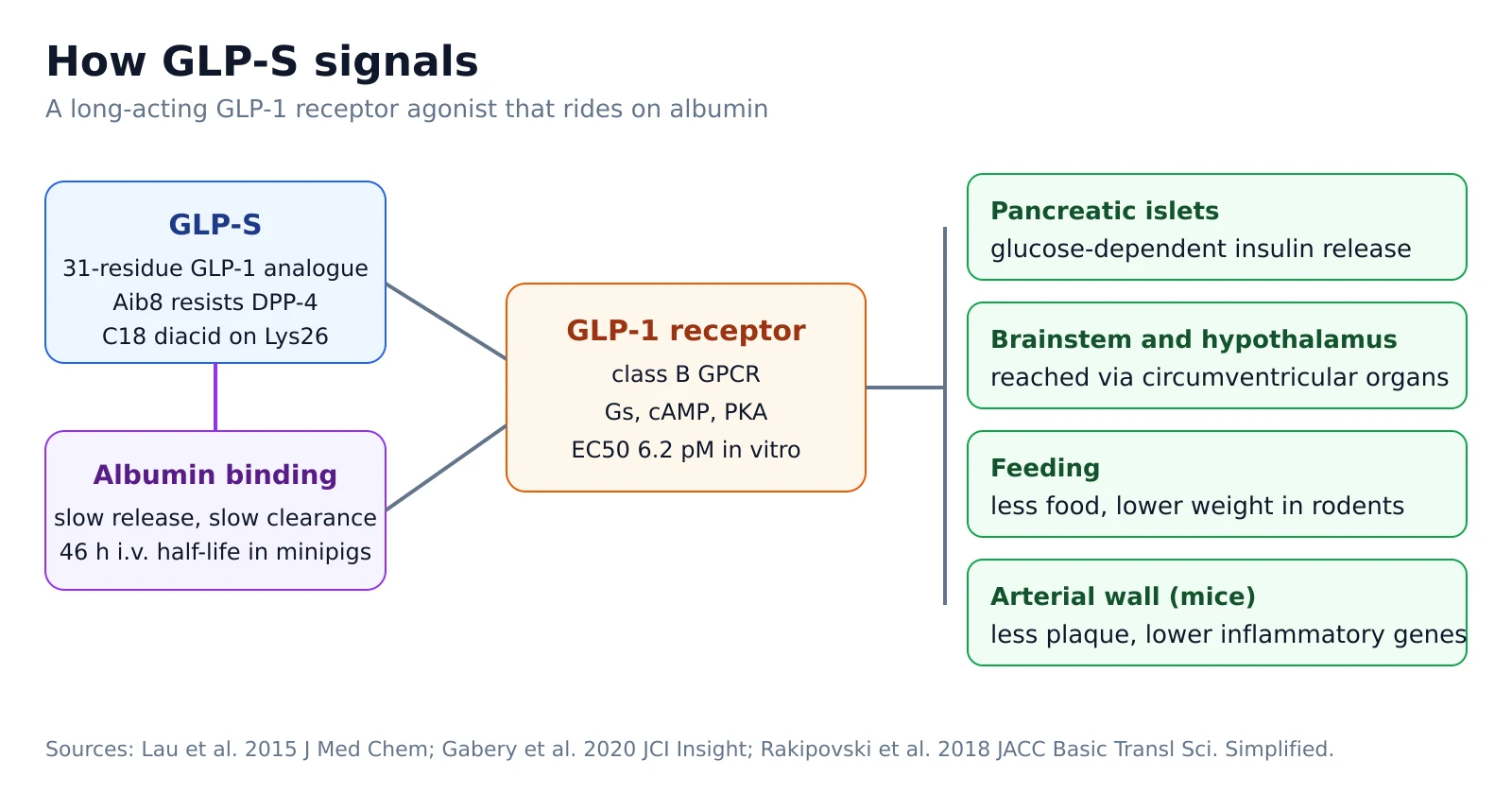
Diagram of GLP-S, a 31-residue GLP-1 analogue with Aib at position 8 and a C18 diacid on Lys26, binding albumin for slow clearance and activating the class B GLP-1 receptor through Gs, cAMP and PKA, with downstream effects in pancreatic islets, brainstem and hypothalamus, feeding, and the arterial wall of mice.

Figure 1. How GLP-S signals.

GLP-S binds albumin through its C-18 diacid side chain, which slows clearance, and activates the GLP-1 receptor through Gs, cAMP and protein kinase A. Downstream readouts shown are glucose-dependent insulin release from islets, access to brainstem and hypothalamic nuclei via circumventricular organs, lower food intake and body weight in rodents, and reduced plaque with lower inflammatory gene expression in the arterial wall of mice.[1,2,3] Simplified.

What did GLP-S do in animal studies?

It made obese mice eat less and weigh markedly less within three weeks, and it slowed plaque formation in mice bred to build it.

The clearest body weight data come from diet-induced obese mice treated twice daily for three weeks, nine animals per group. At the lowest dose tested, mean body weight fell from 42.5 g to 38.2 g, a loss of 4.3 g. At the highest dose tested it fell from 43.6 g to 34.8 g, a loss of 8.8 g, which the authors describe as a 22% reduction from baseline. Food intake suppression was front-loaded: it was maximal within the first five days and on day 1 at the highest dose intake ran 68.2% (plus or minus 4.3%) below vehicle, then faded. Fat mass fell; the change in lean mass was minor and not significant against vehicle.[2]
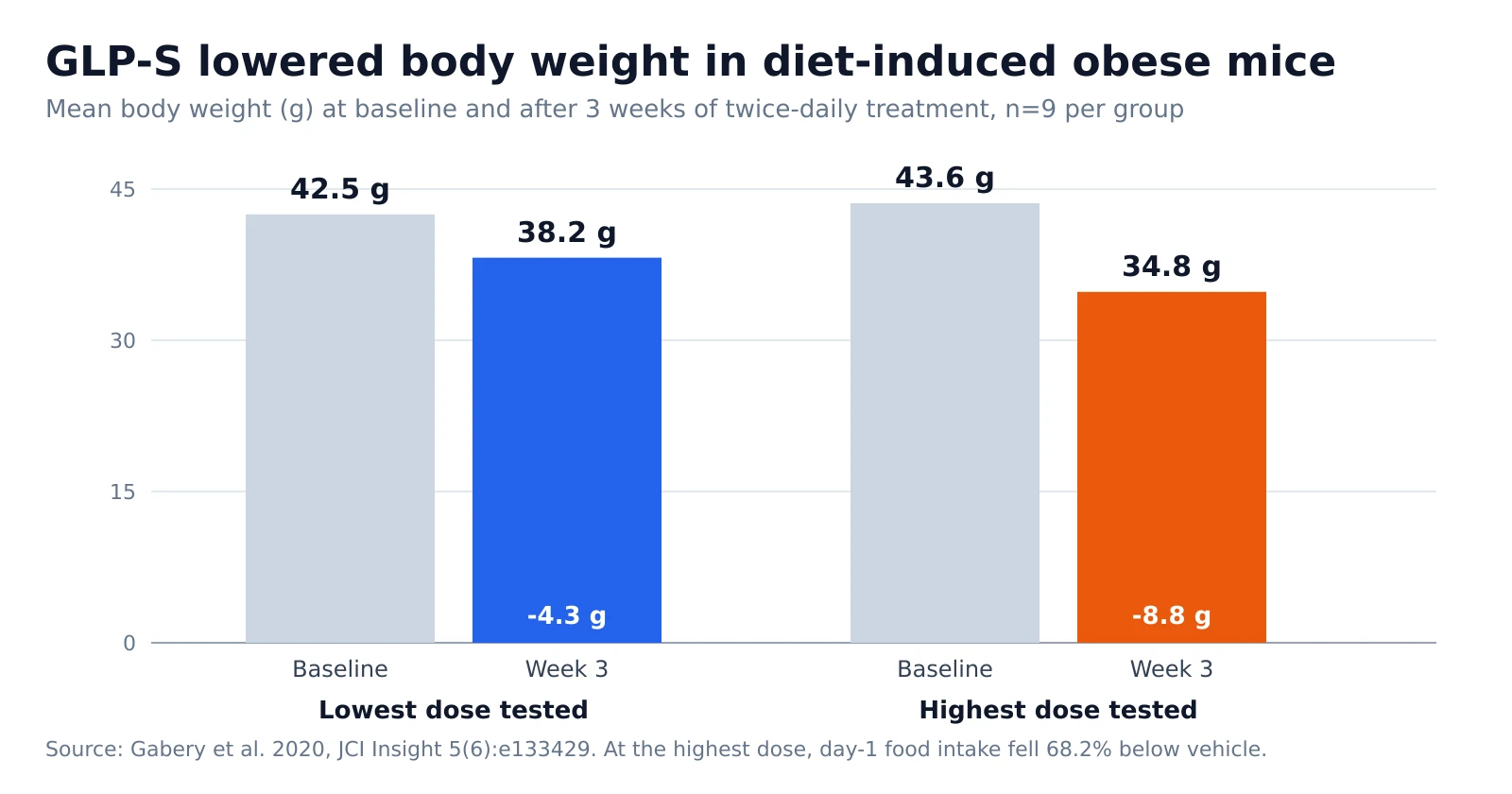
Bar chart of mean body weight in diet-induced obese mice treated with GLP-S for three weeks: at the lowest dose tested weight fell from 42.5 g at baseline to 38.2 g at week 3, a loss of 4.3 g, and at the highest dose tested from 43.6 g to 34.8 g, a loss of 8.8 g, with nine animals per group.

Figure 2. GLP-S lowered body weight in diet-induced obese mice.

Mean body weight at baseline and after three weeks of twice-daily treatment, nine animals per group. The highest dose tested produced an 8.8 g fall, described in the paper as a 22% reduction from baseline, and day-1 food intake at that dose ran 68.2% below vehicle. Source: Gabery et al. 2020, JCI Insight 5(6):e133429.[2]

A separate 11-day calorimetry experiment asked whether the weight loss was simply a slowed metabolism, and found that it was not. At a dose producing a 17% to 18% reduction in body weight, food-restricted controls matched for weight showed a sustained fall in energy expenditure in both the dark and light phases. GLP-S reduced dark-phase energy expenditure only until day 6, after which it was no longer significantly lower than vehicle, and after adjusting for lean mass there was no difference from vehicle at all.[2]

In the arterial wall, two atherosclerosis-prone mouse strains were studied: mice lacking apolipoprotein E and mice lacking the LDL receptor, fed a Western diet. GLP-S and liraglutide both reduced plaque development, and the effect was partly independent of the change in weight and in cholesterol. The Western diet shifted aortic gene expression in pathways tied to leukocyte recruitment and adhesion, cholesterol metabolism and plaque haemorrhage, and GLP-S reversed many of those shifts, which is what led the authors to an inflammatory mechanism. The published abstract gives no plaque area percentages, so none are quoted here.[3]

GLP-S vs GLP-TZ vs GLP-RT: which receptors each one targets

They differ in how many receptors they engage. This section compares receptor targets and compound class only, and makes no comparison of effectiveness.

  • GLP-S. Class: single-receptor acylated GLP-1 analogue. Receptor target: the GLP-1 receptor only.[1]

  • GLP-TZ. Class: dual incretin receptor agonist. Receptor targets: the GIP receptor and the GLP-1 receptor.[5]

  • GLP-RT. Class: triple agonist. Receptor targets: the GIP receptor, the GLP-1 receptor and the glucagon receptor.[6]

The three receptors belong to different hormones. GLP-1 and GIP are the two incretin hormones, both released from the gut wall after food arrives, and both raise insulin secretion in a glucose-dependent way. Glucagon is the pancreatic hormone that acts in the opposite direction on glucose and that also raises energy expenditure. Engaging more receptors engages more pathways, which is the stated design rationale for the dual and triple molecules.[5,6] GLP-S is the single-receptor member of the set and is often used as the reference point in preclinical pharmacology for exactly that reason.

What is GLP-S made of?

A 31-amino-acid peptide backbone with three deliberate changes written into it.

The backbone is GLP-1(7-37), the active form of the natural hormone. Three changes separate GLP-S from it. Aib, an unnatural amino acid, replaces alanine at position 8, which blocks DPP-4 cleavage. Arginine replaces lysine at position 34, which leaves a single lysine for the side chain to attach to. And a C-18 fatty diacid is attached to the lysine at position 26 through a linker made of one gamma-glutamate unit and two short ethylene glycol (OEG) spacers.[1]

Sequence: His-Aib-Glu-Gly-Thr-Phe-Thr-Ser-Asp-Val-Ser-Ser-Tyr-Leu-Glu-Gly-Gln-Ala-Ala-Lys(C-18 diacid via gamma-Glu and two OEG units)-Glu-Phe-Ile-Ala-Trp-Leu-Val-Arg-Gly-Arg-Gly

The molecular formula is C187H291N45O59, giving an average molecular weight of 4113.58 Da, a monoisotopic mass of 4111.12 Da and a heavy atom count of 291. The linker chemistry, not the fatty acid alone, is what the design turned on: the spacer length sets how far the albumin anchor sits from the peptide, and that distance has to balance albumin affinity against receptor potency, since a molecule bound tightly to albumin is not available to the receptor.[1]

What the crystal structure does and does not show. PDB 4ZGM resolves the GLP-S peptide backbone bound to the extracellular domain of the GLP-1 receptor at 1.8 angstrom. It is the unacylated backbone: the C-18 diacid side chain and its linker, the parts responsible for the long duration, are not in the model. The structure describes receptor recognition, not the albumin interaction.[1,7]
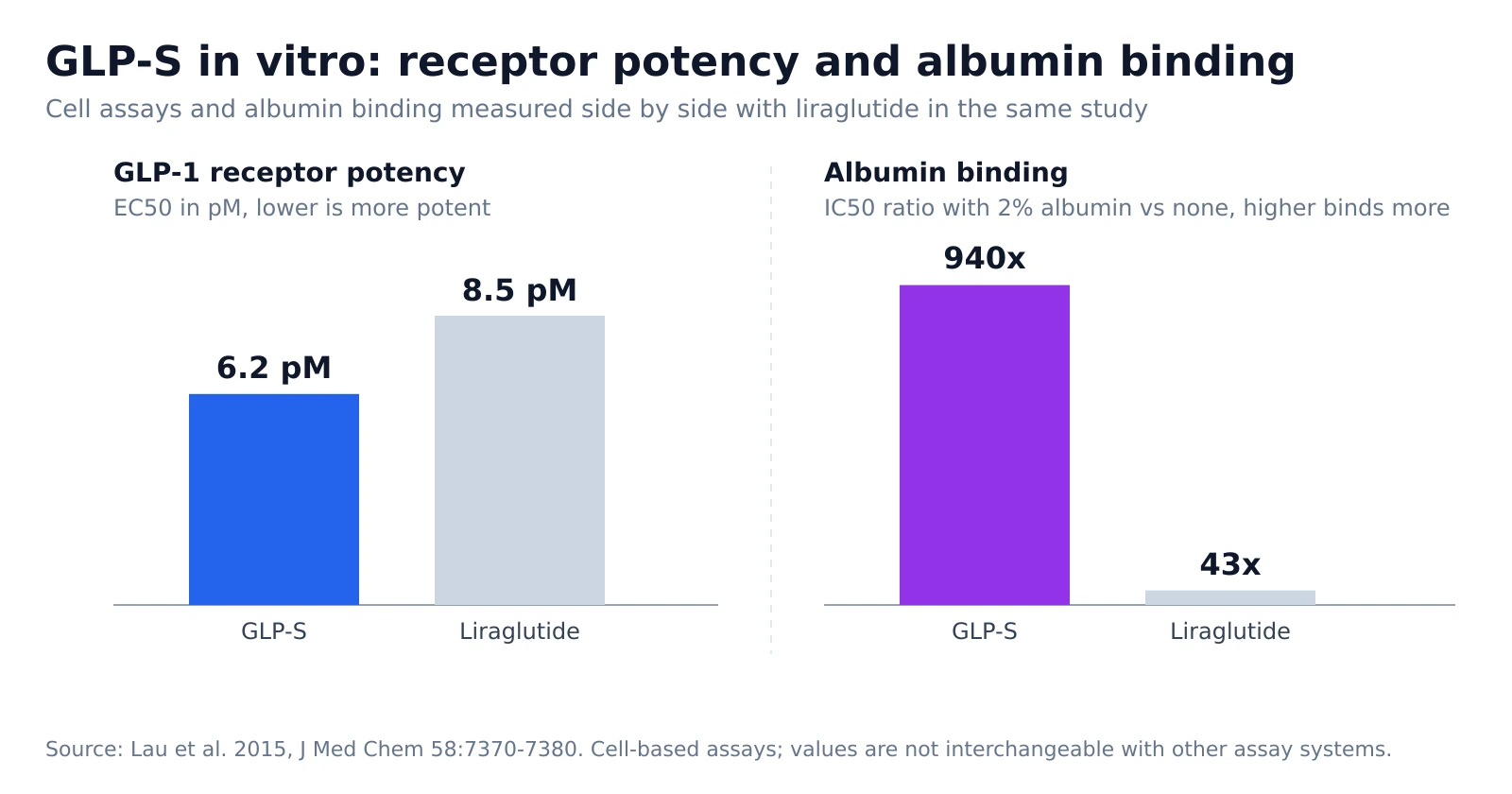
Two-panel bar chart of GLP-S in vitro data: GLP-1 receptor potency with a half-maximal response of 6.2 picomolar for GLP-S against 8.5 picomolar for liraglutide, and albumin binding shown as the receptor IC50 ratio with 2% albumin versus none, 940-fold for GLP-S against 43-fold for liraglutide.

Figure 3. GLP-S in vitro: receptor potency and albumin binding.

Both measurements come from the same study, with liraglutide run alongside as the comparator. GLP-S reached a half-maximal response at 6.2 pM against 8.5 pM for liraglutide, while 2% albumin shifted its receptor IC50 by a factor of 940 against 43 for liraglutide. Source: Lau et al. 2015, J Med Chem 58:7370-7380. Cell assay values are not interchangeable with other assay systems.[1]

GLP-S at a glance

  • Compound: GLP-S, the NextGenPeps catalogue code for this acylated GLP-1 analogue

  • Class: Acylated GLP-1 receptor agonist; the receptor (GLP1R) is a class B G-protein-coupled receptor

  • Sequence: 31 residues on a GLP-1(7-37) backbone, with Aib at position 8, Arg at position 34 and a C-18 fatty diacid on Lys26 via gamma-Glu and two OEG spacers[1]

  • Molecular formula: C187H291N45O59

  • Molecular weight: 4113.58 Da average, 4111.12 Da monoisotopic, 291 heavy atoms

  • Strength per vial: 10 mg

  • Receptor potency: Half-maximal response at 6.2 pM in cell assays, against 8.5 pM for liraglutide measured alongside[1]

  • Albumin binding: 2% albumin shifted the receptor IC50 by a factor of 940, against 43 for liraglutide[1]

  • Half-life: 46.1 hours after intravenous dosing in Goettingen minipigs, against 12.4 hours for liraglutide[1]

  • Identity and purity: Every lot is tested by independent labs and the certificate of analysis is published in the NextGenPeps COA library

  • Appearance: White lyophilised powder, sealed vial

  • Reconstitution: Sterile or bacteriostatic water

  • Structure: PDB 4ZGM, peptide backbone bound to the receptor extracellular domain at 1.8 angstrom[1,7]

  • Regulatory status: Research use only. GLP-S is not an approved medicine and is not sold as a drug, supplement, diagnostic or food

Is GLP-S FDA approved?

No. GLP-S is a research material, not an approved medicine, and no regulatory authority has reviewed or authorised it for any use. It is supplied for in vitro work and approved animal studies only. Nothing on this page should be read as a claim that it has been approved for anything, or that it stands in for any product that has.

What is GLP-S used to study?

Researchers reach for GLP-S when they need the GLP-1 receptor held active for days in a model rather than minutes. Each of the fields below leans on a different property of the molecule.

  • Incretin receptor pharmacology. Potency, albumin binding and duration at the GLP-1 receptor, with GLP-S serving as a long-acting reference agonist in cell assays.[1]

  • Feeding and body composition in rodents. Diet-induced obese mouse models of food intake, body weight, fat and lean mass, and energy expenditure by indirect calorimetry.[2]

  • Central nervous system access. Which brain nuclei a peripherally delivered GLP-1 agonist reaches directly and which it activates indirectly, mapped by labelled compound and c-Fos.[2]

  • Atherosclerosis in mice. Plaque development and aortic inflammatory gene expression in apolipoprotein E deficient and LDL receptor deficient strains on a Western diet.[3]

  • Multi-receptor peptide design. GLP-S as the single-receptor comparator against dual and triple incretin receptor agonists in preclinical pharmacology.[5,6]

Buying GLP-S for research: what each vial includes

Each vial holds 10 mg of GLP-S as a sealed lyophilised powder. For an acylated peptide, identity matters as much as a purity percentage, because the albumin binding and the long duration both depend on an intact fatty acid side chain that a purity number alone will not report on.

  • Independent lot testing. Every lot is tested by independent labs and the certificate of analysis is published in the NextGenPeps COA library.

  • US-based fulfilment. Orders ship within 24 hours from the United States, with free US shipping on orders over $150.

  • Research use only. GLP-S is sold strictly for in vitro and approved animal research. It is not for human or veterinary use and is not sold as a drug, supplement, diagnostic or food.

GLP-S handling, storage and analytical notes

Format. Supplied as 10 mg of lyophilised powder in a sealed vial and reconstituted with sterile or bacteriostatic water. No dosing instructions are supplied, and none should be taken from the studies described above.

Storage. Keep the sealed vial cold, at 2 to 8 degrees Celsius, or at minus 20 degrees Celsius for longer holding, protected from light and moisture. After reconstitution, hold the solution at 2 to 8 degrees Celsius and avoid repeated freeze-thaw cycles.

Adsorption. Acylated peptides are surface active and can adsorb to glass and plastic at low working concentrations, which shows up as apparent loss of potency. Low-binding labware and a carrier protein in the buffer reduce those losses.

Analysis. Mass spectrometry is the informative identity test here, because the intact mass reports whether the fatty acid side chain is present. RP-HPLC at 214 nm separates the acylated peptide from des-acyl and truncated species that a mass check alone may not flag.

Albumin in the assay. Receptor potency measured with albumin present is very different from potency measured without it: the shift reported above is a factor of 940. Any potency figure for this compound should state the albumin concentration in the assay buffer, or it cannot be compared with another laboratory's number.[1]

Naming. GLP-S is the NextGenPeps catalogue code for this compound. GLP-TZ and GLP-RT are separate catalogue codes for different molecules with different receptor targets, and results obtained with one do not transfer to the others.

What is not established about GLP-S

  • Transfer beyond the models studied. The body weight, feeding and plaque findings above come from particular mouse strains on particular diets over weeks. They do not transfer automatically to other species, other models or longer timescales.[2,3]

  • The mechanism behind the plaque effect. The atherosclerosis work reports an effect that is partly independent of weight and cholesterol change and points towards inflammatory pathways, but it does not establish which pathway is responsible.[3]

  • Which brain sites drive which outcome. Direct access was found at the area postrema, nucleus tractus solitarius and dorsal motor nucleus of the vagus, with activation elsewhere mostly secondary. Which of those nuclei account for the feeding and weight results is not resolved.[2]

  • Research-grade potency and stability. Research-grade peptide is not manufactured to pharmaceutical potency or sterility standards, and no stability dataset is supplied, so quantitative work should calibrate against its own reference material.


Research Use Only. The statements made within this website have not been evaluated by the US Food and Drug Administration. These materials are not intended to diagnose, treat, cure or prevent any disease and are not intended for human or veterinary use. Studies described on this page are reported for scientific context and are not guidance of any kind.
Published research

Body weight and feeding in diet-induced obese mice

Twice-daily treatment for three weeks, nine animals per group, lowered mean body weight from 42.5 g to 38.2 g at the lowest dose tested and from 43.6 g to 34.8 g at the highest. Day-1 food intake ran 68.2% below vehicle at the highest dose, fat mass fell, and the change in lean mass was minor and not significant. Indirect calorimetry showed energy expenditure was not persistently suppressed.

Gabery et al., JCI Insight 2020: body weight, food intake and distributed neural pathways in rodents →

Atherosclerosis in two mouse strains

In mice lacking apolipoprotein E and in mice lacking the LDL receptor, fed a Western diet, plaque development slowed partly independently of weight and cholesterol change. The Western diet shifted aortic gene expression across leukocyte recruitment and adhesion, cholesterol metabolism and plaque haemorrhage pathways, and treatment reversed many of those shifts.

Rakipovski et al., JACC Basic to Translational Science 2018: atherosclerosis in ApoE and LDL receptor deficient mice →

Compound information

Molecular Class
Acylated 31-residue GLP-1 analogue; agonist at the GLP-1 receptor
Sequence
GLP-1(7-37) backbone with Aib at position 8, Arg at position 34 and a C-18 fatty diacid on Lys26 via gamma-Glu and two OEG spacers
Molecular Formula
C187H291N45O59
Molecular Weight
4113.58 Da (average)
Monoisotopic Mass
4111.12 Da
Heavy Atom Count
291
Strength
10 mg per vial
Receptor
GLP-1 receptor (GLP1R), a class B G-protein-coupled receptor
Receptor potency
Half-maximal response at 6.2 pM in cell assays; 8.5 pM for liraglutide measured alongside (Lau et al. 2015)
Albumin binding
Receptor IC50 shifted 940-fold by 2% albumin; 43-fold for liraglutide (Lau et al. 2015)
Plasma half-life
46.1 h intravenous in Goettingen minipigs; 12.4 h for liraglutide (Lau et al. 2015)
Physical Form
White lyophilised powder, sealed vial
Purity
Every lot is tested by independent labs and the certificate of analysis is published in the NextGenPeps COA library.
Crystal Structure
PDB 4ZGM, 1.8 angstrom, peptide backbone bound to the receptor extracellular domain
Regulatory status
Research use only. Not an approved medicine and not sold as a drug, supplement, diagnostic or food

Storage & stability

  • Lyophilised powder in a sealed vial
  • Store cold, protected from light and moisture
  • Avoid repeated freeze-thaw cycles
  • Acylated peptides adsorb to glass and plastic at low working concentrations; use low-binding labware
Lyophilised
2 to 8 degrees Celsius, or minus 20 degrees Celsius for longer holding, in the sealed vial
Reconstituted
2 to 8 degrees Celsius, protected from light
Reconstitute with
Sterile or bacteriostatic water
Identity check
Mass spectrometry confirms the intact fatty acid side chain; RP-HPLC at 214 nm separates des-acyl and truncated species

Cited literature

  1. 01
    Discovery of the Once-Weekly Glucagon-Like Peptide-1 (GLP-1) Analogue Semaglutide

    Lau J, Bloch P, Schaffer L, et al. · J Med Chem 2015 · DOI

    The design paper. Reports the Aib8 and Arg34 substitutions and the C-18 diacid on Lys26 via a gamma-Glu and two OEG spacers, a half-maximal receptor response of 6.2 pM against 8.5 pM for liraglutide, an albumin-driven IC50 shift of 940-fold against 43-fold, a 46.1 hour intravenous half-life in Goettingen minipigs against 12.4 hours, and the 1.8 angstrom structure PDB 4ZGM. The structure covers the unacylated backbone only, and the cell assay values are specific to the assay system used.

  2. 02
    Semaglutide lowers body weight in rodents via distributed neural pathways

    Gabery S, Salinas CG, Paulsen SJ, et al. · JCI Insight 2020 · PubMed · DOI · Free full text

    The main rodent outcome source. In diet-induced obese mice treated twice daily for three weeks, nine per group, mean body weight fell from 42.5 g to 38.2 g at the lowest dose and from 43.6 g to 34.8 g at the highest, with day-1 food intake 68.2% below vehicle at the highest dose; energy expenditure was not persistently suppressed. Compound access was mapped to circumventricular organs rather than across the blood-brain barrier, with c-Fos activation in ten nuclei. The vehicle group's own weight trajectory is not given numerically in the text, and rat data are reported as not shown.

  3. 03
    The GLP-1 Analogs Liraglutide and Semaglutide Reduce Atherosclerosis in ApoE-/- and LDLr-/- Mice by a Mechanism That Includes Inflammatory Pathways

    Rakipovski G, Rolin B, Nohr J, et al. · JACC Basic Transl Sci 2018 · PubMed · DOI · Free full text

    Two atherosclerosis-prone mouse strains on a Western diet. Both GLP-1 analogues reduced plaque development partly independently of weight and cholesterol change, and reversed much of the diet-driven shift in aortic gene expression across leukocyte recruitment and adhesion, cholesterol metabolism and plaque haemorrhage pathways. The abstract reports no plaque area percentages, so the effect size is qualitative here.

  4. 04
    Glucagon-like peptide 1 (GLP-1)

    Muller TD, Finan B, Bloom SR, et al. · Mol Metab 2019 · PubMed

    Large multi-author review of GLP-1 biology, volume 30, pages 72 to 130. Used here for the general physiology: glucose-dependent insulin secretion, slowed gastric emptying, reduced food intake, natriuresis and diuresis, and beta-cell proliferation in rodents. A narrative review rather than a primary data source, so individual numbers are not taken from it.

  5. 05
    "Let's Stay Together"; GIP and GLP-1 dual agonism in the treatment of metabolic disease

    DiMarchi RD · Mol Metab 2018 · PubMed · DOI · Free full text

    Short commentary, volume 18, pages 1 to 2, describing dual agonism at the GIP and GLP-1 receptors as a single-molecule strategy. Used only to establish the receptor targets and class of the dual-agonist category. A commentary, not a primary study.

  6. 06
    Next generation GLP-1/GIP/glucagon triple agonists normalize body weight in obese mice

    Knerr PJ, Mowery SA, Douros JD, et al. · Mol Metab 2022 · PubMed · Free full text

    Volume 63, article 101533. Single-molecule peptides activating the GLP-1, GIP and glucagon receptors together, tested in diet-induced obese mice. Used here only to establish the receptor targets and class of the triple-agonist category. Findings are from mice and the published abstract reports no numerical effect sizes.

  7. 07
    RCSB PDB entry 4ZGM: GLP-1 receptor extracellular domain in complex with a GLP-1 analogue peptide

    RCSB Protein Data Bank · PDB, deposited 2015 · Free full text

    The 1.8 angstrom crystal structure referenced in the design paper, covering the peptide backbone bound to the receptor extracellular domain. The fatty acid side chain and its linker are not resolved, so the entry describes receptor recognition and not the albumin interaction.

Frequently asked questions

How is GLP-S packaged?

GLP-S is supplied in the product format and quantity shown for the selected variant. Please inspect the sealed package when it arrives and contact support promptly if the package or labeling appears damaged.

How is GLP-S shipped?

Orders are shipped within the United States via USPS. Transit times are typically 3–7 business days, depending on destination and carrier conditions. Tracking information is provided when available.

How should GLP-S be stored?

Storage requirements are product-specific. Keep GLP-S in its original labeled container and follow the product documentation or manufacturer instructions supplied with the order. Contact support if the applicable storage guidance is not available.

What is the refund policy for GLP-S?

Due to the nature of research materials, NextGenPeps orders are final and are not eligible for refunds, returns, or exchanges. Review the shipping and reship policies before ordering.

Is GLP-S intended for human use?

No. NextGenPeps materials are supplied strictly for laboratory research and development use and are not intended for human or animal consumption, clinical use, diagnostic use, cosmetic use, or dietary use.

Customer reviews

5.0out of 5 · 4 reviews

Exemplary Research Performance

Quality assessment of GLP-1S met expectations with excellent clarity during reconstitution. Purity stated on the CoA matches our own analysis and has become our top compound for semaglutide research.

Holden N.

Fast turnaround on shipping

Every reorder I placed was shipped out and received in days without delay.

Jessica W.

Consistent

Compound quality stayed stable after weeks of refrigeration after reconstitution. The solution never appeared cloudy or separated during storage, high quality research grade glucagon.

Robert G.

Amazing Product

One of the most cost effective sources for GLP1 on the market. Having the COA to see purity is good sign of a trustworthy source

Kara H.

Common research questions

What is GLP-S?

GLP-S is the NextGenPeps catalogue code for a synthetic, long-acting agonist of the GLP-1 receptor, supplied as a research material. It is a 31-residue peptide built on the GLP-1(7-37) backbone with three changes: Aib at position 8, which blocks cleavage by the enzyme DPP-4, arginine at position 34, and a C-18 fatty diacid attached to the lysine at position 26 through a gamma-glutamate and two ethylene glycol spacers. The fatty acid chain binds albumin, which slows clearance and makes the molecule useful where a short-lived agonist would not be. In cell assays it reached a half-maximal response at 6.2 pM. GLP-S is supplied for laboratory research only and is not an approved medicine.

How does GLP-S work?

GLP-S activates the GLP-1 receptor, a class B G-protein-coupled receptor. Binding activates the G protein Gs, raises intracellular cAMP and activates protein kinase A, which in pancreatic beta cells produces glucose-dependent insulin secretion. The same receptor is found well beyond the pancreas, and GLP-1 signalling has been associated with slowed gastric emptying, reduced food intake and beta-cell proliferation in rodents. What distinguishes GLP-S from the natural hormone is duration rather than pathway: the Aib substitution blocks enzymatic cleavage and the fatty acid side chain binds albumin, so the receptor stays engaged for days instead of minutes.

What is the difference between GLP-S, GLP-TZ and GLP-RT?

They differ in how many receptors they engage. GLP-S is a single-receptor agonist and targets the GLP-1 receptor only. GLP-TZ is a dual incretin receptor agonist and targets both the GIP receptor and the GLP-1 receptor. GLP-RT is a triple agonist and targets the GIP receptor, the GLP-1 receptor and the glucagon receptor. GLP-1 and GIP are the two incretin hormones released from the gut wall after food arrives; glucagon acts in the opposite direction on glucose and also raises energy expenditure. This is a comparison of receptor targets and compound class only, not of effectiveness.

How long does GLP-S last?

Far longer than native GLP-1, which is degraded within minutes. Two design features are responsible: the Aib substitution at position 8 blocks the DPP-4 enzyme that cleaves the natural hormone, and the C-18 fatty diacid on position 26 binds albumin so that the molecule is released slowly rather than cleared. In the study that first described the compound, the intravenous half-life in Goettingen minipigs was 46.1 hours, against 12.4 hours for liraglutide measured in the same work. Half-life figures from one species and route of administration should not be assumed to carry over to another.

What has GLP-S been shown to do in animal studies?

In diet-induced obese mice treated twice daily for three weeks, nine animals per group, mean body weight fell from 42.5 g to 38.2 g at the lowest dose tested and from 43.6 g to 34.8 g at the highest, a reduction the authors describe as 22% from baseline. Food intake suppression was front-loaded, running 68.2% below vehicle on day 1 at the highest dose. Fat mass fell while the change in lean mass was minor and not significant. Separately, in mice lacking apolipoprotein E and in mice lacking the LDL receptor fed a Western diet, GLP-S slowed plaque development partly independently of weight and cholesterol change, and reversed much of the diet-driven shift in aortic inflammatory gene expression.

Why is albumin binding important for GLP-S?

Albumin binding is what converts a short-lived hormone into a long-acting research tool, and it is also the main confounder when measuring potency. The C-18 fatty diacid side chain binds albumin reversibly, which shields the peptide from clearance and releases it back into circulation slowly. The effect is large and measurable: adding 2% albumin to the assay shifted the receptor IC50 by a factor of 940, against 43 for liraglutide tested alongside. Any potency number reported for GLP-S should state the albumin concentration in the assay buffer, because otherwise it cannot be compared with a figure from another laboratory.

Frequently Researched with

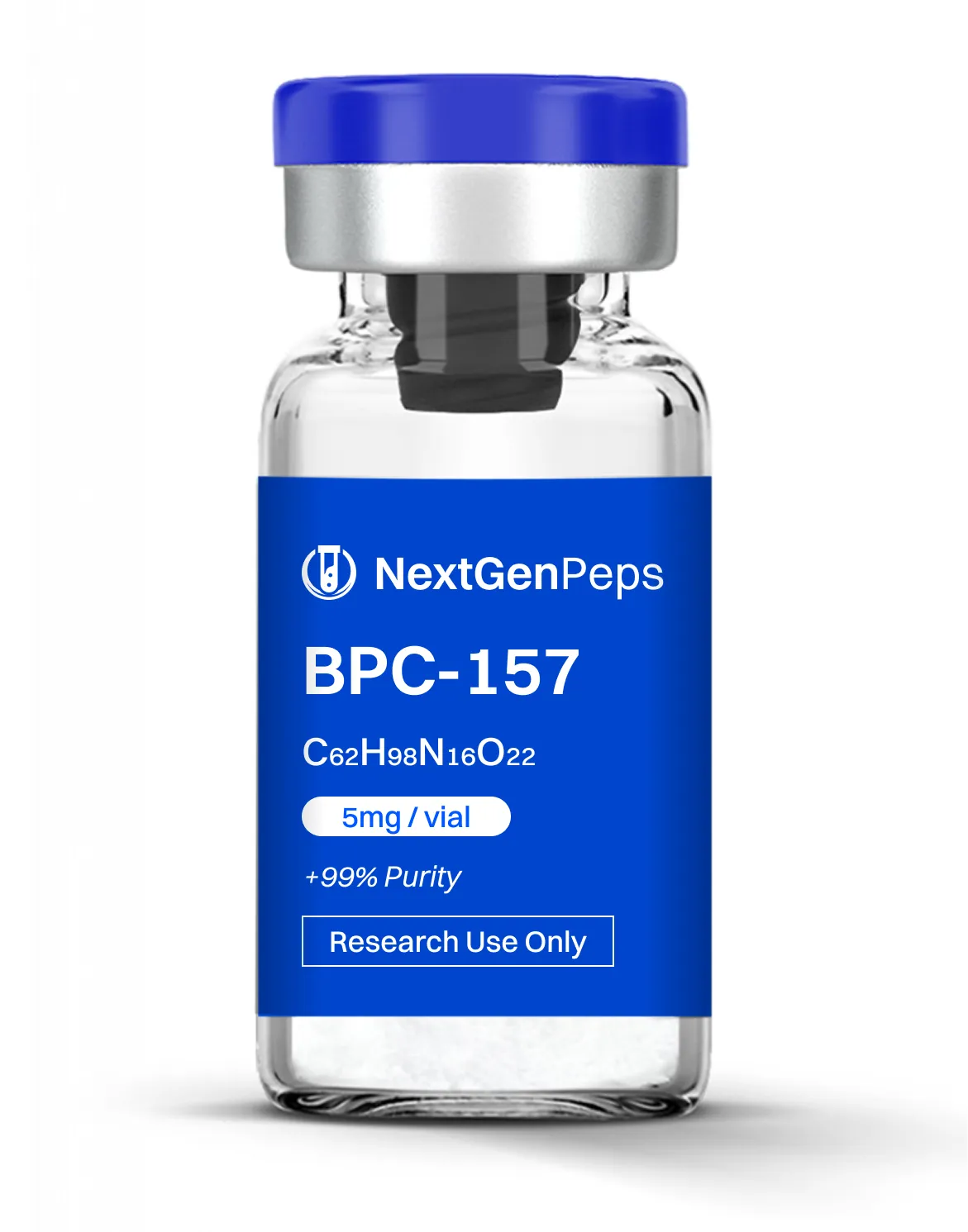
BPC-157

✓ 99.748% purity

BPC-157

$46.00$37.00

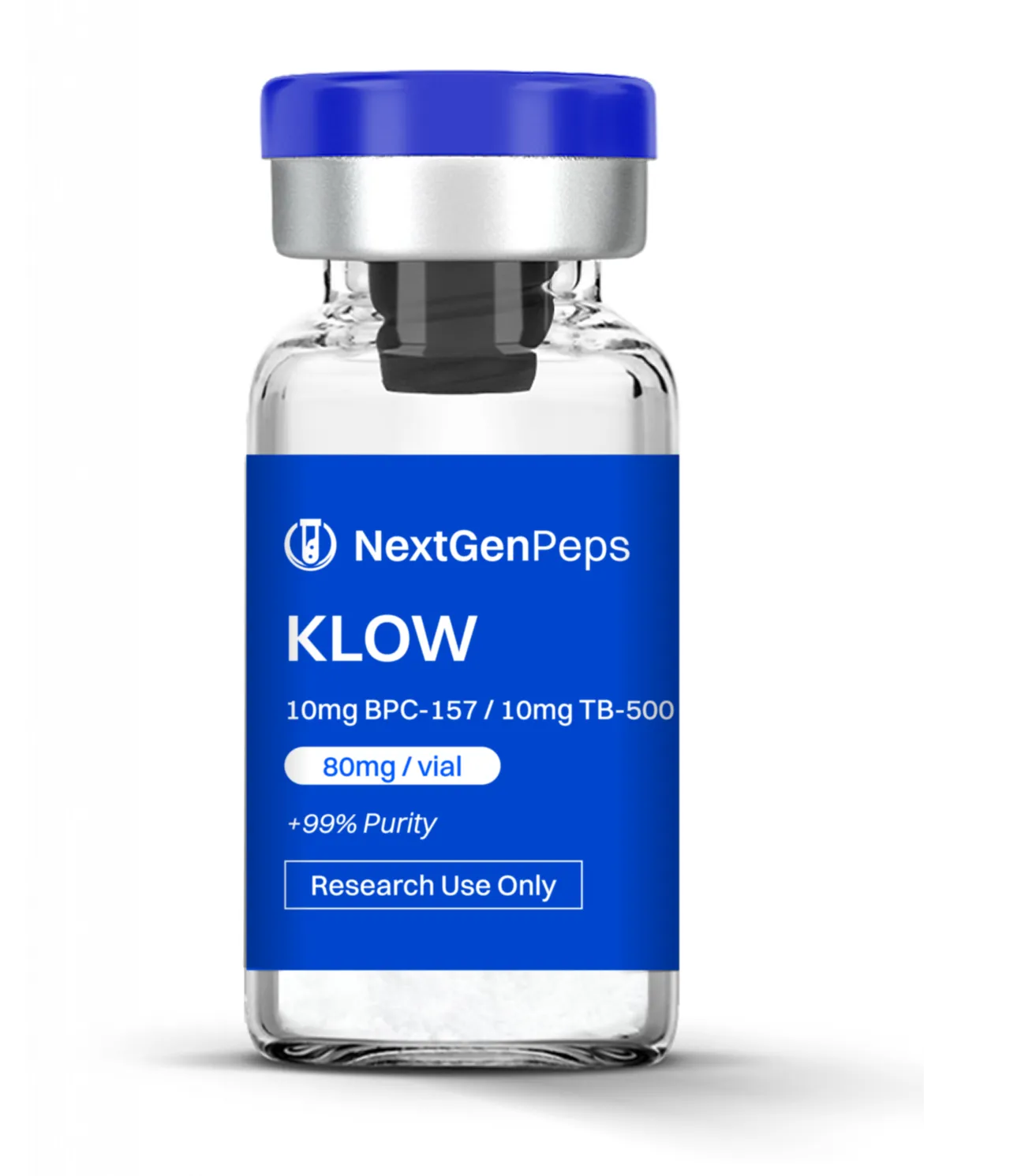
KLOW

✓ 99.80% purity

KLOW

$198.00$158.00

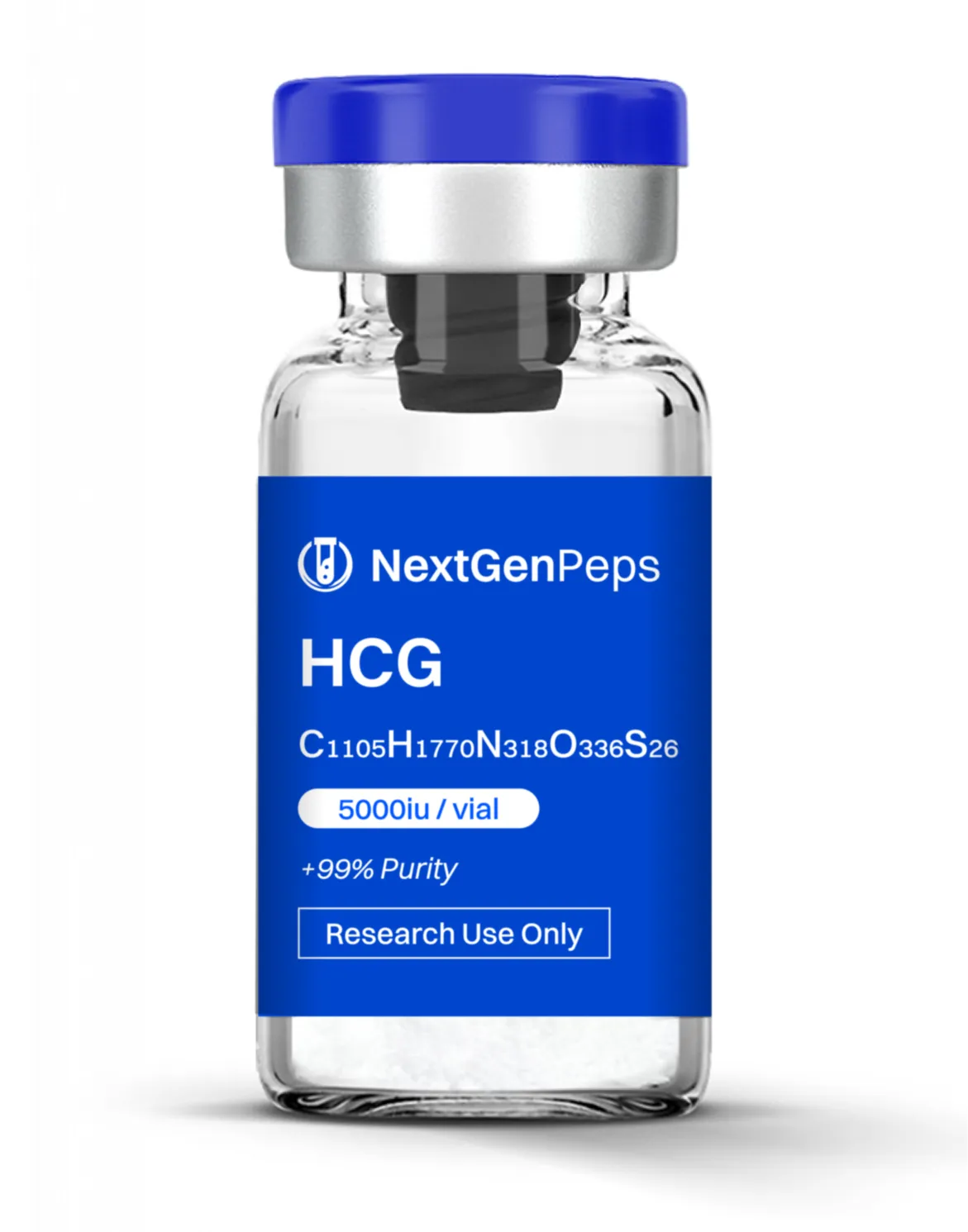
HCG

✓ 99.73% purity

HCG

$79.00$63.00

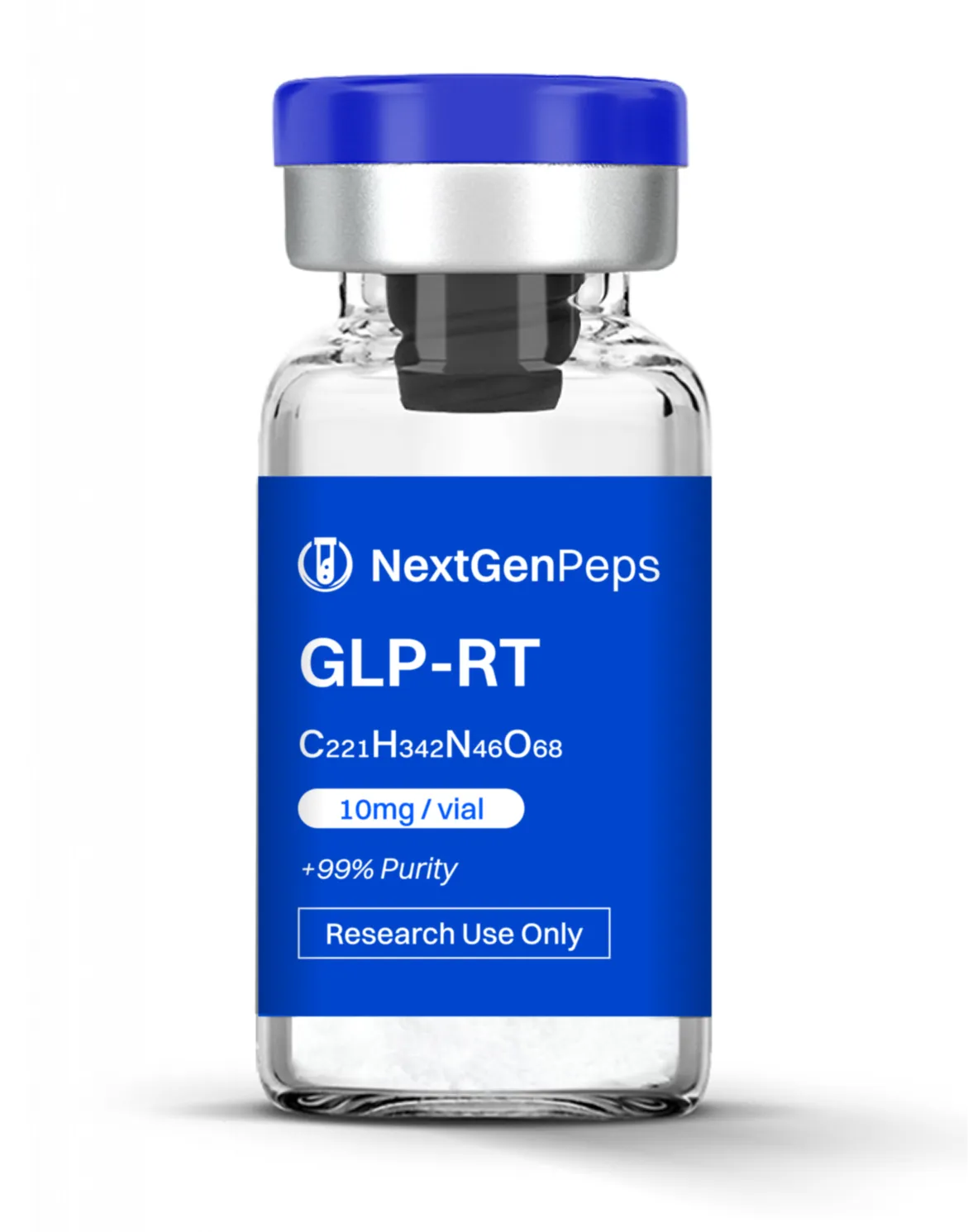
GLP-RT

✓ 99.72% purity

GLP-RT

$89.00$71.00

You have an unfinished subscription checkout

Continue your saved checkout, or replace its item with . Your saved selection and existing subscriptions will stay unchanged.

Continue saved checkout
NextGenPeps

Reliable and innovative research with our top-grade research materials and novel research compounds tailored to lead the competitive research industry. Choose research quality. Choose NextGenPeps.

Customer Service: +1 (971) 300-1435

Get 10% Off Your First Order

Sign up now and receive a 10% discount code valid on your next purchase!

Nextgenpeps LLC

The statements made within this website have not been evaluated by the US Food and Drug Administration. The materials offered by this company are not intended to diagnose, treat, cure, or prevent any disease. All research materials on this site are for laboratory research and development use only, and are not intended for human use.

NextGenPeps is a chemical supplier. NextGenPeps is not a compounding pharmacy or chemical compounding facility as defined under 503A of the Federal Food, Drug, and Cosmetic act. NextGenPeps is not an outsourcing facility as defined under 503B of the Federal Food, Drug, and Cosmetic Act.

Privacy PolicyTerms & ConditionsAffiliate Program

501 W Broadway Ste A, San Diego, CA 92101

© 2026 NextGenPeps. All rights reserved.

Visa
American Express
Mastercard
PayPal
Discover
Apple Pay