

Spend $150 for Free Shipping!Shop Now
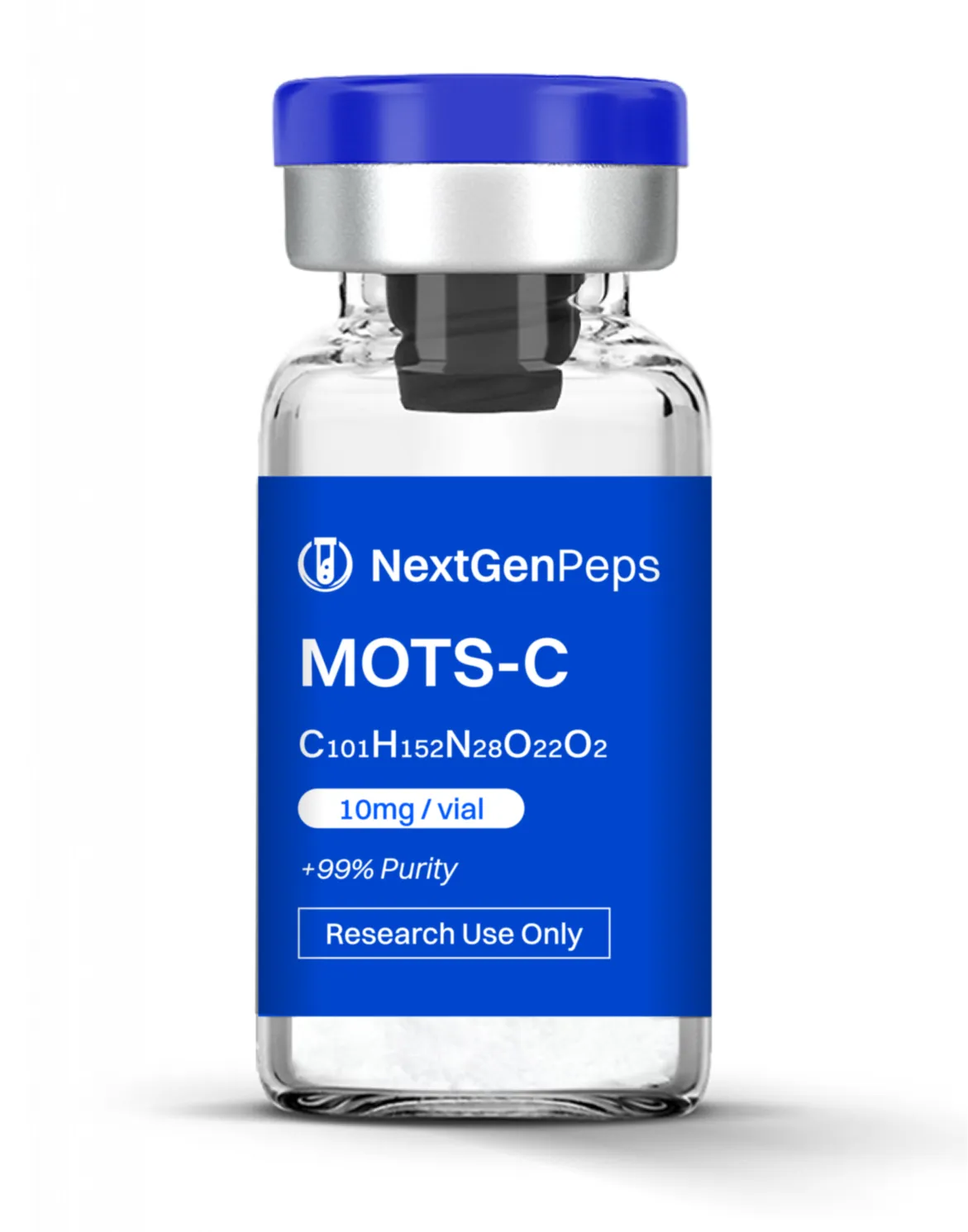
Next Gen Peptides MOTS-C product image 1
$52.00
Quantity:1

Bulk Options:

Select quantity · 10MG

Research Use Only: The statements made within this website have not been evaluated by the US Food and Drug Administration. These materials are not intended to diagnose, treat, cure, or prevent any disease. All products are for laboratory research and development use only, and are not intended for human use.
VisaAmerican Express
U.S. delivery available

MOTS-C Mitochondrial-Derived Peptide Research Overview

MOTS-C (mitochondrial open reading frame of the 12S rRNA‐c) is a high-purity, research-grade mitochondrial-derived peptide (MDP) composed of 16 amino acids and encoded by the mitochondrial genome. It is a key experimental tool for investigating mitochondrial–nuclear communication, metabolic regulation, and cellular stress adaptation in vitro and in vivo.

Molecular Composition and Mechanistic Profile

  • Plays a critical role in cellular metabolic regulation and energy homeostasis, particularly in skeletal muscle and other metabolically active tissues.

  • Translocates from mitochondria to the nucleus under metabolic stress, where it regulates nuclear gene expression related to mitochondrial

  • biogenesis, antioxidant responses, proteostasis, and metabolic adaptation.

    Signals in an AMPK‐dependent manner, amplifying glucose uptake, inhibiting the folate cycle and de novo purine biosynthesis during metabolic stress, and shifting cellular metabolism toward enhanced stress resilience and efficient fuel use.

These properties support its classification as a “mitochondrial hormone” or mitokine that coordinates metabolism within and between cells.

Integrated Research Applications

  • MOTS-C is used across multiple domains of metabolic, cardiovascular, musculoskeletal, and aging research. Representative experimental areas include:

  • Metabolic disease and obesity: Murine models show that MOTS-C improves insulin sensitivity, enhances skeletal muscle glucose uptake, promotes lipid utilization, and reduces diet‐induced obesity while improving glucose tolerance.

  • Aging and longevity: Preclinical work links MOTS-C to improved metabolic responses to aging, enhanced stress adaptation, and potential longevity effects via regulation of mitochondrial biogenesis, antioxidant defenses, and proteostasis.

  • Cardiovascular and vascular calcification: MOTS-C exposure has been reported

    to reduce oxidative stress, improve vascular wall structure, decrease disordered

    elastic fibers, and attenuate vascular calcification and endothelial dysfunction.

  • Musculoskeletal function and bone: In skeletal muscle, MOTS-C activation of AMPK pathways increases glucose transporter expression, improves muscle

    metabolism, and supports contractile function; in bone, it has been reported to promote type I collagen synthesis in osteoblasts via TGF‐β/SMAD signaling in osteoporosis models.

  • Inflammation, pain, and immune modulation: Experimental data suggest analgesic and anti-inflammatory actions via AMPK activation and inhibition of MAP kinase/c‐Fos pathways, with potential applications across cardiovascular disease, insulin resistance, and inflammatory states.

    Collectively, these models position MOTS-C as a central node for integrating mitochondrial signaling with systemic metabolic control.

Analytical Validation, Formulation, and Product Care

  • Research MOTS-C products from these suppliers are typically provided as lyophilized peptide at defined content per vial (e.g., 5 mg or 10 mg). Key quality and handling features include:

  • Purity: Commonly ≥98–99%, confirmed by high-performance liquid chromatography (HPLC).

  • Formulation: Shipped in lyophilized or powder form and intended to be reconstituted to liquid immediately prior to research use.

    Product care guidance emphasizes: storing in a cool, dry place away from light; refrigerating after constitution; and freezing at approximately −20 °C for longer-term storage to maintain structural integrity.

NextGenPeps supplies MOTS-C as a research-grade peptide intended solely for use in laboratory investigations, including in vitro assays and approved animal models. This compound is not approved for human consumption or clinical application and must only be used in accordance with institutional research protocols.

Chemical Properties

Molecular formula
C₁₀₁H₁₅₂N₂₈O₂₂S₂
Molecular weight
2174.6 g/mol
Monoisotopic mass
2173.1077 Da

Frequently Asked Questions

Common Research Questions

What is MOTS-c?

MOTS-c is a 16-amino acid mitochondrial-derived peptide encoded within the mitochondrial genome, specifically the 12S rRNA region. It belongs to a class of molecules called mitochondrial-derived peptides (MDPs), which regulate cellular metabolism. MOTS-c is produced in response to metabolic stress and translocates to the nucleus under certain conditions. Researchers study it as a communication link between mitochondria and the rest of the cell.

What are the primary signaling pathways associated with MOTS-C?

MOTS-C acts largely through AMPK activation, modulation of the folate–methionine cycle and purine biosynthesis, and nuclear regulation of genes linked to mitochondrial biogenesis, antioxidant defense, heat-shock responses, and metabolic stress adaptation.

Why is MOTS-C often described as an “exercise mimetic”?

Its expression increases with exercise, and in preclinical models MOTS-C mimics key exercise benefits—improved insulin sensitivity, enhanced fatty acid oxidation, greater muscle metabolic flexibility, and protection against diet‐induced obesity—leading to its classification as an exercise-like mitochondrial hormone.

What is MOTS-c used for?

MOTS-c is used in research on metabolic regulation, insulin sensitivity, and exercise physiology. Scientists investigate its role in obesity, age-related metabolic decline, and mitochondrial dysfunction. It serves as a tool for studying AMPK activation and cellular energy homeostasis. MOTS-c is examined in models of skeletal muscle function and metabolic adaptation to physical activity.

How are MOTS-C products typically supplied and handled for research?

Suppliers provide MOTS-C as lyophilized 5–10 mg vials for research use, to be reconstituted with suitable sterile diluent, stored in a cool, dry environment away from light, refrigerated after constitution, and frozen at about −20 °C for long-term storage.

What does MOTS-c do?

MOTS-c activates AMPK, a central regulator of cellular energy balance, in experimental models. It promotes glucose uptake in skeletal muscle independent of insulin signaling pathways. Research shows MOTS-c helps cells adapt to metabolic stress by regulating gene expression in the nucleus. It influences fatty acid oxidation and reduces markers associated with insulin resistance.

MOTS-c compared to SS-31?

MOTS-c is a mitochondrial-derived peptide that regulates metabolism through AMPK activation and nuclear gene signaling. SS-31 is a synthetic peptide that concentrates in the inner mitochondrial membrane to stabilize cardiolipin and support electron transport chain efficiency. MOTS-c excels in systemic metabolic regulation and insulin sensitivity research, while SS-31 emphasizes direct mitochondrial membrane protection and oxidative stress reduction. Both peptides target mitochondrial function but through distinct mechanisms, one signaling-based and the other is structural.

Product Questions

How is MOTS-C packaged?

MOTS-C is supplied in the product format and quantity shown for the selected variant. Please inspect the sealed package when it arrives and contact support promptly if the package or labeling appears damaged.

How is MOTS-C shipped?

Orders are shipped within the United States via USPS. Transit times are typically 3–7 business days, depending on destination and carrier conditions. Tracking information is provided when available.

How should MOTS-C be stored?

Storage requirements are product-specific. Keep MOTS-C in its original labeled container and follow the product documentation or manufacturer instructions supplied with the order. Contact support if the applicable storage guidance is not available.

What is the refund policy for MOTS-C?

Due to the nature of research materials, NextGenPeps orders are final and are not eligible for refunds, returns, or exchanges. Review the shipping and reship policies before ordering.

Is MOTS-C intended for human use?

No. NextGenPeps materials are supplied strictly for laboratory research and development use and are not intended for human or animal consumption, clinical use, diagnostic use, cosmetic use, or dietary use.

Customer Reviews

4.73 reviews

Dependable Everytime

Reordered 4 times and havent gotten a bad vial, Best bang for your buck on MOTS

Sam H.

Good first impression

This is my first time trying nextgenpeps and I am happy with them. The site is straightforward and I got my order tracking same day

Zach N.

Consistent Between Batches

Strong performance from batch lot, quality standards were above my expectations.

Dominic W.

NextGenPeps

Reliable and innovative research with our top-grade research materials and novel research compounds tailored to lead the competitive research industry. Choose research quality. Choose NextGenPeps.

Customer Service: +1 (971) 300-1435

Get 10% Off Your First Order

Sign up now and receive a 10% discount code valid on your next purchase!

NextGenPeps LLC

The statements made within this website have not been evaluated by the US Food and Drug Administration. The materials offered by this company are not intended to diagnose, treat, cure, or prevent any disease. All research materials on this site are for laboratory research and development use only, and are not intended for human use.

NextGenPeps is a chemical supplier. NextGenPeps is not a compounding pharmacy or chemical compounding facility as defined under 503A of the Federal Food, Drug, and Cosmetic act. NextGenPeps is not an outsourcing facility as defined under 503B of the Federal Food, Drug, and Cosmetic Act.

© 2026 NextGenPeps. All rights reserved.

VisaAmerican Express