





GHK-Cu Copper Peptide Research Overview
The GHK-Cu composite is a high-purity, research-grade copper tripeptide complex designed for advanced investigation into tissue remodeling, oxidative balance, and gene-level regulation of repair pathways. This compound unites a defined peptide sequence (GHK) with a tightly bound copper ion, creating a structurally precise tool for modeling extracellular matrix (ECM) dynamics, inflammatory signaling, and cellular stress responses in controlled systems.
Molecular Composition and Mechanistic Profile
GHK-Cu (Glycyl‐L‐Histidyl‐L‐Lysine Copper): A naturally occurring tripeptide–metal complex first isolated from human plasma and later identified in saliva and urine. The peptide fragment GHK exhibits high affinity for copper(II) ions, forming GHK-Cu, which acts as a bioactive signaling complex implicated in wound healing, tissue regeneration, and anti‐inflammatory responses in preclinical models.
Structural characteristics: GHK-Cu supports tight copper chelation while maintaining aqueous solubility and compatibility with biological matrices, enabling reproducible dosing and consistent behavior in in vitro, ex vivo, and in vivo research systems.
Experimental data indicate that GHK-Cu can influence collagen and glycosaminoglycan synthesis, modulate proteoglycan and chondroitin sulfate turnover, and recruit fibroblasts, immune cells, and endothelial cells to sites of tissue injury. The complex also exhibits redox-regulating and antioxidant activity, suppressing free radical–mediated damage while broadly impacting gene expression patterns linked to regeneration and cellular protection.
Integrated Research Applications
The GHK-Cu system is formulated to enable multi-layer investigation of copper peptide biology, where metal binding, ECM signaling, and inflammatory modulation can be interrogated within unified experimental designs. Representative research domains include:
In vitro skin and connective tissue models examining fibroblast activity, ECM deposition, collagen organization, and responses to oxidative stress.
Ex vivo tissue constructs assessing angiogenic factor expression, wound closure kinetics, and structural remodeling under controlled copper availability.
In vivo preclinical models exploring dermal repair, anti‐fibrotic effects, neuroprotection, and pain modulation through pathways involving VEGF, TGF‐β, miR‐regulated signaling, and amino acid–mediated analgesia.
By using GHK-Cu as a single, well-characterized entity, researchers can evaluate both localized and systemic effects of copper peptide signaling without the confounding variability of mixed or poorly defined copper complexes.
Analytical Validation and Quality Assurance
Commercial research preparations of GHK-Cu are specified at high purity (typically ≥98–99%) and are characterized by standard analytical techniques such as high-performance liquid chromatography (HPLC) and mass spectrometry (MS). These methods confirm identity, verify copper incorporation, and support consistent batch quality for laboratory use.
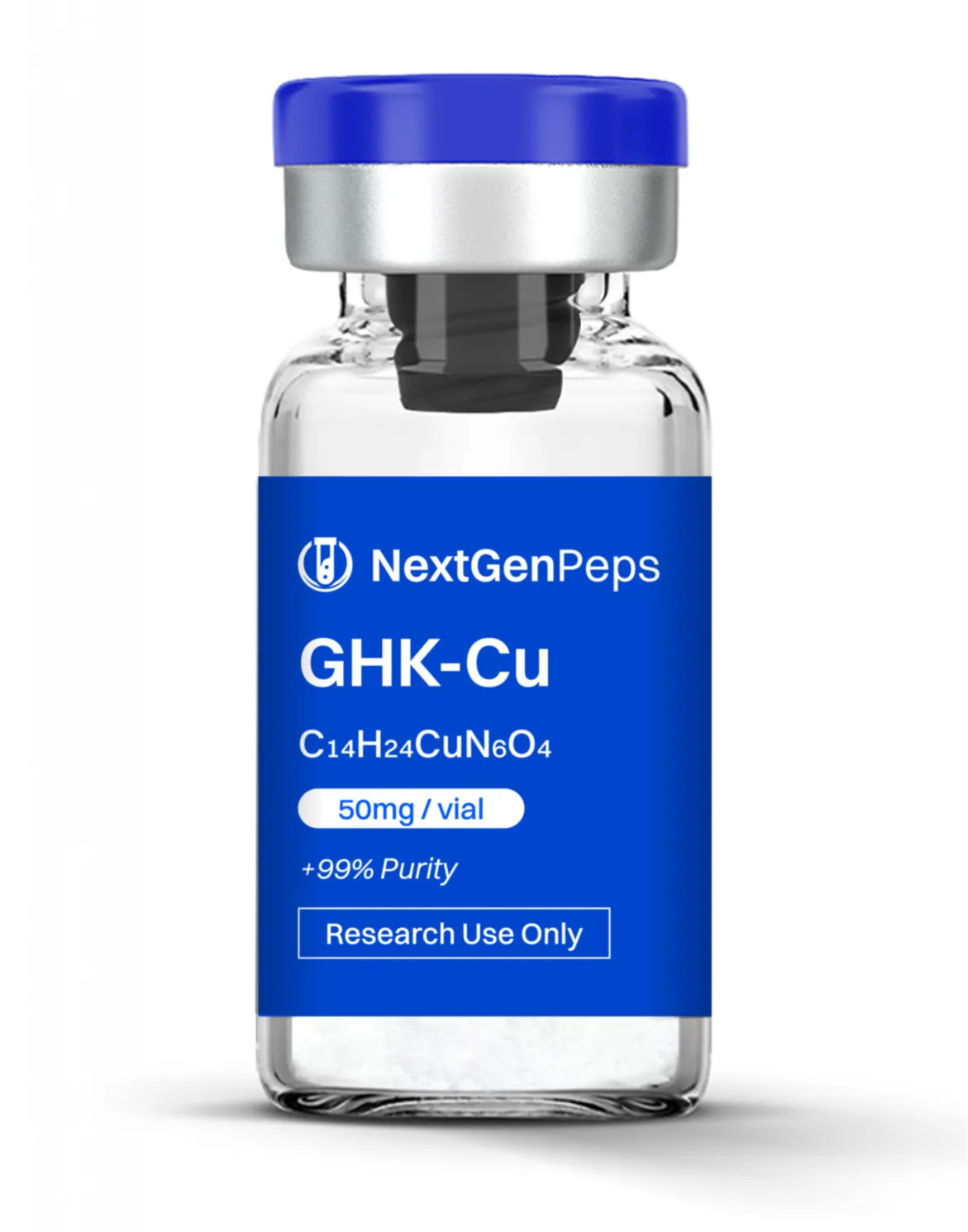
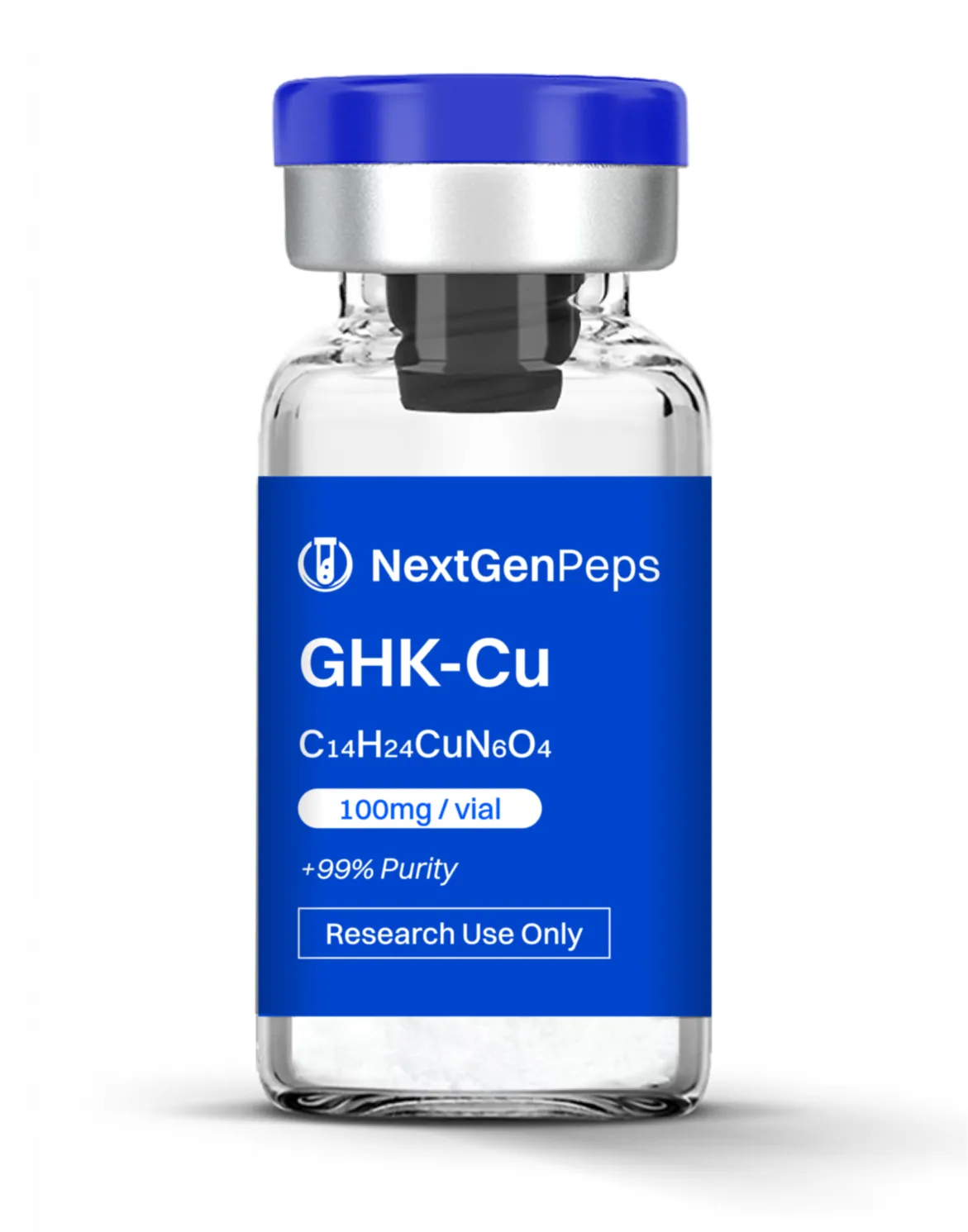
Product configurations commonly include lyophilized GHK-Cu powder in sealed glass vials, with labeling that documents peptide content (e.g., 50 mg or 100 mg), suggested reconstitution volumes, and research-use disclaimers. This structured presentation facilitates standardized dosing across experiments and minimizes variability between research groups.
Storage and Stability Guidelines
Proper storage is critical to preserve the structural integrity of the GHK-Cu complex and maintain reproducible activity in experimental systems. Typical handling guidance for lyophilized GHK-Cu includes:
Room temperature (unopened, lyophilized): Stable for limited periods when kept sealed, dry, and protected from light.
Refrigerated storage (2–8 °C): Suitable for medium-term maintenance of unopened or reconstituted material when used over days to weeks.
Frozen storage (≤ −20 °C, and preferably lower for long-term): Recommended for extended timelines, with vials kept well sealed to limit moisture uptake and oxidative degradation.
Reconstituted solutions are generally advised to be stored at low temperature, shielded from light, and used within a defined experimental window to maintain potency and limit microbial risk, in accordance with local lab practices.
GHK-Cu offered by NextGenPeps is intended solely for research use in vitro or in non-human in vivo studies, where it can be incorporated into experimental designs focused on skin biology, extracellular matrix dynamics, or neurobiological pathways. It is not manufactured or labeled for human cosmetic use, clinical application, or any consumer-facing formulation, and it must not be applied, injected, or otherwise administered to humans.