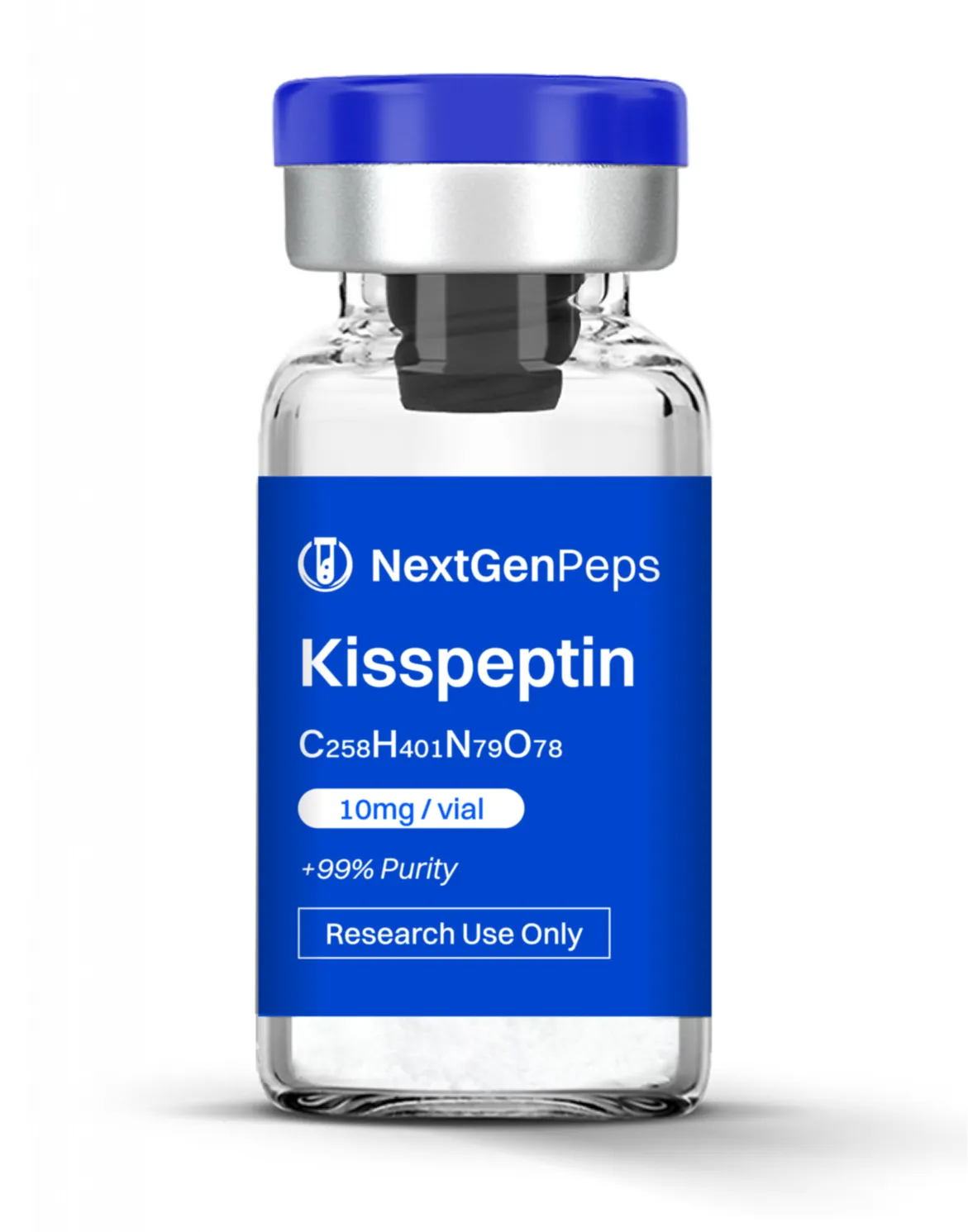






Kisspeptin Research Peptide Overview
Kisspeptin is widely regarded as the master regulator of the reproductive hormone axis in preclinical models. It's one of the most heavily studied neuropeptides in reproductive endocrinology research, making it a top choice for researchers investigating hormonal regulation in non human models.
What Makes Kisspeptin Unique
Category: Reproductive neuropeptide, HPG (hypothalamic-pituitary-gonadal) axis activator
Primary research focus: Triggering GnRH release to drive downstream production of LH, FSH, and sex hormones (testosterone, estrogen) in laboratory models
Why researchers use it: Kisspeptin sits above GnRH, LH, and testosterone in the reproductive signaling chain. That makes it a uniquely powerful research tool for studying the root cause of reproductive axis regulation, rather than just downstream hormone levels.
Kisspeptin binds to its receptor, KISS1R (also called GPR54), located on GnRH-producing neurons in the hypothalamus. It is now widely accepted that kisspeptin, acting via the kisspeptin receptor, is a critical regulator of the reproductive axis by stimulating hypothalamic gonadotropin-releasing hormone release. This GnRH release cascades into the secretion of luteinizing hormone (LH) and follicle-stimulating hormone (FSH), downstream hormones that regulate spermatogenesis and follicular development/ovulation in non human models.
Key Research Applications
Reproductive axis & fertility model research: Kisspeptin is studied in animal and in vitro models for its role in activating the GnRH pathway, relevant to research on reproductive-axis regulation and fertility mechanisms.
Hormone regulation & pubertal onset research: Kisspeptin triggers pulsatile GnRH release, activating the downstream LH and FSH cascade from the anterior pituitary and driving gonadal steroid production of testosterone and estrogen, making it central to studies on pubertal onset and hormone-axis development in laboratory models.
Neuroendocrine signaling research — Studies have examined kisspeptin's broader neuroendocrine signaling role, including its interaction with behavior-related and stress-related pathways in animal models.
Metabolic research — Kisspeptin has also been explored in animal models for its potential role in metabolic regulation and weight homeostasis.
Quality, Formulation & StoragePurity: ≥99% verified by HPLC.
Format: Lyophilized white powder in sealed glass vials.
Storage: Store lyophilized peptide in a cool, dark, dry place at or below −20°C. Once reconstituted, keep refrigerated, avoid repeated freeze-thaw cycles, and use within your lab's defined time window.
NextGenPeps supplies Kisspeptin as a high-purity research peptide intended strictly for controlled laboratory use in non human models. This compound is not approved as a drug, diagnostic, or dietary ingredient, and is not manufactured, packaged, or marketed for human consumption, self-experimentation, clinical application, or any use outside properly designed and ethically approved research protocols.