What Is SS-31? The Cardiolipin-Targeting Mitochondrial Peptide and What Animal Studies Showed
SS-31 is a four-amino-acid peptide that binds cardiolipin inside mitochondria. Here is what it did in rat heart and kidney injury models, aged mice and cell studies, how it differs from GH peptides and ordinary antioxidants, and what the research has not shown.
12 min readBy NextGenPeps Research Team
On this page11 sections
- What is SS-31?
- What does SS-31 do?
- What did SS-31 do in heart studies?
- What did SS-31 do in kidney studies?
- What did SS-31 do in aging muscle?
- What did SS-31 do in cell and test-tube studies?
- How is SS-31 different from GH peptides and ordinary antioxidants?
- SS-31 at a glance
- Buying SS-31 for research
- What is not established about SS-31
- References
What is SS-31, in brief. SS-31 is a four-amino-acid synthetic peptide, D-Arg-Dmt-Lys-Phe-NH2, that travels into mitochondria (the parts of a cell that make its energy) and sticks to cardiolipin, a fat molecule found almost only in the inner mitochondrial membrane. The same molecule is also called elamipretide, MTP-131 and Bendavia. In rats it shrank heart damage after a blocked coronary artery from 59.9% to 53.9% of the at-risk area, and after kidney ischemia it held serum creatinine at 0.62 mg/dl against 1.72 mg/dl in saline-treated rats. In old mice, one treatment raised muscle phosphocreatine, a short-term energy reserve, from 24.4 to 29.3 mM, and eight weeks of treatment nearly doubled treadmill endurance compared with untreated old mice. In test-tube work it blocked the harmful peroxidase activity that cytochrome c picks up when it binds cardiolipin. NextGenPeps supplies SS-31 for laboratory research use only.
What is SS-31?
SS-31 is a synthetic tetrapeptide (four amino acids) with the sequence D-Arg-Dmt-Lys-Phe-NH2, where Dmt is 2',6'-dimethyltyrosine, a modified tyrosine. The "SS" stands for Szeto-Schiller, after the two researchers whose peptide series it came from. It belongs to a small group of peptides that alternate positively charged and aromatic (ring-containing) building blocks, a pattern that lets them cross cell membranes and gather at the inner mitochondrial membrane (Zhao 2004). In the clinical literature the same molecule is called elamipretide; MTP-131 and Bendavia are earlier development codes.
What does SS-31 do?
It binds cardiolipin and keeps the mitochondrial energy chain working under stress, so less of it turns into a source of damage.
Mitochondria make energy by passing electrons along a chain of proteins in their inner membrane. Cardiolipin is the fat molecule that holds that chain together and anchors cytochrome c, one of the electron carriers. When cardiolipin is damaged, as it is when blood flow stops and restarts, cytochrome c switches roles and starts acting as a peroxidase, an enzyme that produces more oxidative damage. Electrons leak, reactive oxygen species (ROS, unstable oxygen molecules that damage cells) build up, and the mitochondrion makes less ATP, the cell's energy currency.
Using a fluorescent version of the peptide, Birk and colleagues showed in 2013 that SS-31 binds cardiolipin with high affinity. In the test tube, adding cardiolipin to cytochrome c raised its peroxidase activity 34-fold, and SS-31 blocked that activity in isolated mitochondria with a half-maximal concentration of 0.8 micromolar. The authors concluded that this binding protects the folded inner membranes (cristae) where ATP is made (Birk 2013). In short: SS-31 is thought to stop the leak at its source rather than mop up ROS afterward.
What did SS-31 do in heart studies?
It reduced heart muscle damage after blocked blood flow in rats and limited heart failure changes in mice.
In an isolated, perfused heart model, the SS peptides improved contractile force after ischemia and reperfusion (blood flow cut off, then restored). Analogs lacking the dimethyltyrosine building block did not prevent this "stunning", which pointed to that residue as essential (Zhao 2004).
In live rats with a coronary artery tied off for 60 minutes and then reopened, infarct size (dead heart muscle as a share of the area at risk) was 59.9% in saline controls, 53.9% with SS-31 and 47.1% with SS-20, a related peptide that does not scavenge ROS. Both peptides also reduced lipid peroxidation in heart tissue and made early arrhythmias less frequent and less severe (Cho 2007).
Figure 1. Infarct size after coronary ischemia-reperfusion in rats.
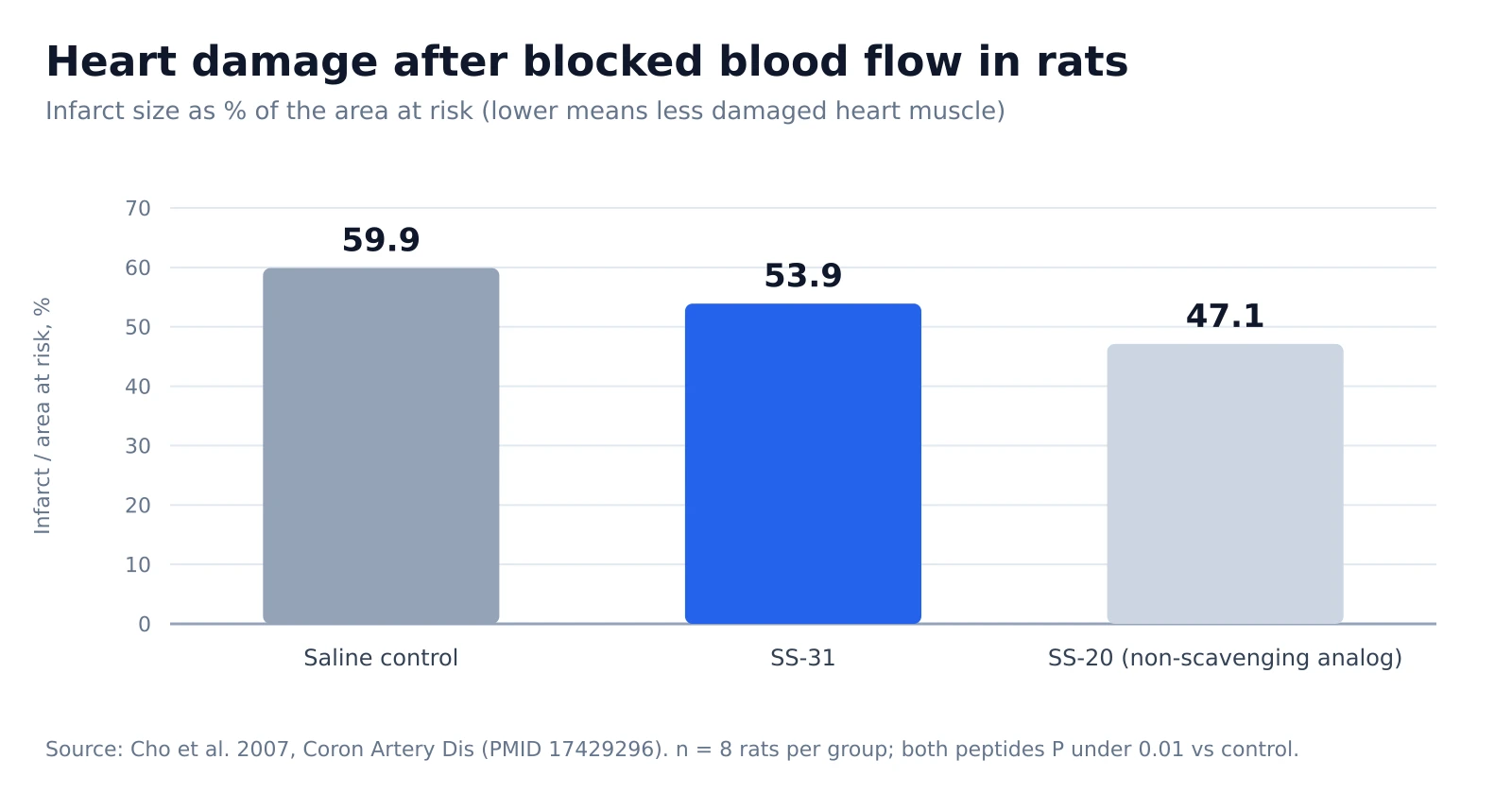
Both peptides cut infarct size compared with saline. That SS-20, which does not scavenge ROS, worked at least as well suggests the benefit is not simple antioxidant mopping-up.
In mice given angiotensin II for 4 weeks, a model of hypertension-driven heart damage, SS-31 reduced cardiac hypertrophy (thickening), diastolic dysfunction (stiff filling) and fibrosis (scarring), even though blood pressure stayed high. The general antioxidant N-acetylcysteine (NAC) showed no benefit in the same model, and in heart cells NAC did not prevent the rise in mitochondrial ROS that SS-31 blocked. SS-31 also partly rescued heart failure in mice genetically engineered to overexpress the signalling protein Gαq (Dai 2011).
In mice with pressure-overload heart failure from a surgically narrowed aorta, 538 heart proteins changed significantly. SS-31 reduced the heart failure signs and, on average, prevented 84% of the changes in mitochondrial proteins and 69% of the changes in other proteins. SS-20 had only modest effects in this model (Dai 2013).
SS-31 is in stock for laboratory research, with a batch COA from independent labs.
What did SS-31 do in kidney studies?
In rats it protected kidney mitochondria during ischemia, sped ATP recovery and kept kidney function closer to normal.
In a rat kidney ischemia-reperfusion model, SS-31 protected mitochondrial structure and respiration during early reperfusion, accelerated ATP recovery, reduced death of tubular cells (the kidney's filtering-tube cells), lowered oxidative stress and inflammation, and sped up the regrowth of surviving tubular cells within a day (Szeto 2011).
In the follow-up mechanism study, 30 minutes of ischemia left the mitochondria in saline-treated kidneys swollen to about three times their normal area with their inner folds largely lost; pretreatment with SS-31 protected the cristae and prevented the swelling. At 24 hours, serum creatinine (a blood marker that rises when kidneys filter poorly) was 0.39 mg/dl in sham-operated rats, 1.72 mg/dl after ischemia with saline and 0.62 mg/dl with SS-31. Blood urea nitrogen was 13.3, 73.2 and 34.3 mg/dl, and creatinine clearance was 33.3, 10.8 and 25.1 ml/h (Birk 2013).
Figure 2. Serum creatinine 24 hours after kidney ischemia in rats.
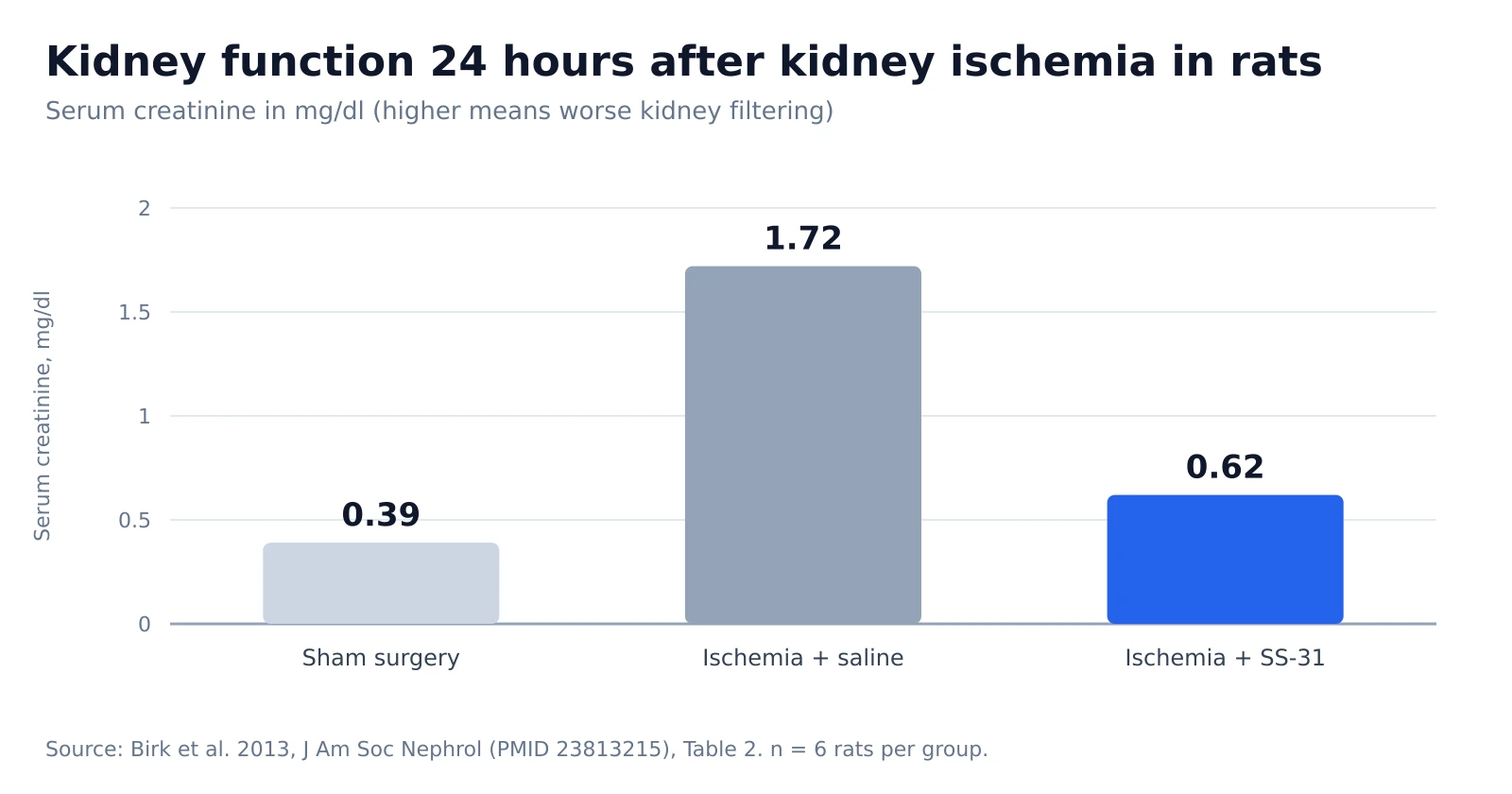
Ischemia raised creatinine more than four-fold in saline-treated rats; SS-31-treated rats stayed much closer to sham values.
What did SS-31 do in aging muscle?
In old mice it restored muscle energy production toward young levels within an hour and improved endurance with longer treatment.
Siegel and colleagues compared 5-month-old and 27-month-old mice using magnetic resonance and optical spectroscopy, which measure muscle energy without removing tissue. Old muscle had lower maximal ATP production, poorer coupling (how efficiently oxygen use is turned into ATP) and a lower energy state. One hour after a single SS-31 treatment, these measures returned to young levels in old mice, while young muscle was unaffected. Muscle phosphocreatine, a quick-release energy reserve, was 36.8 mM in young mice, 24.4 mM in old controls and 29.3 mM in old SS-31-treated mice. Treated old muscle also emitted less hydrogen peroxide, was more resistant to fatigue, and 8 days of treatment improved treadmill endurance (Siegel 2013).
Figure 3. Leg muscle phosphocreatine in young and old mice.
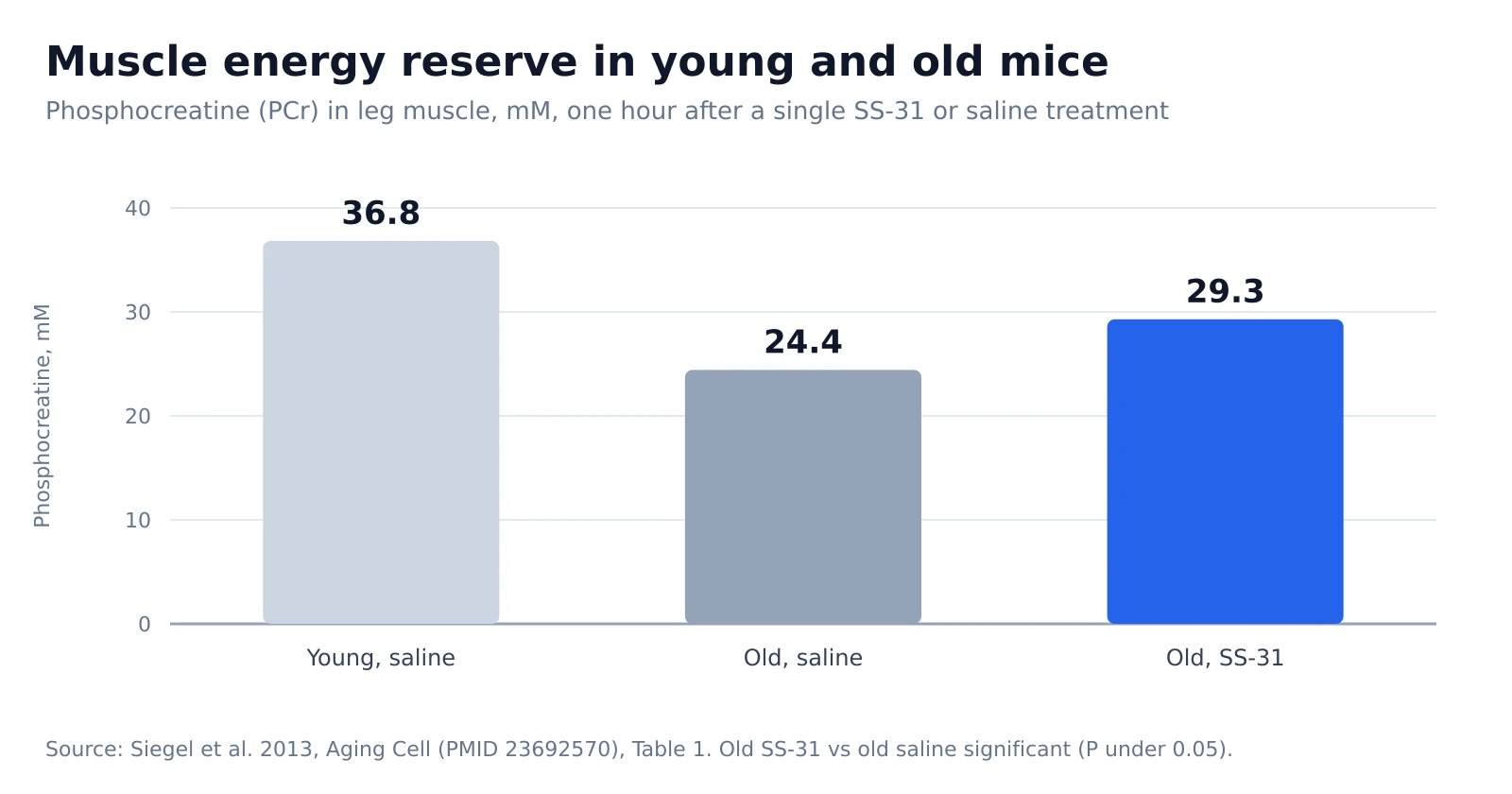
Age cut the muscle energy reserve by about a third; one SS-31 treatment recovered part of that gap.
In a longer study, 26-month-old female mice treated for 8 weeks regained maximal ATP production and coupling, had more fatigue-resistant and heavier gastrocnemius (calf) muscles, and nearly doubled treadmill endurance compared with untreated old mice. Treated old mice improved about 30% over their own pre-treatment baseline, while untreated old mice declined about 20%. These gains came without an increase in mitochondrial protein content, which suggests better-working mitochondria rather than more of them (Campbell 2019).
What did SS-31 do in cell and test-tube studies?
It concentrated in the inner mitochondrial membrane, cut cellular ROS at nanomolar concentrations and blocked cytochrome c peroxidase activity.
The SS peptides concentrated about 1,000-fold in the inner mitochondrial membrane. In neuronal N2A cells exposed to an oxidizing chemical, they reduced intracellular ROS and cell death with half-maximal effects in the nanomolar range. In isolated mitochondria they decreased ROS production, blocked the permeability transition (a sudden opening of the inner membrane that triggers swelling) and prevented release of cytochrome c (Zhao 2004). Separately, SS-31 inhibited cardiolipin-driven cytochrome c peroxidase activity (Birk 2013).
Model | What changed with SS-31 | Source |
|---|---|---|
Rat heart, coronary ischemia-reperfusion | Infarct size 53.9% vs 59.9% of area at risk; less lipid peroxidation and arrhythmia | Cho 2007 |
Mouse, angiotensin II heart damage | Less hypertrophy, diastolic dysfunction and fibrosis without lowering blood pressure; NAC had no effect | Dai 2011 |
Mouse, pressure-overload heart failure | Heart failure signs reduced; 84% of mitochondrial protein changes prevented | Dai 2013 |
Rat kidney ischemia-reperfusion | Faster ATP recovery, less tubular cell death; creatinine 0.62 vs 1.72 mg/dl | Szeto 2011; Birk 2013 |
Old mice, single treatment | Muscle energy measures restored toward young levels; PCr 29.3 vs 24.4 mM | Siegel 2013 |
Old mice, 8 weeks | Treadmill endurance nearly doubled vs untreated old mice | Campbell 2019 |
Cells and isolated mitochondria | Lower ROS and cell death at nanomolar levels; peroxidase blocked | Zhao 2004; Birk 2013 |
What changed in each rodent, cell and test-tube study cited above.
How is SS-31 different from GH peptides and ordinary antioxidants?
It does not act on a hormone receptor, and it is not a typical free-radical scavenger: it works at one lipid inside mitochondria.
Growth hormone-related research peptides such as ipamorelin, sermorelin and tesamorelin act on receptors on pituitary cells and change hormone release (see What Is Ipamorelin?). SS-31 has no known hormone-releasing action. Its effects in the studies above trace back to mitochondria in the stressed tissue itself.
It also differs from general antioxidants. Untargeted antioxidants spread through the cell and neutralize ROS after they form. SS-31 concentrates at the inner mitochondrial membrane, and Birk and colleagues concluded that this targeting is driven mainly by its affinity for cardiolipin, unlike older mitochondria-targeted compounds that rely on the membrane's electrical charge (Birk 2013). Its dimethyltyrosine residue does give it some scavenging ability (Zhao 2004), but two results argue that scavenging is not the whole story: N-acetylcysteine failed where SS-31 worked in angiotensin II-treated mice (Dai 2011), and SS-20, a non-scavenging relative, also reduced infarct size in rats (Cho 2007).
SS-31 at a glance
Compound: SS-31 (elamipretide, MTP-131, Bendavia)
Class: Mitochondria-targeted, cardiolipin-binding peptide
Sequence: D-Arg-Dmt-Lys-Phe-NH2, a tetrapeptide with a C-terminal amide (Dmt = 2',6'-dimethyltyrosine)
Formula and weight: C32H49N9O5, 639.8 g/mol (free base, PubChem CID 11764719)
Target: Cardiolipin in the inner mitochondrial membrane
Strength at NextGenPeps: 10 mg per vial, lyophilised powder
Buying SS-31 for research
Documented identity and purity. Every lot has a published COA covering identity and purity from independent labs.
US-based fulfilment. Orders ship within 24 hours from the United States, with free US shipping on orders over $150.
Research use only. Supplied strictly for in vitro and approved animal research.
Shop SS-31 for laboratory research.
What is not established about SS-31
Species and model. The results above come from rats, mice, isolated hearts, cells and purified proteins. They should not be assumed to carry over to other systems.
Size of the effect varies. In the rat heart study SS-31 lowered infarct size by 6 percentage points, a smaller cut than the non-scavenging analog SS-20 achieved (Cho 2007).
Significance against saline in the kidney table. The 2013 kidney function table reports statistics against sham-operated rats, not between SS-31 and saline; the abstract describes renal dysfunction as mitigated (Birk 2013).
Pretreatment, not rescue. In the rat heart and kidney ischemia studies charted here, SS-31 was first given before blood flow was cut off (Cho 2007; Birk 2013), so they do not show whether it helps once damage is established.
Lab measures are not whole-body outcomes. In old mice, respiration in isolated muscle fibers did not change even though in-body energy measures improved, and voluntary wheel running did not increase (Siegel 2013; Campbell 2019).
Regulatory status. Research-grade SS-31 is not an approved drug. Elamipretide received a narrow FDA accelerated approval in September 2025 for one rare genetic mitochondrial disease; for every other use it remains investigational (FDA 2025).
References
Reference | Model | Link |
|---|---|---|
Zhao K et al. Cell-permeable peptide antioxidants targeted to inner mitochondrial membrane inhibit mitochondrial swelling, oxidative cell death, and reperfusion injury. J Biol Chem. 2004;279(33):34682-90. | Cells, isolated mitochondria, ex vivo heart | |
Cho J et al. Potent mitochondria-targeted peptides reduce myocardial infarction in rats. Coron Artery Dis. 2007;18(3):215-20. | Rat | |
Dai DF et al. Mitochondrial targeted antioxidant peptide ameliorates hypertensive cardiomyopathy. J Am Coll Cardiol. 2011;58(1):73-82. | Mouse, cardiomyocytes | |
Dai DF et al. Global proteomics and pathway analysis of pressure-overload-induced heart failure and its attenuation by mitochondrial-targeted peptides. Circ Heart Fail. 2013;6(5):1067-76. | Mouse | |
Szeto HH et al. Mitochondria-targeted peptide accelerates ATP recovery and reduces ischemic kidney injury. J Am Soc Nephrol. 2011;22(6):1041-52. | Rat | |
Birk AV et al. The mitochondrial-targeted compound SS-31 re-energizes ischemic mitochondria by interacting with cardiolipin. J Am Soc Nephrol. 2013;24(8):1250-61. | In vitro, rat | |
Siegel MP et al. Mitochondrial-targeted peptide rapidly improves mitochondrial energetics and skeletal muscle performance in aged mice. Aging Cell. 2013;12(5):763-71. | Mouse | |
Campbell MD et al. Improving mitochondrial function with SS-31 reverses age-related redox stress and improves exercise tolerance in aged mice. Free Radic Biol Med. 2019;134:268-81. | Mouse | |
Szeto HH. First-in-class cardiolipin-protective compound as a therapeutic agent to restore mitochondrial bioenergetics. Br J Pharmacol. 2014;171(8):2029-50. | Review | |
US Food and Drug Administration. FDA grants accelerated approval to first treatment for Barth syndrome. September 19, 2025. | Regulatory notice |
This article summarizes published laboratory and animal research for educational purposes. SS-31 supplied by NextGenPeps is for laboratory research use only.
Mentioned in this article
Shop all compounds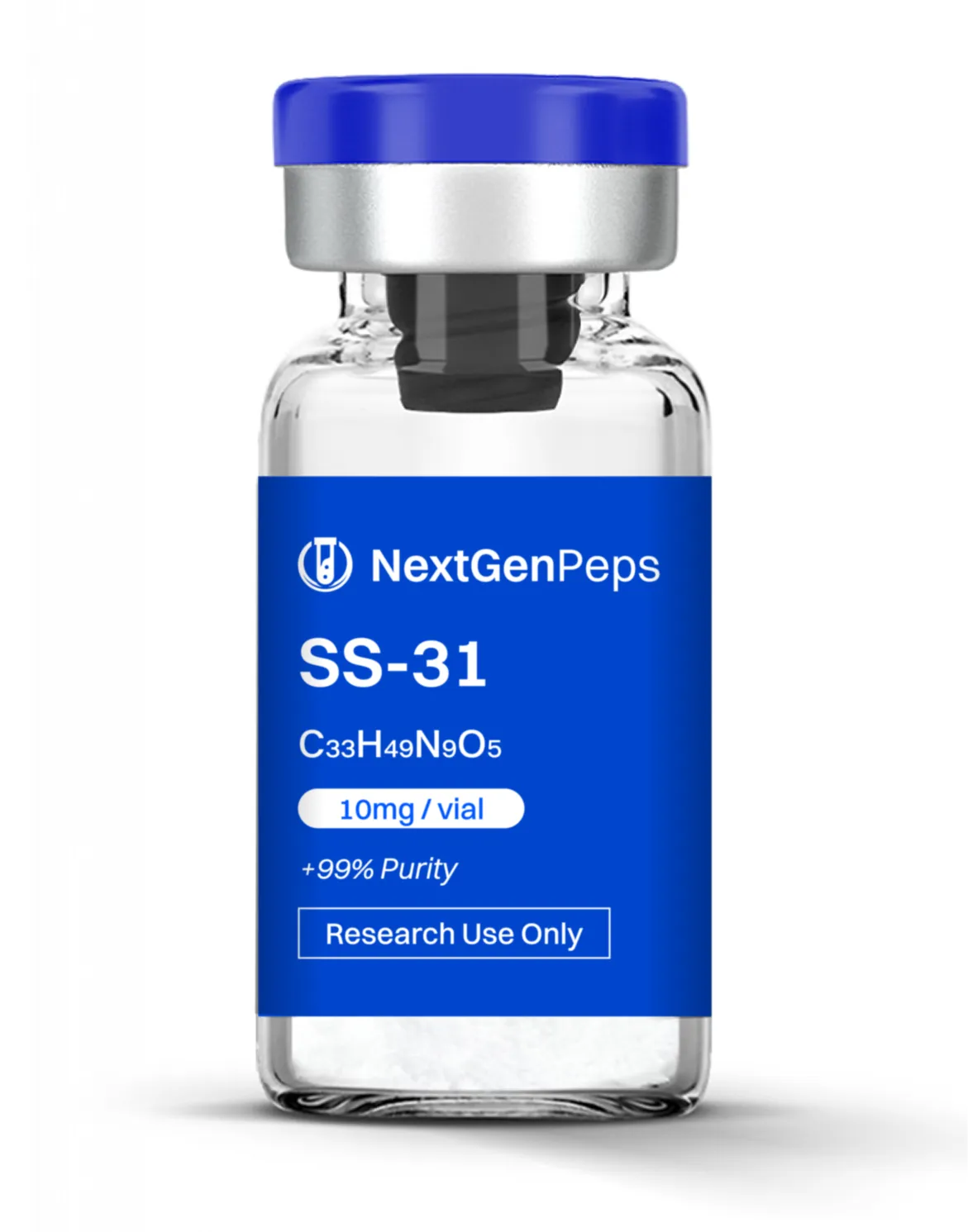
Written by NextGenPeps Research Team
The NextGenPeps Research Team summarizes published laboratory and animal research on the compounds NextGenPeps supplies for research use only.
More articles →Research Use Only: this article describes laboratory research. Nothing here is dosing guidance, and these materials are not intended for human use.
Keep reading
- Research
What Is Ipamorelin? The Selective Ghrelin Receptor Peptide and Animal Study Results
Ipamorelin is a five-amino-acid peptide that activates the ghrelin receptor to release growth hormone. Here is what it did in rat and swine studies, how it differs from sermorelin and tesamorelin, and what the research has not shown.
10 min read · Nov 2026